Entering Chichester Cathedral through the west door the impact of John Piper’s controversial altar tapestry is immediate. Symbols of the Trinity, the four evangelists and the four elements cavort in bold, arresting colours, noisily clamouring for attention.
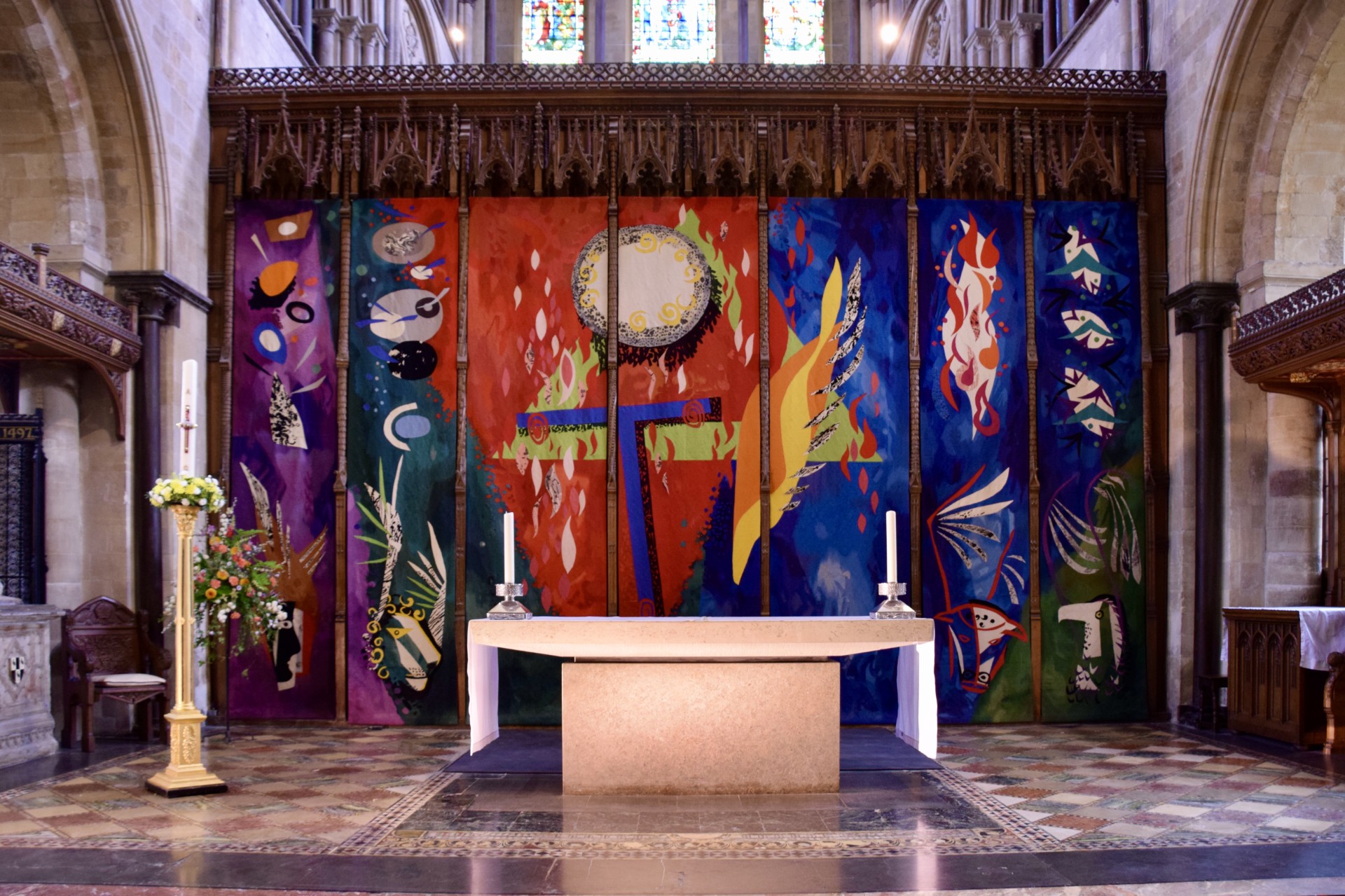
(Universal Public Domain via Wikimedia Commons)
The presence of the tapestry and other twentieth century art in the eleventh century cathedral is attributable to Walter Hussey. In earlier centuries the church had been a major patron of the arts, and Hussey regretted that contemporary painting, music, sculpture and drama were little encouraged by the ecclesiastical hierarchy of his day. As vicar of St. Matthews in Northampton, he had set about rectifying this, commissioning works by Benjamin Britten, Henry Moore, Michael Tippett and Graham Sutherland.
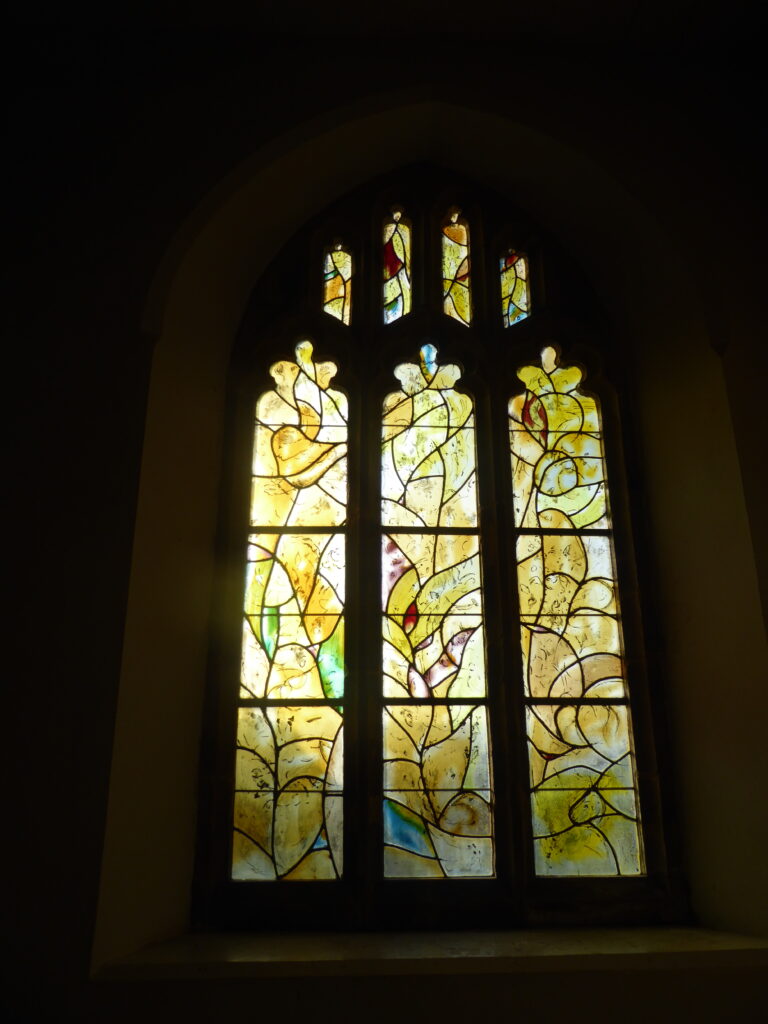
When he became Dean of Chichester in 1955 his scope was increased, and the cathedral boasts an enviable collection of modern art. This was supplemented by Hussey’s personal collection which he left to the city, today located in the Queen Anne townhouse known as the Pallant Gallery. My personal favourite amongst the cathedral treasures is Hussey’s final commission, a stained-glass window by Marc Chagall based on psalm 150: “Let everything that hath breath praise the Lord.”
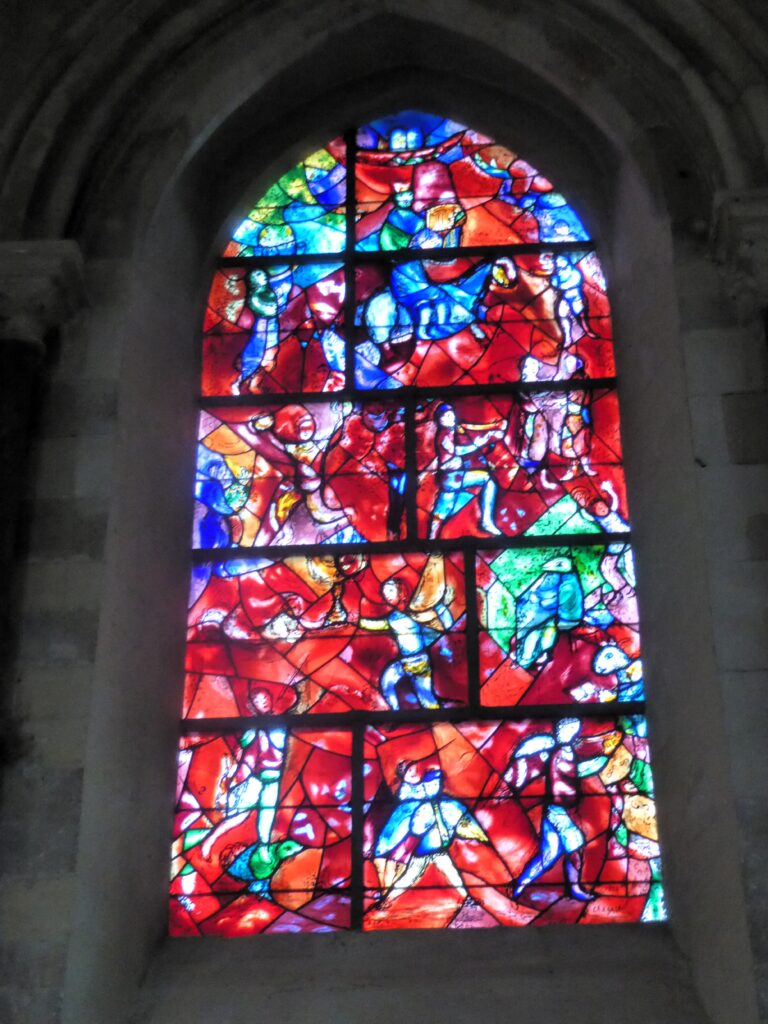
Chichester is one of only two locations in England with stained-glass by Chagall, and fond though I am of the cathedral window there is no question that the glass in an otherwise unremarkable church in neighbouring Kent far eclipses it.
Henry and Rosemary d’Avigor-Goldsmid commissioned Chagall to design a window for All Saints church, Tudeley, in memory of their daughter who had died in a sailing accident. When Chagall arrived for the dedication of the east window in 1967, his response was immediate,
C’est magnifique! Je les ferai tous.
Over ten years he designed eleven more windows as a gift to the family and the community; the last one was installed in 1985 just before his death. All Saints became the only church in the world to have all its windows designed by Chagall.
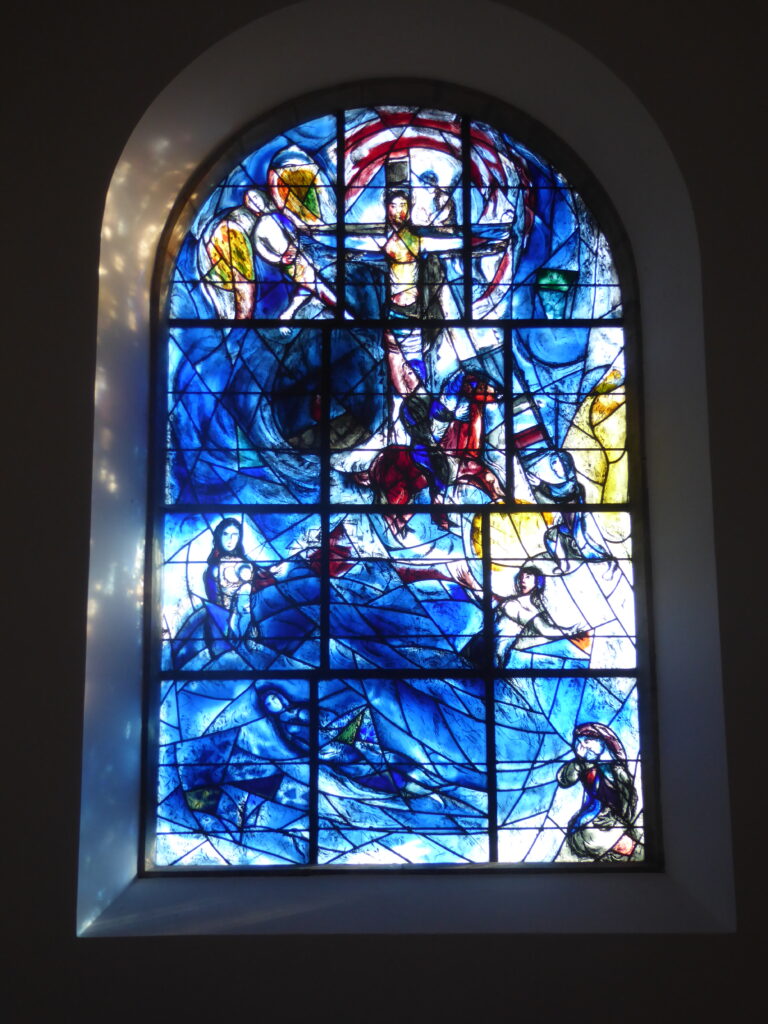
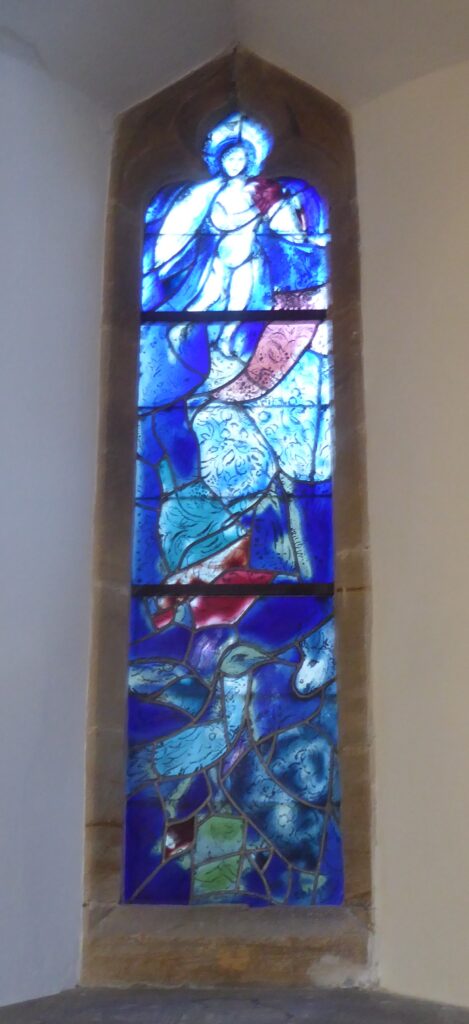
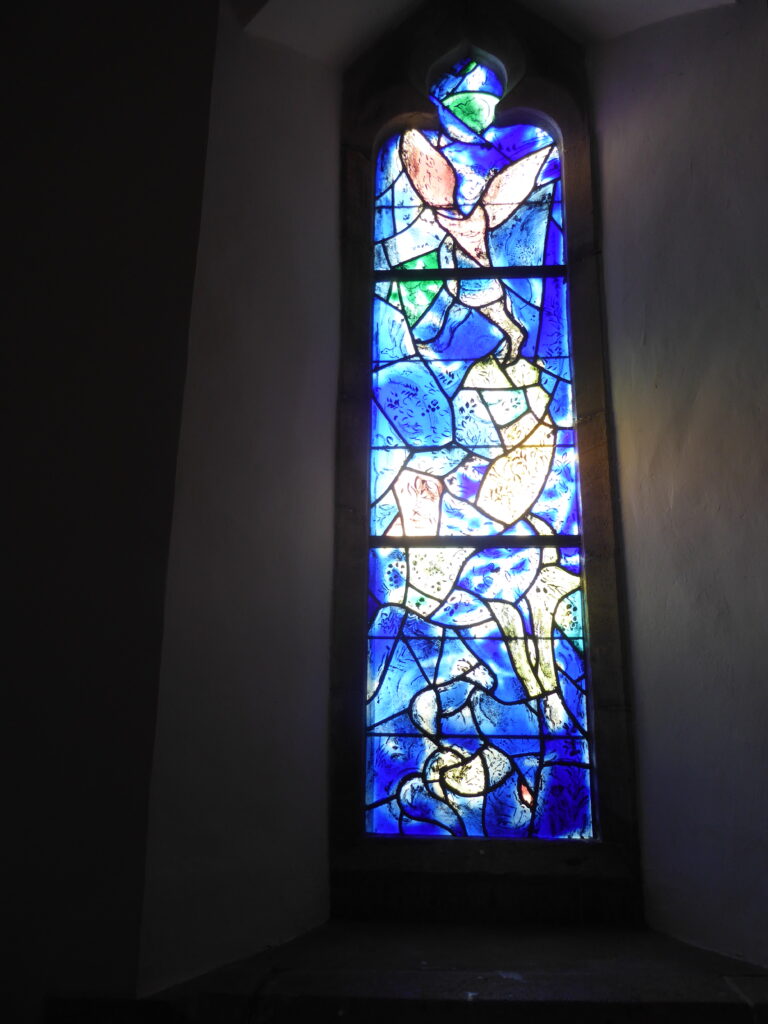
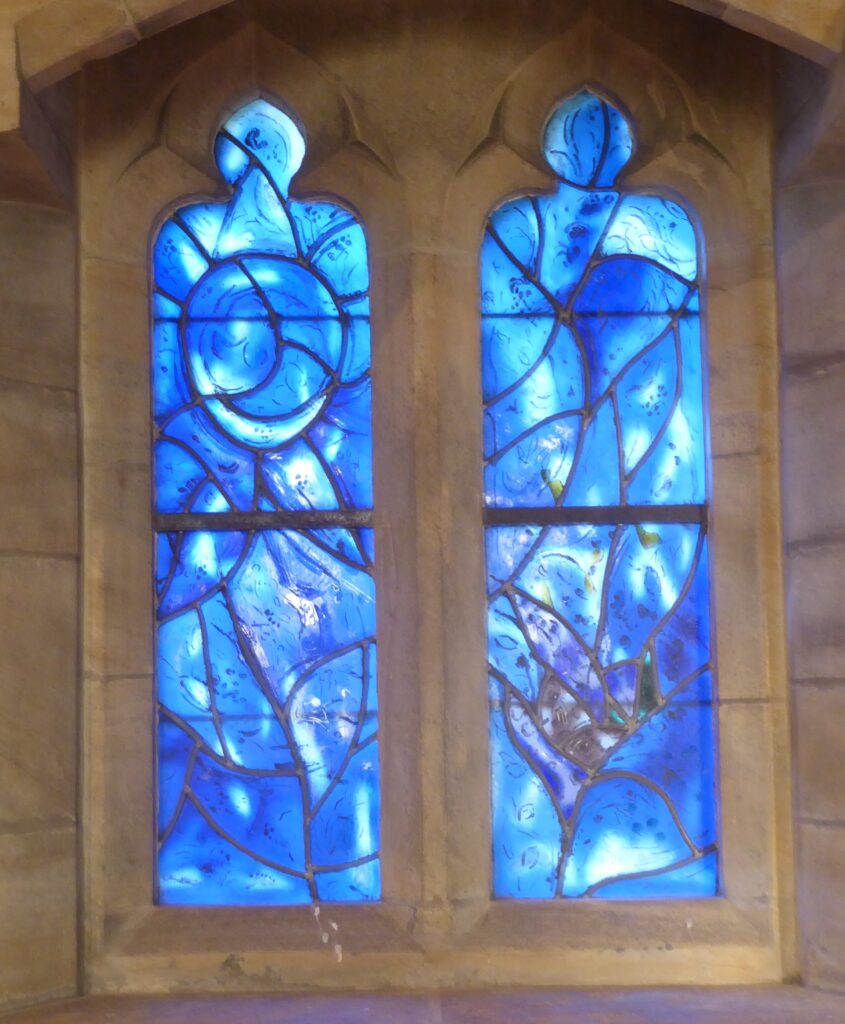
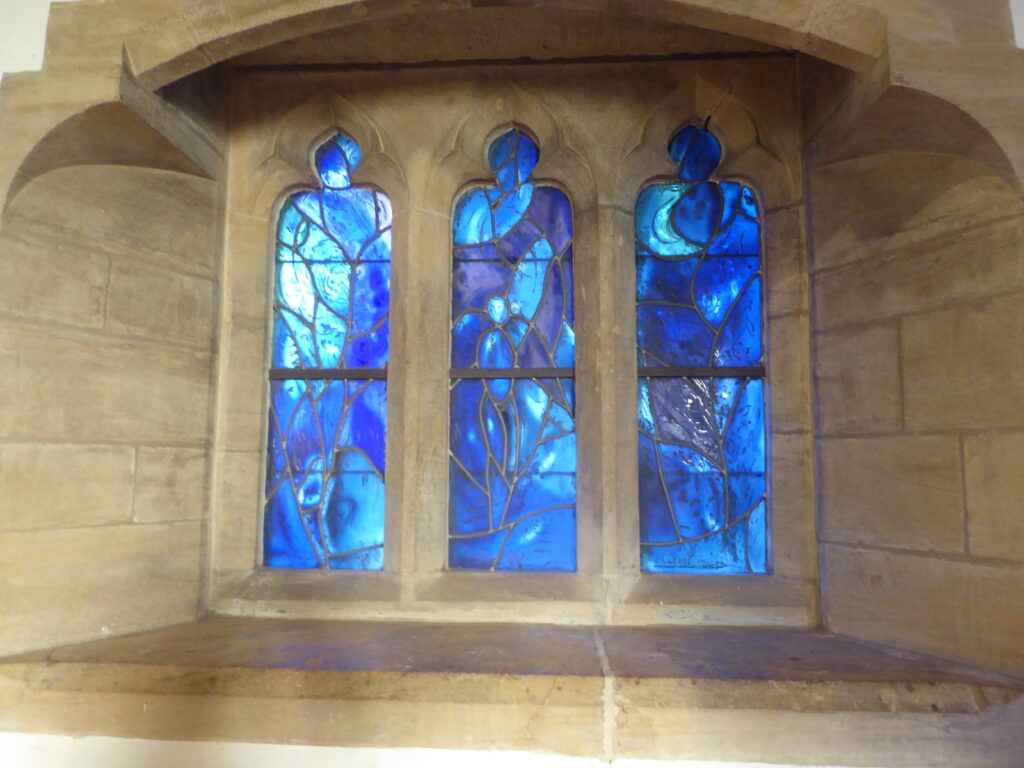
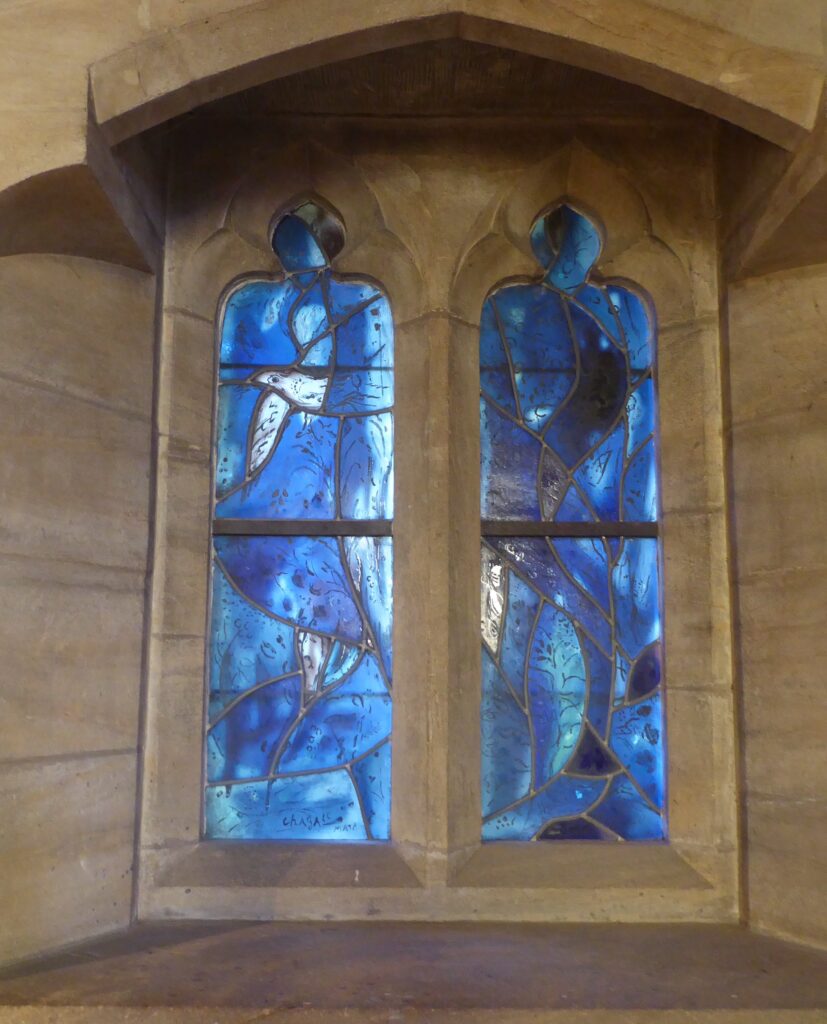
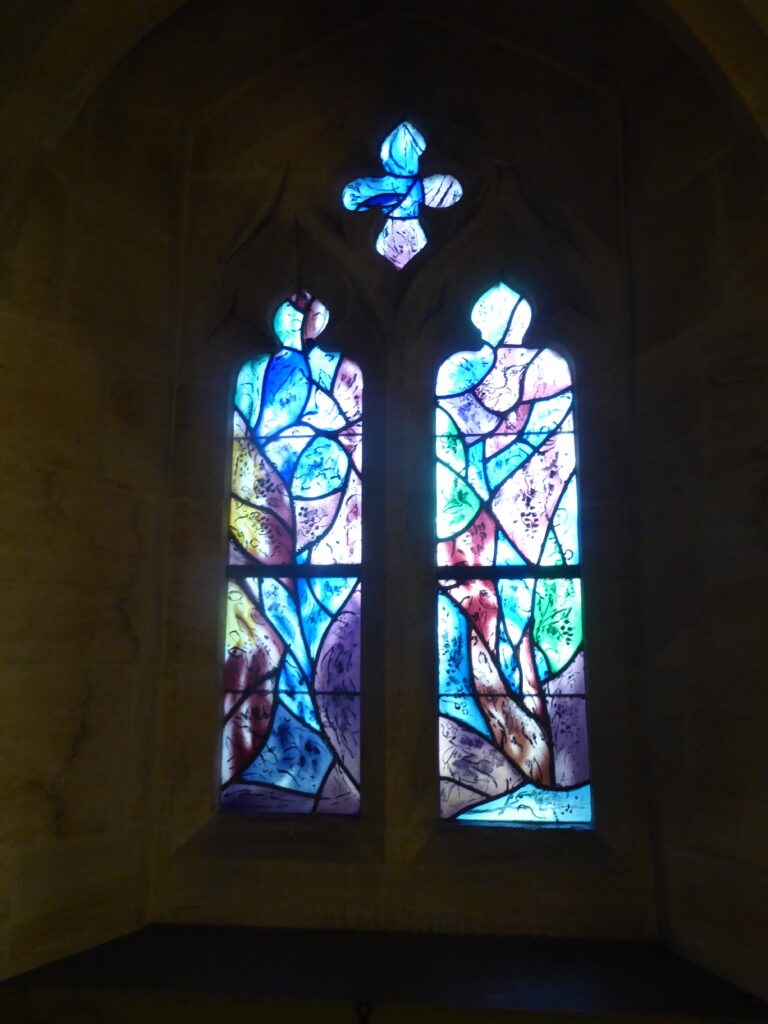
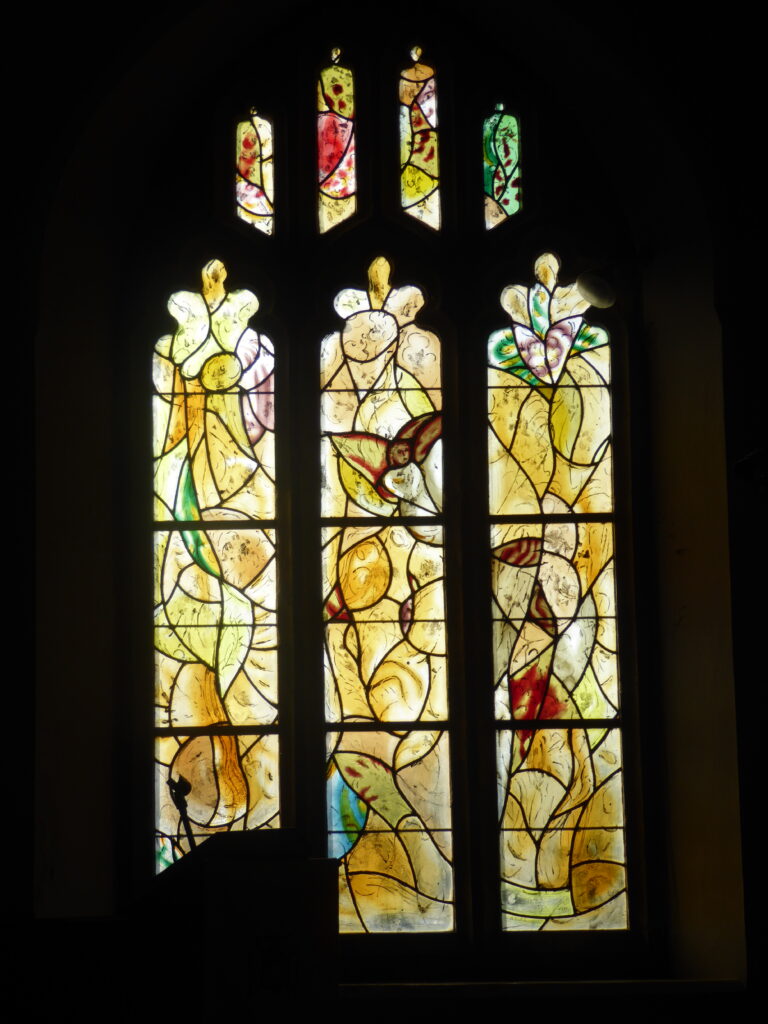
Marc Chagall (1887-1985) was born in Vitebsk, NE Belarus, then part of the Russian Empire. From 1906 he attended art school in Saint Petersburg for four years, before moving to Paris where he began to produce paintings of life in Vitebsk. Life in the town had been hard; Chagall was one of nine children whose father was employed hauling barrels of herring. Chagall compared the work to that of a galley slave:
My heart used to twist like a Turkish bagel as I saw my father lift those weights.
Worse, there was always the fear of pogroms against the Jews.
But the paintings he produced do not emphasise the hardship, they are not realistic, objective portrayals. For Chagall was motivated at least in part by a tender desire to record and celebrate Jewish traditions and modes of living which were disappearing. The dream like paintings of snowy streets, wooden houses, fiddlers, circuses, acrobats, and ghostly figures floating in the sky led Picasso to wonder:
I don’t know where he gets those images from; he must have an angel in his head.
In 1914 Chagall went home to marry Bella Rosenfeld in Vitebsk. The most romantic pictures come from the years following his marriage. In The Birthday (1915) a couple kiss as they drift through the air. The Promenade (1918) shows him holding onto his wife’s hand as she flies above.
Chagall had not intended to remain in Vitebsk but with the closure of borders in World War I, he was unable to return to Paris and spent the years until 1923 between Vitebsk, Moscow and Petrograd. There he taught, illustrated books, and produced murals alive with dancers, fiddlers and acrobats for the State Jewish Chamber Theatre.
After his return to Paris, he worked and travelled extensively but in the 1930s Nazi campaigns against modernist, “degenerate” art began. Paintings, including those of Chagall, described as
green, purple and red Jews shooting out of the earth, fiddling on violins, flying through the air…representing an assault on Western civilisation
were confiscated from museums.
Yet even after the German invasion Chagall and his wife remained in Vichy France, slow to perceive the danger and unable at last to afford the passage to America. They were rescued in 1941, following their arrest and loss of citizenship, by the American journalist Varian Fry and the Emergency Rescue Committee who helped anti-Nazis and Jews, especially artists and intellectuals, to escape.
Chagall lived in New York until 1948 when he returned to France, seeking the “lumière – liberté” of the Cote d’Azur. There he experimented with ceramics and sculpture alongside his painting. Malraux, a great admirer of Chagall, commissioned him to paint the ceiling of the Paris opera in 1963, avowing
Chagall has looked at our world with the light of freedom and seen it with the colours of love.
And after a visit to Chartres in the 1950s Chagall began to produce stained glass with intense colours refracted by the light. For the Hebrew University’s medical centre in Jerusalem, he designed twelve windows representing the twelve tribes of Israel earning breathless praise from the philosopher Gaston Bachelard:
Chagall reads the bible and suddenly the passages become light.
The art historian Jean Leymarie in his commentary on the windows concurred:
The essence of the Jerusalem windows lies in colour, in Chagall’s magical ability to animate material and to transform it into light. Words do not have the power to describe Chagall’s colour, its spirituality, its dazzling luminosity…it is simultaneously jewel-hard and foamy, reverberating and penetrating, radiating light from an unknown interior.
Other windows followed: the peace window in the Secretariat building of the United Nations in New York; at Saint Stephen’s Mainz, a widow symbolising Jewish-German reconciliation; windows in the Fraumunster church in Zurich, in Metz cathedral, at the art institute in Chicago, in Reims and in Tudeley.
Chagall’s art defies description. It has been linked with Cubism, Fauvism, Surrealism, and Expressionism, but ultimately it is unique. The paintings blend the real and the fantastic, at once whimsical fairy tales, romantic fantasies, dreams, and representations of the wonder and joy of the quotidian and the commonplace. And, as with the stained-glass, it is the colour and the light which leave us breathless. Picasso was confident that
When Matisse dies, Chagall will be the only painter left who understands what colour is…His canvasses are really painted, not just tossed together. Some of the last things he has done in Vence convince me that there has never been anyone since Renoir who has the feeling for light that Chagall has.
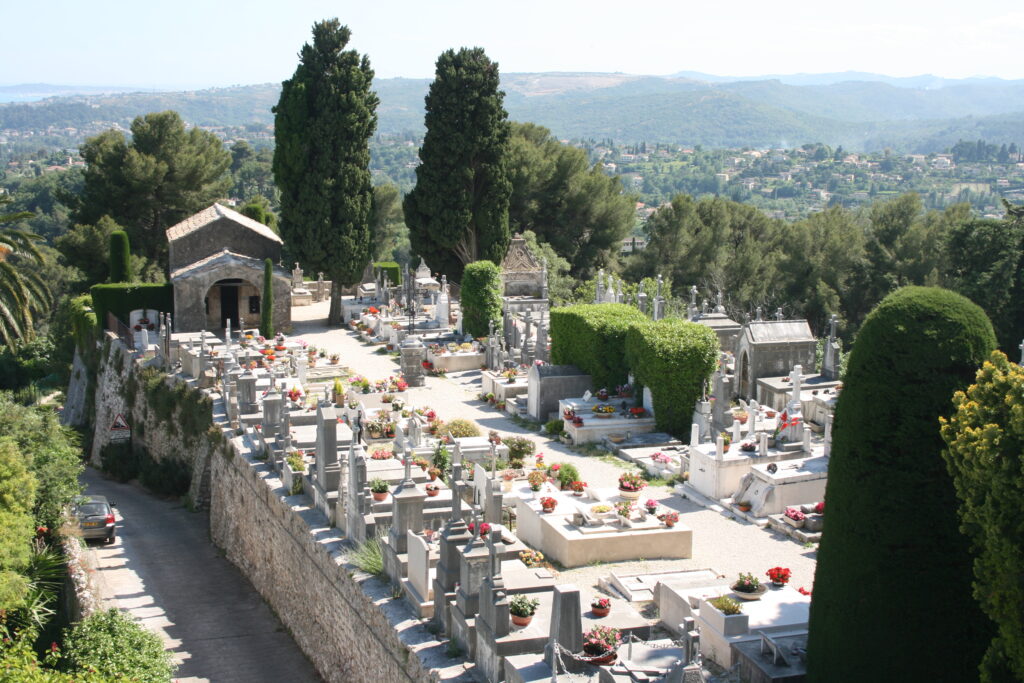
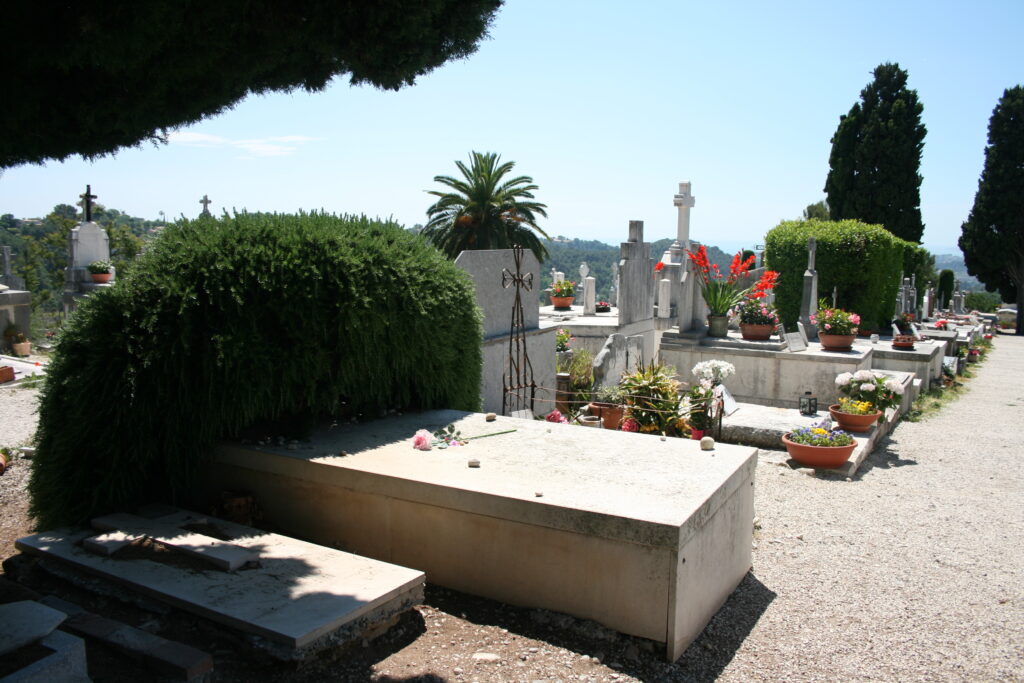
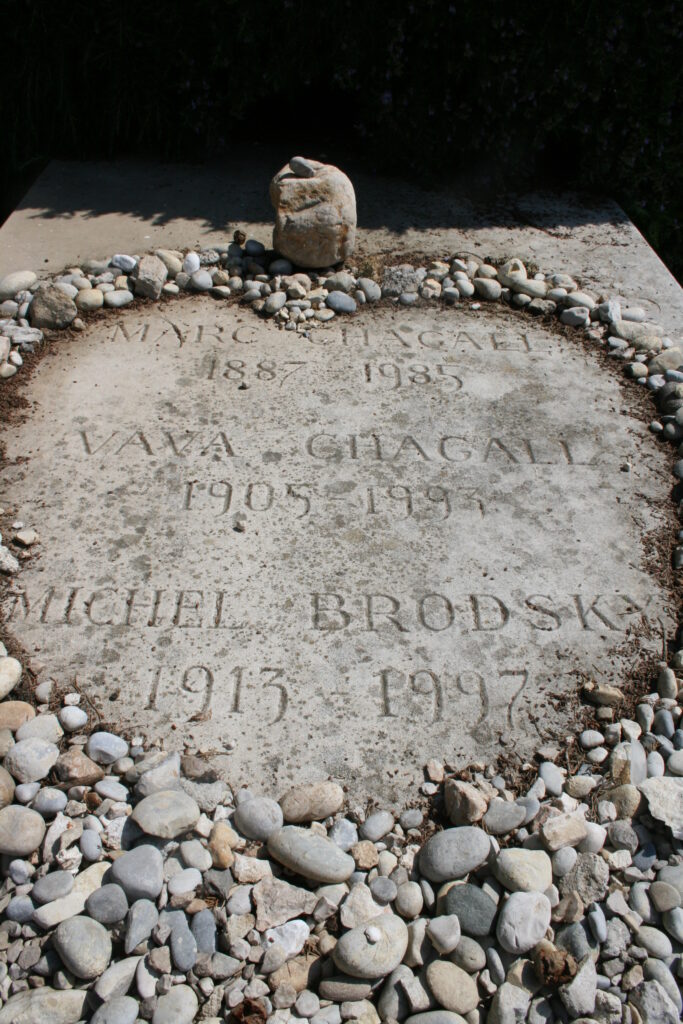
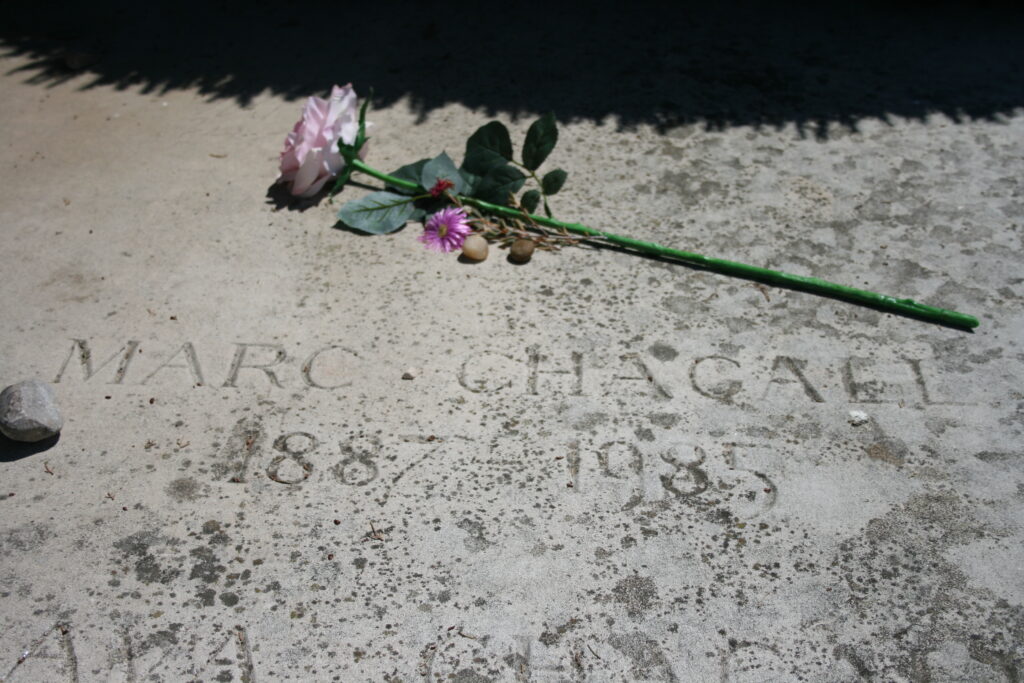
Chagall is buried in the multi-denominational cemetery of St. Paul de Vance, bathed in the light and colour of the south of France, but maybe still dreaming of Vitebsk.