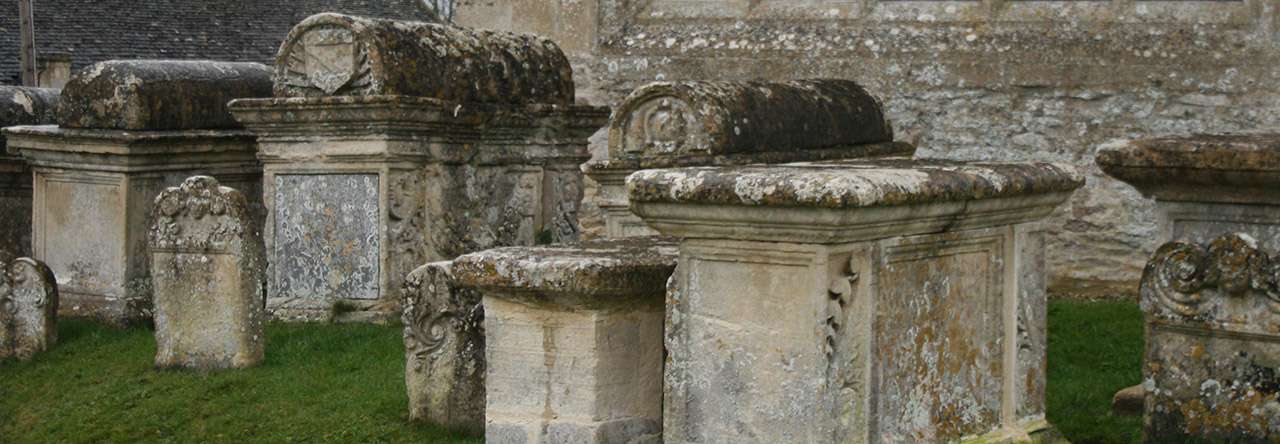
Come with me into the graveyard, all human life is here

Month: September 2026

Maurice Selbach: “He died as he lived, a cyclist.”

A cold, wet January morning was not the best time to enter Llandrindod Wells. The town looked tired: the streets mean and unwelcoming; shops closed or empty of customers; a few wan pedestrians moving sluggishly, inadequately protected against the relentless rain.

It had not always been like this, for Llandrindod Wells has mineral springs, and the advent of the railways in the 1860s led to an economic boom as wealthy visitors arrived with their servants from South Wales, the Midlands and the Northwest of England. From May to mid-October, they drank the chalybeate waters.

Hotels and boarding houses, shops, theatres, parks, gardens and boating lakes opened to serve them. Rock Park, a woodland area traversed by paths, waterfalls and bridges fell steeply to the river where the Victorian spa buildings, bath house and pump room, were located. Here the orchestra played while the patrons sipped tea to take away the taste of their sulphur and saline elixirs.

It all ended with the First World War when refugees and wounded soldiers were billeted on the hotels. By the 1920s and 1930s the fashion had swung away from spas and instead holiday makers sought seaside guesthouses and lodgings. The final blow came with the closure of the Mid-Wales railway line in the 1960s. The lights went out, the musicians packed up their instruments, the grand hotels closed or were converted into flats and offices.

Yet there are always hidden gems in what may at first look an unprepossessing environment, and I have a partiality for small run-down towns nestled in a time warp. So as my umbrella directed its runoff down the back of my neck, I made a perambulation of the town in the footsteps of those early spa visitors. And there is a worthy array of Victorian and Edwardian architecture, all balconies, brickwork, and bay windows. Moreover, even when the town had passed its heyday two magnificent art deco garages, Pritchards and the Automobile Palace, had opened to service the new motorcars, even though the latter were only passing through.

I was less enamoured with Rock Park; I have never shared the Romantics maudlin enthusiasm for gloomy woods, and the forsaken spa buildings looked pitiful.

So quickly back to the town centre and the Metropole Hotel, opened in 1872 as Coleman’s, and famed for receiving an unwelcome guest in the form of a lioness in 1889 when Wombwell’s Menagerie was exhibiting on the lawns opposite. In 1911 Elizabeth Miller bought up the cutlery, china, and carpets from the defunct Metropole Hotel in Cromer; since all the items bore an “M” monogram she renamed her hotel to match them. The hotel survived requisitioning in both world wars, replaced its stables with garages, boasted an outdoor pool in the 1930s, and through the decades exercised a protean capacity to reinvent itself and survive where others failed.

Today its income is bolstered by the conference and wedding trade. And, as I discovered when I settled into its “sun lounge,” a conservatory-like structure running the length of its façade, it is an extremely popular spot with the ladies of the town for morning coffee. It is an accommodating place where the friendly staff are pleased rather than otherwise if you explore the public rooms and staircases admiring the older fixtures and fittings.

Posters advertised forthcoming “Dinner-Dances.” I have never been to a dinner-dance; I thought they had vanished in my childhood. They sound at once quaint and glamorous. Having a “date” – another phenomenon which I assumed had disappeared half a century ago until it reappeared in the rebarbative, coy expression “date-night” – is obviously a prerequisite. If you can rustle one up, I recommend that you head for the Metropole at the next opportunity.

But in the absence of date, dinner and dance, I sought the object of my visit to Llandrindod Wells, the National Cycle Museum. You do not have to be a cycling aficionado to love this museum. It has a wonderful collection of vintage cycles: from an 1818 hobby horse, through a selection of transitionals and velocipedes, a wooden tricycle, penny farthings, a sociable, tandems, shop bikes, police bikes, and ice cream carts. Sleek modern racing bikes and carbon fibre models compete for attention with trophies and badges recalling past races and cycling clubs. Old photographs trace changing fashions in cycling apparel.

But I was in quest of one particular artefact: the gravestone of Maurice Selbach.

Selbach had no connections at all with Llandrindod Wells. His origins were more exotic. He was born in Paris in 1889 to an American engineer father of German descent and a Polish Countess mother, Marguerite Kossakowska. They moved to London during his childhood.

Selbach was a successful amateur cyclist, specialising in long distance time trials. He broke records for Lands’ End to London and for London to Bath and back, and for the 100-mile tandem trial. He turned professional in 1922 after cycling in the Anerley 12 Event* on a day when he was meant to be at work. His boss was competing in the same race, and as Selbach overtook him an angry shout advised him that he was sacked.

Riding for the French Louvet team in the Paris-Roubaix race in 1923, Selbach was the first rider to represent Britain in a major continental road race.

After his success in the six-day cycle race at Olympia the same year his fellow American Gordon Selfridge set up a display in one of his shop windows with Selbach’s bike surrounded by stars and stripes and union jacks.

In 1924 when Selbach retired after fourteen years as a competitor, he opened a business in south London, designing and producing bicycles to the highest standards. Selbach bikes were distinguished by their advanced level of technological innovation. Cycling buffs speak in hallowed tones of his use of tapered tubing and roller bearings in quality frame building, and of the Selbach crownlite alloy bolt-on calliper brake. They recall his design of the first curved seat tube for a tandem. In short, in the 1920s and 1930s, a Selbach was the nonpareil of lightweight bikes.

Selbach was also a fan of American cars: he owned several and used his Buick to deliver his bicycles to London customers. But he continued to cycle to work, and one morning in 1935 as he tried to overtake a truck, his front wheel caught in a tramline. Selbach crashed into the truck and fell under its wheels; he died on the way to hospital.

A delightful grave-marker, in Streatham cemetery in south London, bore his portrait, a sculpted bicycle leaning against a milestone, a finger-post, and the words

He died as he lived, a cyclist.

But in the 1990s there were plans to clear the cemetery for commercial development. Two local cycling enthusiasts, reluctant to see the memorial disappear, acquired the stone and persuaded the National Cycle Museum to transport it to Llandrindod Wells. And there it is today, surrounded by bikes, including two manufactured by Selbach himself.

Selbach’s gravestone in the National Cycling Museum. Touchingly someone has surrounded it with potted greenery…
… and even added a model bird, apparently descended from the foliage, to perch on the grave.
The bike propped against a milestone
He died as he lived, a cyclist

Next year, on 4 July 2027, the Tour de France Grand Depart Stage 3 will pass through Llandrindod Wells. Selbach will be there to cheer the riders on.

_____________________________________________

*For fascinating detail on the history of the Anerley Bicycle Club, one of the oldest in the country, and the Anerley 12 Event see anerleybc.org/history-1881

The National Cycle Museum, run by lovely volunteers, and located in the former Automobile Palace is well worth a visit.

http://www.cyclemuseum.org.uk

Happily,Streatham cemetery had a reprieve, as there are other interesting people there…
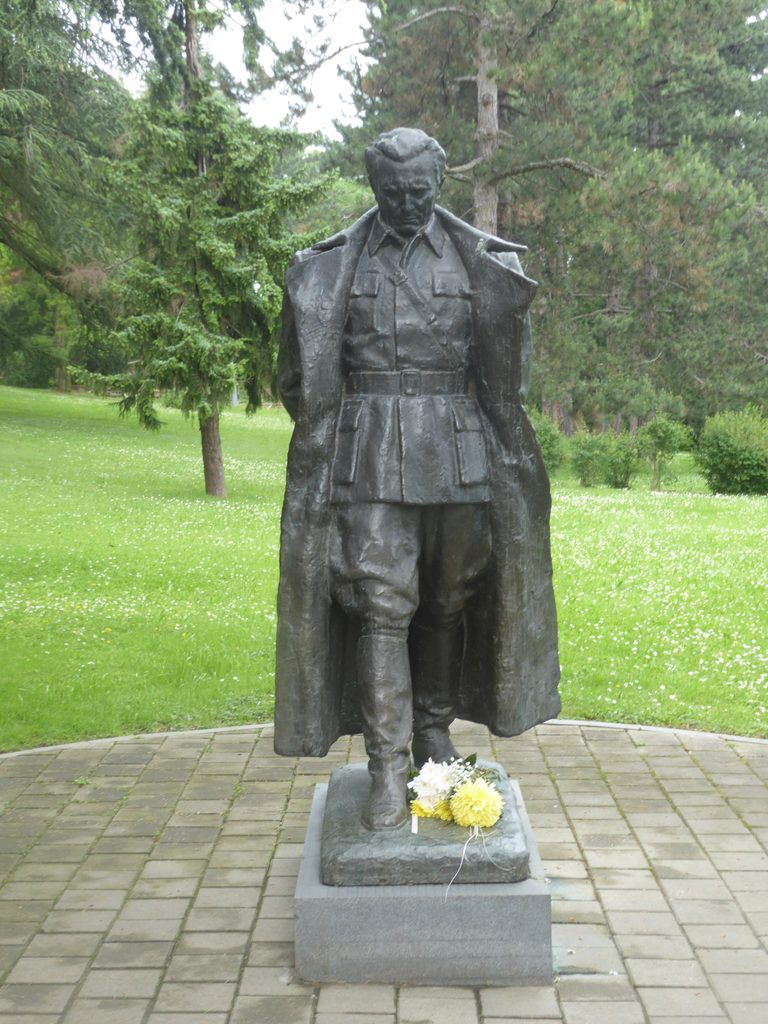
Josip Broz Tito -Brotherhood and Unity in Yugoslavia

Josip Broz Tito, Belgrade

In the mid-seventies I travelled twice on the Road of Brotherhood and Unity. Otherwise known as the Autoput, this was the inland route across Yugoslavia, stretching 734 miles along the backbone of the country from the Austrian border at Jesenice in Slovenia to the Greek border at Gevgelija in North Macedonia. Construction of the road, much of it carried out by volunteer youth brigades, had been initiated by Tito in 1947 to connect the republics of Slovenia, Croatia, Serbia and North Macedonia not just physically but also culturally, as a symbol of the unity of the different ethnic groups.

Despite being heavily used, the road remained a two-lane highway with no central reservation and was in poor condition. Much of the traffic was in a similar state. Alongside the lorries, ramshackle coaches and ancient cars carried young travellers on limited budgets from northern and western Europe to Greece and Turkey, and in the opposite direction ferried Turkish, Greek and Yugoslavian Gastarbeiter to West Germany.

The journey was long, and there were few facilities along the way. In summer it was hot, vehicles lacked air conditioning and mosquitoes feasted on exposed flesh. Unroadworthy vehicles broke down and blocked the highway. Eager to put the Autoput behind them drivers went without sleep or breaks for dangerously prolonged periods, and accidents were common. Carcasses of wrecked and burnt-out cars lay in the fields. Those cars which had decent acceleration raced past the others, overtaking using the opposite lane whenever an opportunity arose on the crowded road.

My first experience of the highway was in one of those recklessly accelerating cars, the second time I was on the Magic Bus, travelling from London to Athens. Like every passenger who made that journey I remember two drivers who performed an elaborately choreographed manoeuvre as they periodically changed places while the bus was still moving. The trip was meant to take three days, carrying our food with us and sleeping on the coach, but strikes and a fuel distribution issue left us stranded at a petrol station somewhere in Yugoslavia, sitting by the roadside for an additional half day. For the rest of the journey the drivers tried to make up the lost time.

Yet despite the sweat, the dirt and the discomfort, what I remember most is the camaraderie on the bus and the romance of the road as we journeyed through what still seemed a rather exotic country, the land where the Partisans defied fascism with their ideals of brotherhood and unity.

That road is easier to travel today: in 2019 a four-lane national motorway was completed. But it is no longer called the Road of Brotherhood and Unity, and it no longer crosses one united country. Instead, it is called the A2 in Slovenia, the A3 in Croatia, the A3 and the A1 in Serbia and the A1 in North Macedonia. Even more prosaically it goes by its European designations forming parts of the E62, E70 and E75, respectively. For Yugoslavia fell apart, collapsing into inter-ethnic wars in the 1990s.

Yugoslavia, the Kingdom of South Slavs, had emerged following the collapse of Austria-Hungary in World War I. The highly centralised state came under the control of the Serbian monarchy which enjoyed considerable leverage having supported the Allies in the war and on account of its military strength. The non-Serbian nations suffered two decades of marginalisation and discrimination.

When the Nazi Germany, assisted by Italy, Hungary and Bulgaria invaded and occupied Yugoslavia in 1941, the king and government fled. The Axis powers exploited warped nationalism to establish puppet governments, the fascist Ustase in Croatia and Bosnia and the royalist para-fascist Chetniks in Serbia.

But in that occupied, divide land something remarkable occurred. The Yugoslav Communist Party which had been outlawed since 1920, able only to operate an underground network, emerged from obscurity. A party with only 12,000 members in 1941 created the most formidable anti-fascist force in Europe: the Partisans. Committed to the liberation of Yugoslavia and the establishment of a communist state which treated all ethnic groups equally, the Partisans liberated their country virtually unaided by the Allies or Russia.

In marked contrast to the collaborators, they adopted the slogan Brotherhood and Unity. The partisan brigades included Serbs, Slovenes, Croats, Macedonians, Bosnians, and Kosovan Albanians; there were Orthodox and Roman Catholic Christians, Muslims, Jews and Atheists; there were men and women, for the partisan ideals also included women’s rights and gender equality. From their strategic heartlands in the mountainous regions of Bosnia-Herzegovina and Montenegro, spreading to Croatia and Slovenia, the multi-ethnic partisans fought the invaders and collaborators. The most effective resistance movement in occupied Europe, they forced a German retreat and took back power in Yugoslavia.

The same idealism informed the post war organisation of the country. Elections led to the victory of the Communist Party, the king was deposed, and a federal republic established. Brotherhood and Unity remained the guiding principle: poor nations were to have the same rights as middle-income ones; everyone was free to express their own culture but expected to be tolerant of others. A country previously susceptible to ultra nationalism was to be united around a common Yugoslav goal.

Moreover, Yugoslavia pursued a successful policy of Non-Alignment, exploiting east west antagonism to her own advantage. Economic reforms introduced a unique, decentralised form of market socialism, with worker self-management.

There was economic growth; the spread of literacy and education; health care improved. Women were encouraged to work; abortion and contraception were legal.

Yugoslav citizens could travel and work abroad. Foreigners could travel freely within the country, and from the 1960s they were not just passing through Yugoslavia on the Autoput but holidaying on the Adriatic coast and islands.

Yet in the last decade of the twentieth century Yugoslavia fractured and collapsed into violent and brutal wars.

Economic crises drove the breakup: inflation, unemployment and foreign debt pushed Yugoslavia into recession in the late 1980s. Strikes, and the uncovering of corruption followed. Resentment grew in the wealthier republics of Croatia and Slovenia whose populations felt they were paying too much into the federal budget to support the poorer territories.

The fall of Communism in eastern Europe and the Soviet Union meant that western powers no longer had a motive to help Yugoslavia with its debts. The IMF imposed austerity measures. And without support from the Communist bloc the power of the Yugoslav Communist Party to hold the federation together was weakened.

Against this background atavistic national, cultural and religious divisions re-emerged.

The reformed 1974 Constitution had given the republics more autonomy, reducing the power of central government where Serbia had continued to hold a dominant position. It was a dominance which some Serbs did not wish to surrender. When the constituent republics went further and sought to secede inter-ethnic wars resulted.

Slovenia voted for complete independence in 1990, followed by Croatia a year later. The Serb controlled Yugoslav People’s Army moved against them, supported in Croatia by the Serb minority there who had a legitimate fear of Tudjman’s openly anti-Serb nationalist government. The Croatians had an equally reasonable suspicion that desire for a Greater Serbia rather than a federal Yugoslavia dominated Milosevic’s thinking. The war lasted four years during which Serbs shelled civilian areas of Split and Dubrovnik, and their paramilitaries were responsible for the Vukovar hospital massacre.

In 1992 Bosnia-Herzegovina declared independence. The Serb response was to declare a separate Republic of Serb people, the Republica Srpska, within Bosnia-Herzegovina. From this base between 1992-95 Serbs under Radovan Karadzic conducted a campaign of ethnic cleansing, massacring and raping Muslim Bosniaks. They laid siege to Sarajevo, bombarding it for four years. At Srebrenica they murdered 8,000 men and boys, an act declared genocide by the International Court.

The Kosovan Albanians, who made up 77% of the population of Kosovo, had since the 1980s been demanding that the Serbian province of Kosovo should be a full constituent republic. As these demands increased in the 1990s, Milosevic responded with an aggressive Serbian nationalist agenda: there were growing restrictions on use of the Albanian language; Albanian media were silenced and schools were closed; and Albanians were dismissed from public office. When the newly formed Kosovan Liberation Army conducted acts of sabotage against the Serbian security forces retribution was brutal. Two thousand civilian and KLM combatants were killed and hundreds of thousands of civilians displaced between1998-99. A United Nations Supreme Court found that there had been a systematic campaign of terror including murder and rape conducted against the Albanian population.

Economic factors, the fall of Communism and the rise of nationalism ripped Yugoslavia apart and the subsequent wars left 140,000 dead, 130,000 casualties, 2.4 million refugees and an ugly record of war crimes, genocide, and ethnic cleansing. A long way from the Brotherhood and Unity ideals of the partisans, a long way from the carefree days when the Magic Bus bumped and trundled along the Brotherhood and Unity Highway.

And perhaps there was one more factor contributing to the collapse of Yugoslavia. For without subscribing to the great men theory of history, it is impossible to deny that Josip Broz Tito was a major unifying force in Yugoslavia and that ethnic tensions started to grow after his death in 1980.

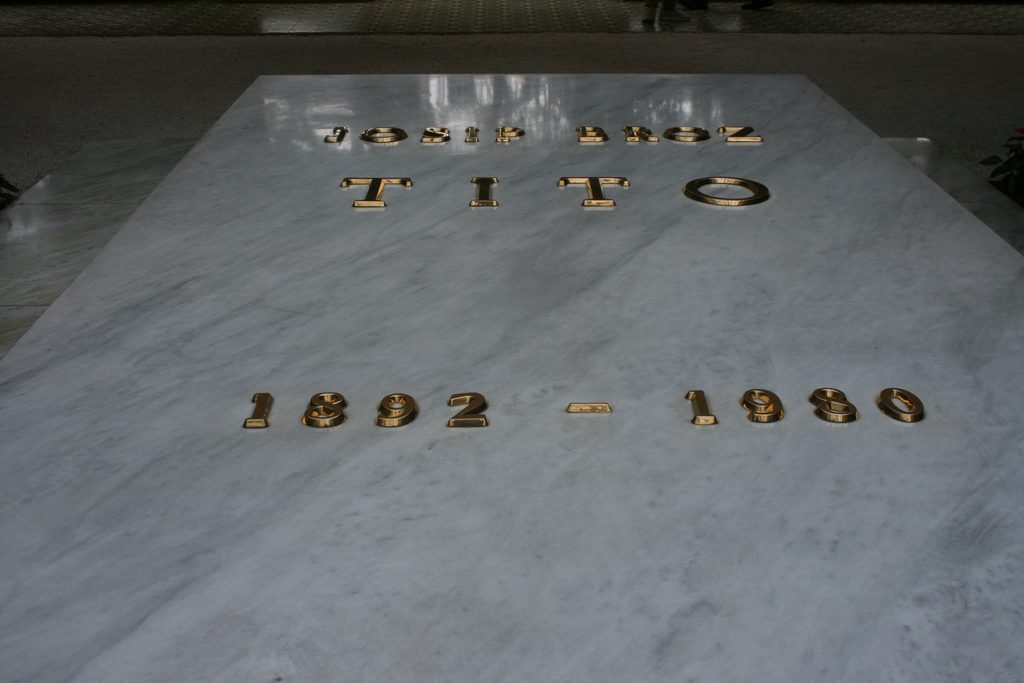
Tito was born in 1892 in present day Croatia, then part of the Austro-Hungarian Empire. As a young man he was active in the Metal Workers Union. In 1913 he was conscripted into the Austro-Hungarian army for compulsory military service. Captured by the Russians during World War I, he became a prisoner of war but escaped and after the October Revolution joined a Red Guard unit in Omsk. In 1920 he returned home and joined the Communist Party in the newly formed Yugoslavia.

After the CPY was declared illegal in 1921, he continued to work for the party, was arrested and lost his job. He became a professional revolutionary, writing and organising strikes, and as a result was imprisoned. In 1934 he was elected to the Politburo and became a full time official of the Comintern while continuing to organise strikes in the shipyards. After recruiting volunteers for the International Brigades in Spain in 1936, he became General Secretary of the CPY.

When the Axis powers invaded Yugoslavia, it was Tito who called on people to unite against the occupation. As Commander in Chief of the Yugoslav Partisans, he organised and directed them, and personally commanded brigades in Bosnia, Montenegro and Serbia.

After the war Tito served as Prime Minister (1943-63) and President of Yugoslavia (1953-1980). Despite Yugoslavia being a founder member of the Cominform Tito became the only leader during Stalin’s lifetime to defy Soviet hegemony leading to the Tito-Stalin split and Yugoslavia’s expulsion from the organisation in 1948. Assassination attempts organised by Stalin,

I will shake my little finger and there will be no more Tito,

all failed. Tito wrote to the Soviet leader,

Stalin. Stop sending assassins to murder me. We have already caught five, one with a bomb, another with a rifle… if this does not stop, I will send one man to Moscow and there will be no need to send another.

Tito was a founding member, and the first Secretary General in 1961, of the Non-Aligned Movement.In addition to establishing useful ties with developing countries, his policy enabled Yugoslavia to receive aid from America and, after Stalin’s death, from the Comecon as well.

Justifiably, the political, economic, and foreign policies of post war Yugoslavia– independence from Moscow, workers self-management, market socialism, foreign policy neutrality, federalism and unity – were collectively known as Titoism, and his death removed a powerful influence for overcoming divisions and holding the republics of Yugoslavia together.

Although the wars have ended, the revival of nationalism has rendered Tito a polarising figure across the countries which once made up Yugoslavia. The complex where he was buried was closed to the public during the wars. It has since reopened but it no longer has a twenty-four-hour guard of honour.

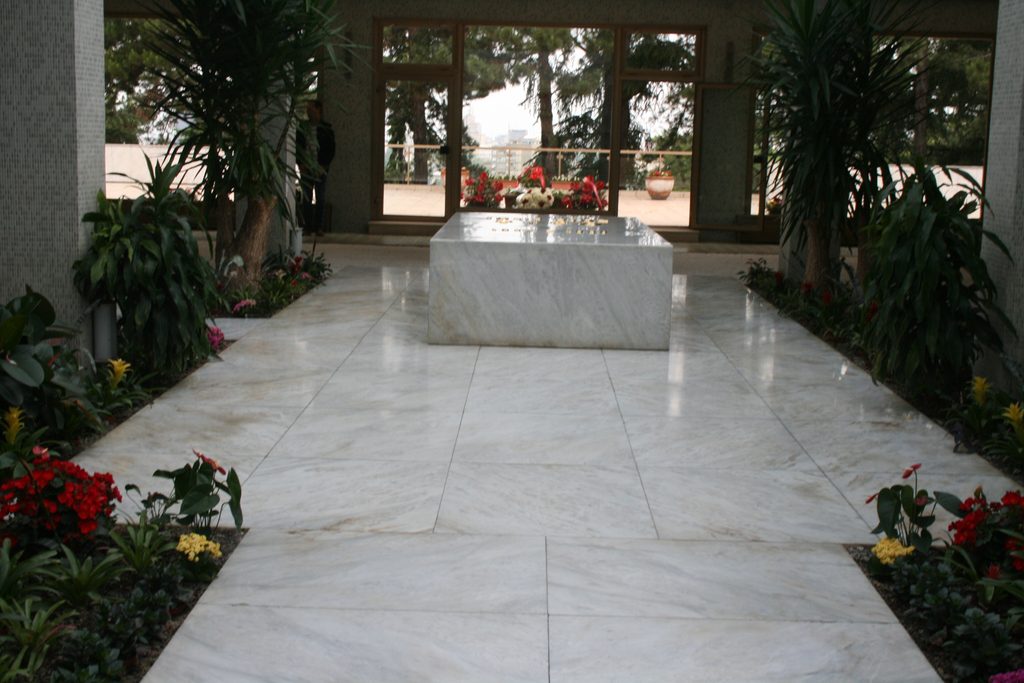
Tito was buried, as he wished, in the House of Flowers: a winter garden which he had built near his home in Belgrade, and where he had an office looking out over the city.

The river boat down the Danube docks in Belgrade, and while my fellow tourists headed for the fortress, Saint Sava, and the Tesla museum, I visited Tito.

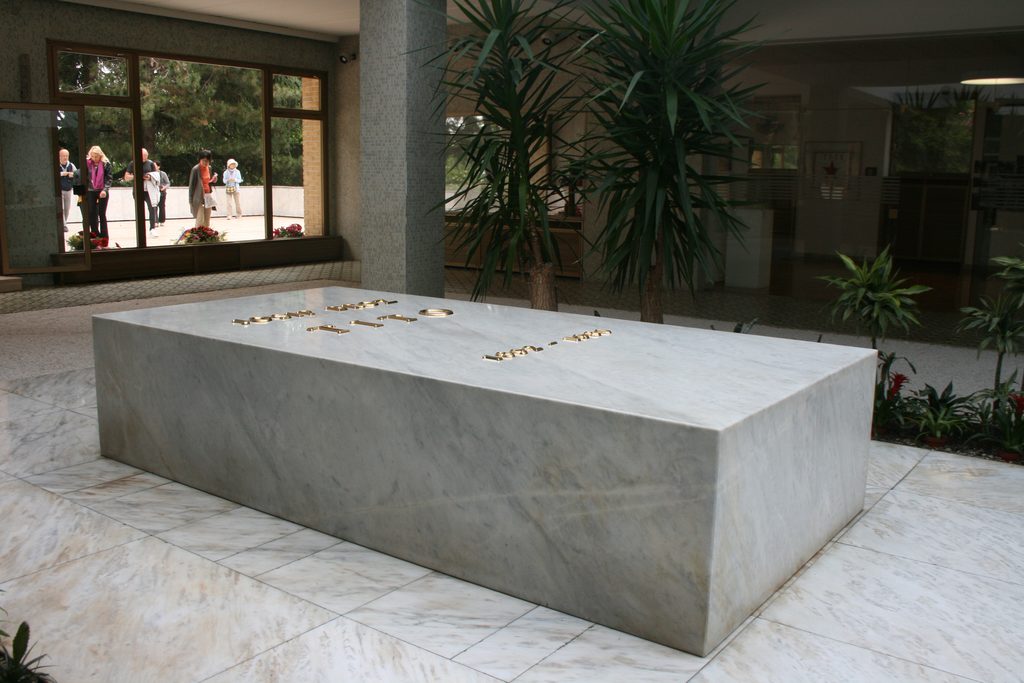
Tito’s tomb in the House of Flowers, Belgrade
Tito’s tomb
Josip Broz Tito, 1892-1980
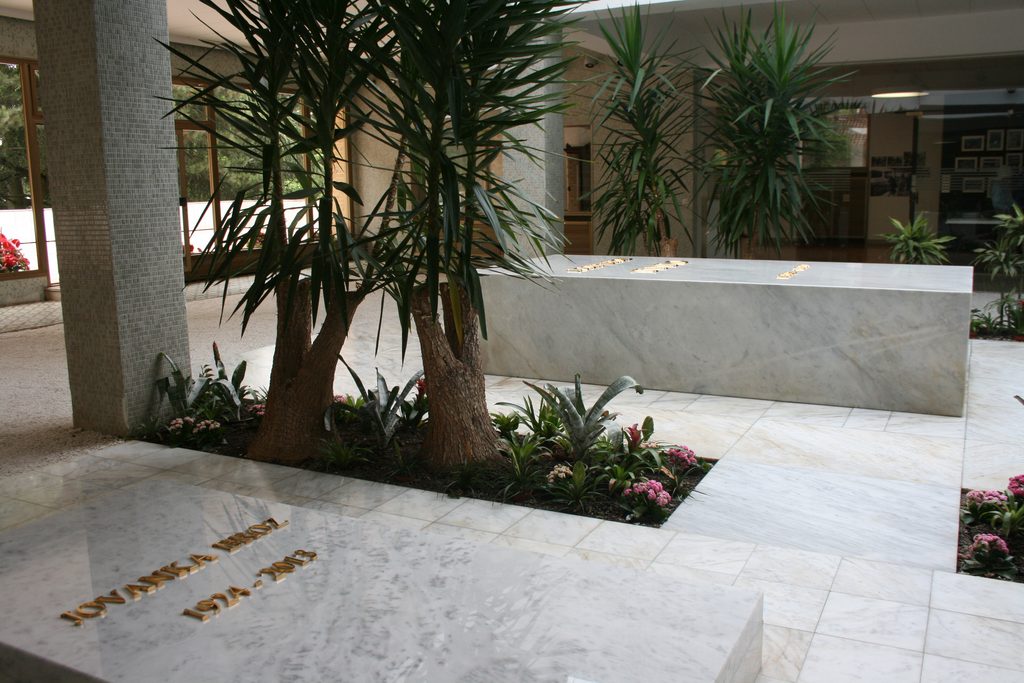
Tito’s third wife, Jovanka, lies in a smaller tomb alongside.

It was a sad visit, for it was not just Tito’s grave, but that of Yugoslavia and of all the fine hopes of the brave Partisans.

Powered by WordPress & Theme by Anders Norén