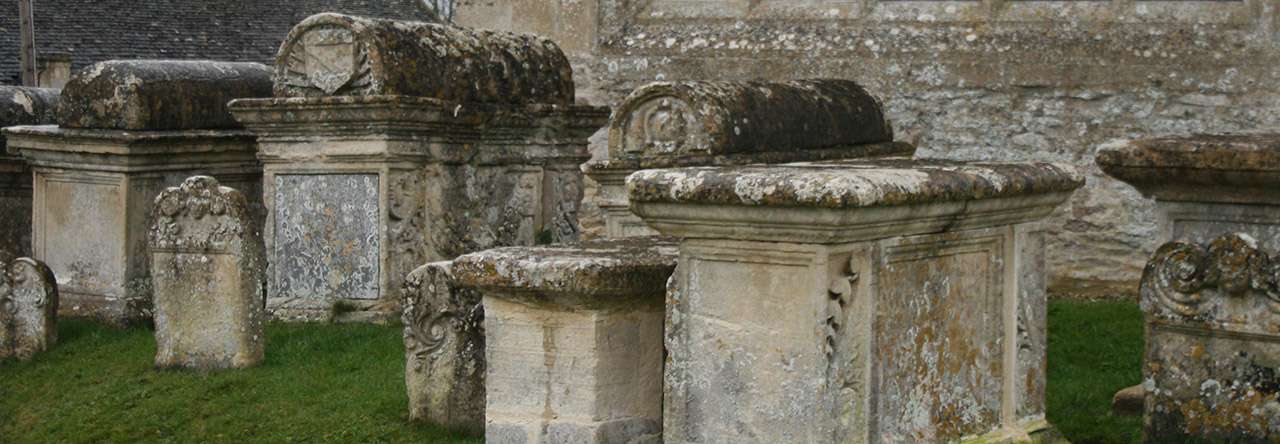
Come with me into the graveyard, all human life is here

Month: August 2026

Forever and ever my friend the wind

There was a Dutch lady, a Belgian lady and an English lady, all of a certain age. Their car moved swiftly along the narrow coastal road handling the bends with confidence. The scent of thyme arrived on the warm air through the open windows. Far below the iridescent sea shimmered turquoise caressing the shore, mutating into a deeper blue which saturated the pelagic expanse.

The heat was soporific, but their driver was alert and disinclined to silence: what music would they like? Demis Roussos suggested one of them, half joking. “Siri,” the driver doted on his voice activated stereo, “play Demis Roussos,” and the unmistakeable soaring high tenor gave them My Friend the Wind.

In a trice all three women were singing along, and, as far as the constraints of their seatbelts permitted, dancing in time to the music.

Siri, unfortunately, did not know any other songs by Demis Roussos but the women were happy with this one on repeat. Every day on the afternoon excursions following their Greek lessons, they put in the same request until their teacher forbade more than one rendition per day. Reader, they sulked.

What was the attraction? Well, it was the music of their youth, and particularly of their early summer holidays in the Mediterranean.

Born in Alexandria in 1946, Demis Russos had returned to Greece with his parents ten years later when they lost their property following the Suez crisis. In 1967, along with Loukas Sideras and Silver Koulouris, he joined Vangelis to form Aphrodite’s Child, a progressive rock and psychedelic pop band. When the military junta came to power in Greece, rock and “foreign” music were discouraged, and the band moved to Paris. Touring Europe they achieved cult status particularly with their final album, 666, which came out in 1972.

But by then they had disbanded and both Vangelis and Roussos had embarked on solo careers. In 1971 Roussos enjoyed his first big solo success in the Netherlands and Belgium with We Shall Dance. His popularity spread rapidly throughout Europe: Forever and Ever was a hit in Germany, Norway and Austria in 1973, and in 1975-6 he entered the British charts. He knew why:

The reason for my big success in England was that the Brits. had started wanting to go on holidays to Greece and Spain. My music came out on time. It was romantic Mediterranean music addressed to those people.

Ouch, were we being patronised? Almost certainly. For this music, unlike Roussos’ early output with Aphrodite’s Child, was undeniably kitsch: a sentimental, middle of the road, commercial sound, calculatingly tailored to the western European market.

And we knew it. In 1977 Mike Leigh’s Abigail’s Party appeared to massive acclaim, first at the Hampstead theatre and then as the BBC’s Play for Today on television. It satirised a society infested with materialism and sexism. But its most scathing strictures were reserved for the meretricious taste endemic in 70s suburbia, whether it was in clothes, furniture, art, food, or music.

Dennis Potter hated the play, finding it cruel and snobbish:

A prolonged jeer, twitching with genuine hatred about the dreadful suburban tastes of the dreadful lower middle classes.

Leigh denied contempt, defending his play as a tragicomedy, a lamentation over the insecurities and vulnerabilitie of his characters, rather than a sneer.

Whatever the truth the play has proved enduringly popular, and everyone remembers Beverley showing off Stephen Pearson’s Wings of Love, while forcing “little cheesy pineapple ones on cocktail sticks” onto her guests. But above all Demis Roussos’ Forever and Ever is forever and ever associated with a tipsy Beverley attempting to seduce a squirming Tony.*

Roussos ceased to be so successful in Britain as his association with package holiday pop began to miscarry. Not that he needed the British market: he continued to tour and release new material in Europe, Latin-America, the Middle East and Japan. Throughout the 1980s and 90s he remained popular in France, Belgium and the Netherlands.

And in Greece? Memory tells me that his romantic Mediterranean sound was enjoyed there too in the seventies, even while Greeks were quick to point out that this was not real Greek music, and to draw attention to the authentically Greek sounds of entechno, laiko, and rebetiko, lauding Theodorakis, Zabetas and Bithikotsis.  

As for the ladies in the car, they espouse Noel Coward’s dictum:

Extraordinary how potent cheap music is.

Moreover, they know that context is all and those songs carry them back to when they were younger, fitter, and could dance all night without even “a little cheesy pineapple one on a cocktail stick” to sustain them.

Demis Roussos died in Athens in 2015 and is buried in the First Cemetery.

Demis Roussos, First Cemetery, Athens

*Mention the song to any British person who remembers the seventies and they will recall Abigail’s Party. Mention the play and they will start singing Forever and Ever. Ironically, it was not Demis Roussos but Jose Feliciano whose music featured in the original stage version. The BBC substituted an artist recorded on a British label to avoid breach copyright if they sold the televised version to the US. But since then, no one has ever performed the play without the assistance of Demis Roussos.

Peccavi: Charles James Napier and Catherine Winkworth

Trafalgar Square: the home of Nelson’s column, Landseer’s lions, Lutyens’s fountains, and, when the British begin to feel that Really Things Have Gone a Bit Too Far, a stage for political demonstrations. The National Gallery provides the backdrop. There are also four plinths which formerly aroused little interest, indeed prior to the millennium one of them had stood empty since money for statues ran out in 1841. In 1999 the Royal Society of Artists inaugurated the Fourth Plinth Project and since then a new artwork has appeared on the plinth every two years.

Here are my three favourites:

In 2010 Yinka Shonibare presented us with his Ship in a Bottle, a replica of Nelson’s flagship HMS Victory, its sails decorated with African patterns.

When Ship in a Bottle completed its two year tenure in Trafalgar Square it moved to a permanent home outside the Greenwich museum.

Hans Haacke’s Gift Horse, a skeletal, riderless bronze horse, based on an etching by Stubbs found in the National Gallery, appeared in 2015. An electronic ribbon linked by tickertape machine to the London Stock Exchange was tied to its front leg.

Haake’s horse, focusing on the links between power, money, and history.

The Invisible Enemy Should not Exist, created in 2018 by Michael Rakowitz, recalled 7,000 objects looted from the Iraq museum or destroyed at archaeological sites across the country by ISIS. It is dominated by the Lamassu, which stood at the Nergal gate entrance to Ninevah. The reconstruction was made from 10,500 recycled date syrup cans, mirroring the recycled cannon used for the reliefs at the base of Nelson’s column.

The Lamassu
The Lamassu is a deity with a human head, the body of a bull or lion, and the wings of an eagle.
Overlapping date syrup containers; the syrup was a major export from Iraq before the war.

Last time I visited the Square, I inspected the other three plinths. They bear undistinguished statues of George IV, Major-General Henry Havelock and Charles James Napier respectively. But the latter reminded me of a more dramatic, albeit equally ugly, image of Napier which lies outside the garrison church in Portsmouth where he was buried.

Stretched out on his back, an uncomfortable looking Napier clutches his sword.The plinth bears the names of the battles in which he participated.
Napier was buried inside the church which was extensively damaged by bombing during World War II.
Garrison church, Portsmouth

As a young man Charles James Napier (1782-1853) took up a commission in the British army. He fought in the Peninsula War (1808-14) and the War of 1812 against the United States. From 1822-30 he was military resident in Cephalonia. Between 1839-41, as the chief of troops in the north of England, he was responsible for the violent suppression of the Chartist demonstrations.

When he was appointed Commander-in-Chief of the army of the East India Company Napier seized the opportunity for self-aggrandisement and military glory. The East India Company already had direct or indirect control over much of the Indian subcontinent.  In the Sindh province however the Amirs of the Talpur dynasty still held nominal control although the passage of “friendship” treaties had left them paying tribute to the British, providing a base for their troops and military hardware, and supplying them with auxiliary forces.

By 1842 the British were seeking to expand their influence in the area developing trade routes along the Indus river and securing their defences against Russian attack through Afghanistan. The Talpurs opposed this, and there was increasing hostility towards the East India Company, but the disaffected Amirs were divided and lacked a professional army.

Napier shifted British policy from a combination of diplomacy and bullying, to outright aggression. He pushed the Amirs into open conflict by imposing a new treaty forcing them to cede territory and by marching on and destroying the desert fortress of Imamgarh.

On the grounds their alleged disloyalty, Napier then received orders that the “rebel” forces of the Amirs should be put down. He had easy victories at the battles of Meanee and Hyderabad. But Napier went further, exceeding his mandate to suppress the rebels, and in a ruthless and unauthorised campaign he subjugated Sindh, conquering the whole province. He knew that his action was neither legal nor moral,

We have no right to seize Sindh. Yet we shall do it,

but used the habitual spurious and hypocritical justification for colonial expansion,

and a very advantageous, humane and useful piece of rascality it shall be.

Advantageous and useful it undoubtedly was for the East India Company and for Napier himself. The military conquest of Sindh paved the way for further annexations of the Punjab, and Napier became the first Governor-General of Sindh.

Even in Britain however Napier’s conduct was controversial: he faced criticism for his barbaric action, quest for personal glory and for exceeding his authority. Nonetheless he received a knighthood and later there was widespread public mourning and a military tribute at his funeral.

Moreover generations of Latin teachers in British schools delighted in elucidating Napier’s putative wit in a telegram which he allegedly sent home informing his superiors of his conquest. “Peccavi,” it read.

There was no telegraph in the Subcontinent until the 1850s.

But in Manchester in 1843 there was a sixteen-year-old schoolgirl called Catherine Winkworth. She coined the pun, substituting “I have sinned” for “I have Sindh” in the supposed dispatch to highlight the immorality of Napier’s assault on the territory. Amused, and in sympathy with her view, her teacher suggested that she forward her witticism to Punch magazine, where it was erroneously credited to Napier.

Catherine Winkworth (1827-1878) studied under the Unitarian William Gaskell. As a young woman she belonged to the circle of Manchester Liberals whose commitment to a more equal society led to their support for free trade, the repeal of the Corn Laws, pacifism, a free press, the separation of church and state, and opposition to slavery.

In adulthood she was known for her translations of German hymns and her support for higher education for women.  After moving to Bristol, she became a founder and governor of girls’ schools including Cheltenham Ladies’ College, Red Maids’ School, and Clifton High School for Girls.

She died suddenly of heart disease while in Savoy, but there is a monument to her memory in Bristol Cathedral.

This pious memorial is devoid of puns. A suitable epitaph for a middleaged German hymn translator perhaps, but giving no hint of the smart,witty, radical young girl from Manchester.What a pity.

Powered by WordPress & Theme by Anders Norén