A cold, wet January morning was not the best time to enter Llandrindod Wells. The town looked tired: the streets mean and unwelcoming; shops closed or empty of customers; a few wan pedestrians moving sluggishly, inadequately protected against the relentless rain.
It had not always been like this, for Llandrindod Wells has mineral springs, and the advent of the railways in the 1860s led to an economic boom as wealthy visitors arrived with their servants from South Wales, the Midlands and the Northwest of England. From May to mid-October, they drank the chalybeate waters.
Hotels and boarding houses, shops, theatres, parks, gardens and boating lakes opened to serve them. Rock Park, a woodland area traversed by paths, waterfalls and bridges fell steeply to the river where the Victorian spa buildings, bath house and pump room, were located. Here the orchestra played while the patrons sipped tea to take away the taste of their sulphur and saline elixirs.
It all ended with the First World War when refugees and wounded soldiers were billeted on the hotels. By the 1920s and 1930s the fashion had swung away from spas and instead holiday makers sought seaside guesthouses and lodgings. The final blow came with the closure of the Mid-Wales railway line in the 1960s. The lights went out, the musicians packed up their instruments, the grand hotels closed or were converted into flats and offices.
Yet there are always hidden gems in what may at first look an unprepossessing environment, and I have a partiality for small run-down towns nestled in a time warp. So as my umbrella directed its runoff down the back of my neck, I made a perambulation of the town in the footsteps of those early spa visitors. And there is a worthy array of Victorian and Edwardian architecture, all balconies, brickwork, and bay windows. Moreover, even when the town had passed its heyday two magnificent art deco garages, Pritchards and the Automobile Palace, had opened to service the new motorcars, even though the latter were only passing through.
I was less enamoured with Rock Park; I have never shared the Romantics maudlin enthusiasm for gloomy woods, and the forsaken spa buildings looked pitiful.
So quickly back to the town centre and the Metropole Hotel, opened in 1872 as Coleman’s, and famed for receiving an unwelcome guest in the form of a lioness in 1889 when Wombwell’s Menagerie was exhibiting on the lawns opposite. In 1911 Elizabeth Miller bought up the cutlery, china, and carpets from the defunct Metropole Hotel in Cromer; since all the items bore an “M” monogram she renamed her hotel to match them. The hotel survived requisitioning in both world wars, replaced its stables with garages, boasted an outdoor pool in the 1930s, and through the decades exercised a protean capacity to reinvent itself and survive where others failed.
Today its income is bolstered by the conference and wedding trade. And, as I discovered when I settled into its “sun lounge,” a conservatory-like structure running the length of its façade, it is an extremely popular spot with the ladies of the town for morning coffee. It is an accommodating place where the friendly staff are pleased rather than otherwise if you explore the public rooms and staircases admiring the older fixtures and fittings.
Posters advertised forthcoming “Dinner-Dances.” I have never been to a dinner-dance; I thought they had vanished in my childhood. They sound at once quaint and glamorous. Having a “date” – another phenomenon which I assumed had disappeared half a century ago until it reappeared in the rebarbative, coy expression “date-night” – is obviously a prerequisite. If you can rustle one up, I recommend that you head for the Metropole at the next opportunity.
But in the absence of date, dinner and dance, I sought the object of my visit to Llandrindod Wells, the National Cycle Museum. You do not have to be a cycling aficionado to love this museum. It has a wonderful collection of vintage cycles: from an 1818 hobby horse, through a selection of transitionals and velocipedes, a wooden tricycle, penny farthings, a sociable, tandems, shop bikes, police bikes, and ice cream carts. Sleek modern racing bikes and carbon fibre models compete for attention with trophies and badges recalling past races and cycling clubs. Old photographs trace changing fashions in cycling apparel.
But I was in quest of one particular artefact: the gravestone of Maurice Selbach.
Selbach had no connections at all with Llandrindod Wells. His origins were more exotic. He was born in Paris in 1889 to an American engineer father of German descent and a Polish Countess mother, Marguerite Kossakowska. They moved to London during his childhood.
Selbach was a successful amateur cyclist, specialising in long distance time trials. He broke records for Lands’ End to London and for London to Bath and back, and for the 100-mile tandem trial. He turned professional in 1922 after cycling in the Anerley 12 Event* on a day when he was meant to be at work. His boss was competing in the same race, and as Selbach overtook him an angry shout advised him that he was sacked.
Riding for the French Louvet team in the Paris-Roubaix race in 1923, Selbach was the first rider to represent Britain in a major continental road race.
After his success in the six-day cycle race at Olympia the same year his fellow American Gordon Selfridge set up a display in one of his shop windows with Selbach’s bike surrounded by stars and stripes and union jacks.
In 1924 when Selbach retired after fourteen years as a competitor, he opened a business in south London, designing and producing bicycles to the highest standards. Selbach bikes were distinguished by their advanced level of technological innovation. Cycling buffs speak in hallowed tones of his use of tapered tubing and roller bearings in quality frame building, and of the Selbach crownlite alloy bolt-on calliper brake. They recall his design of the first curved seat tube for a tandem. In short, in the 1920s and 1930s, a Selbach was the nonpareil of lightweight bikes.
Selbach was also a fan of American cars: he owned several and used his Buick to deliver his bicycles to London customers. But he continued to cycle to work, and one morning in 1935 as he tried to overtake a truck, his front wheel caught in a tramline. Selbach crashed into the truck and fell under its wheels; he died on the way to hospital.
A delightful grave-marker, in Streatham cemetery in south London, bore his portrait, a sculpted bicycle leaning against a milestone, a finger-post, and the words
He died as he lived, a cyclist.
But in the 1990s there were plans to clear the cemetery for commercial development. Two local cycling enthusiasts, reluctant to see the memorial disappear, acquired the stone and persuaded the National Cycle Museum to transport it to Llandrindod Wells. And there it is today, surrounded by bikes, including two manufactured by Selbach himself.


Next year, on 4 July 2027, the Tour de France Grand Depart Stage 3 will pass through Llandrindod Wells. Selbach will be there to cheer the riders on.
_____________________________________________
*For fascinating detail on the history of the Anerley Bicycle Club, one of the oldest in the country, and the Anerley 12 Event see anerleybc.org/history-1881
The National Cycle Museum, run by lovely volunteers, and located in the former Automobile Palace is well worth a visit.
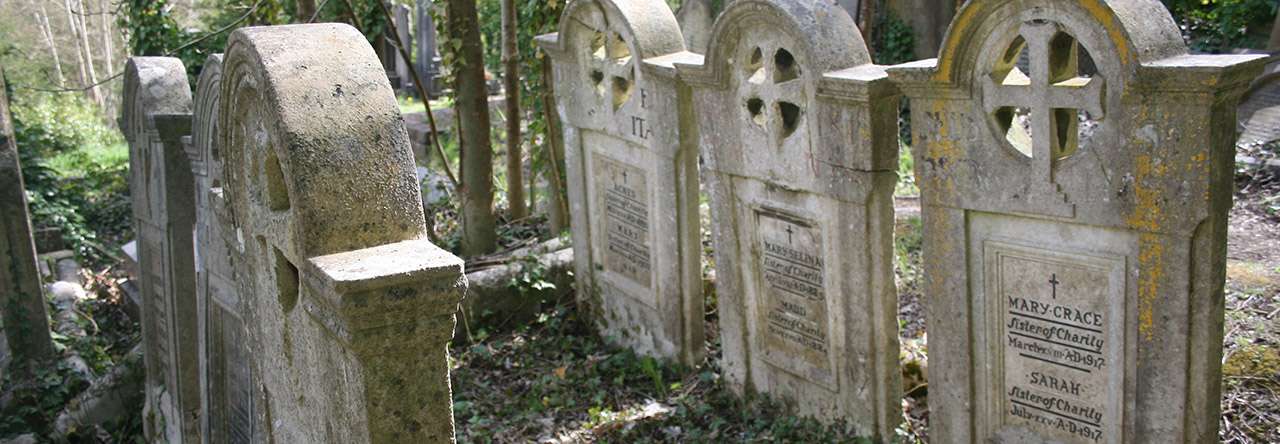
Happily,Streatham cemetery had a reprieve, as there are other interesting people there…