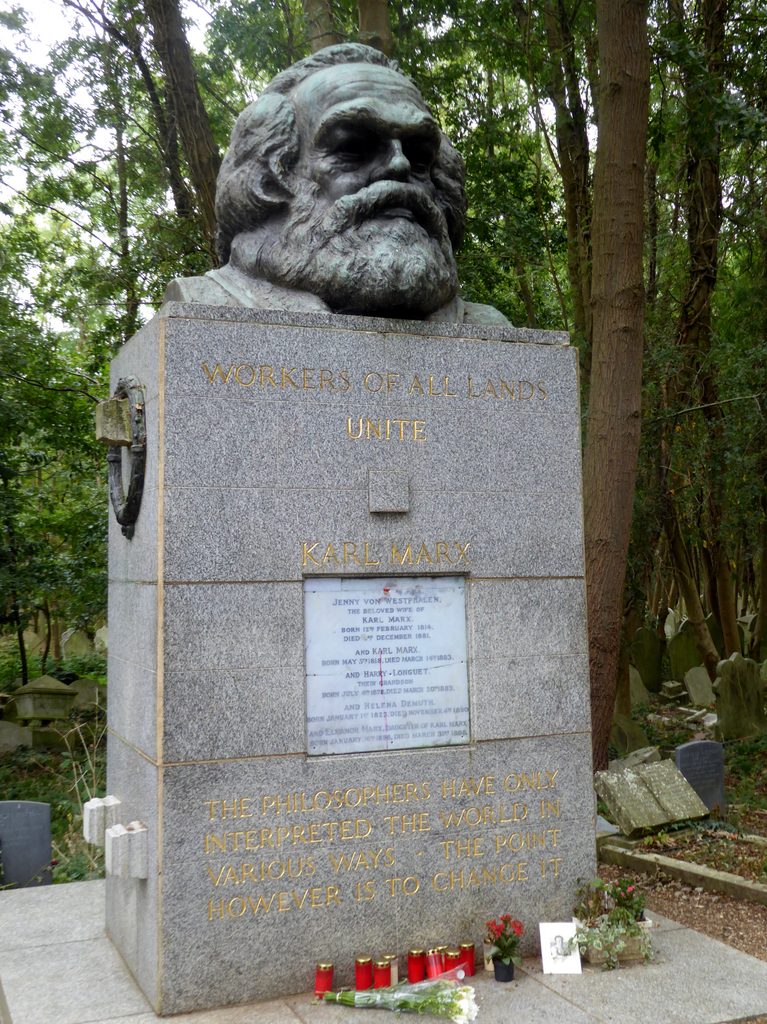
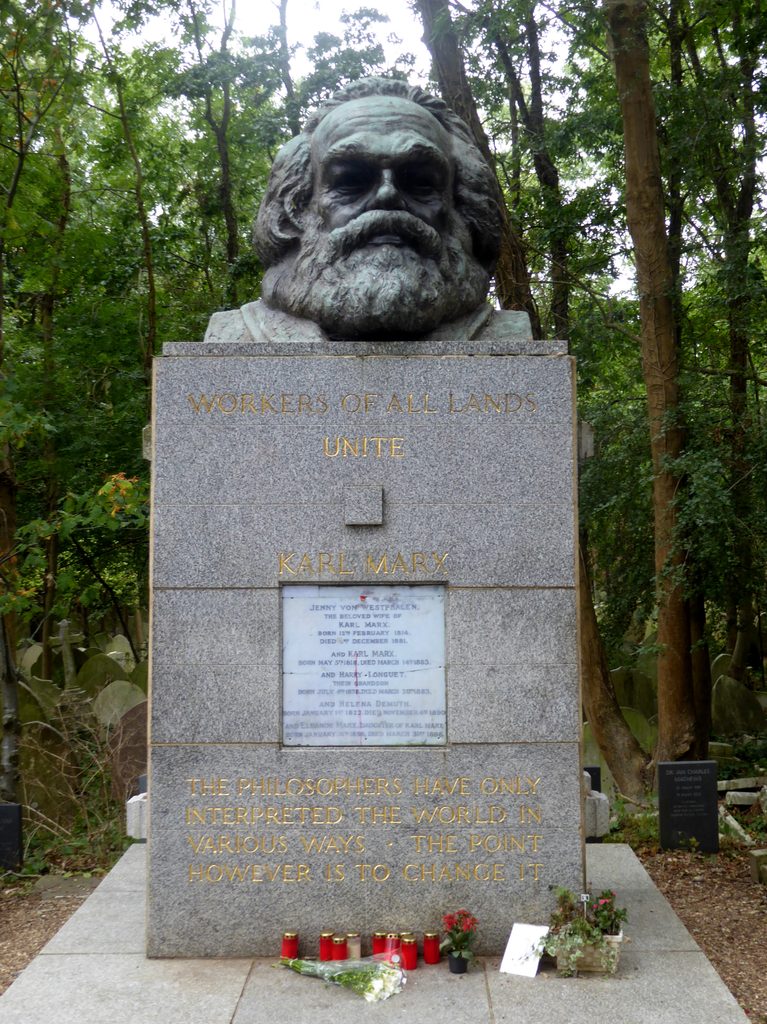
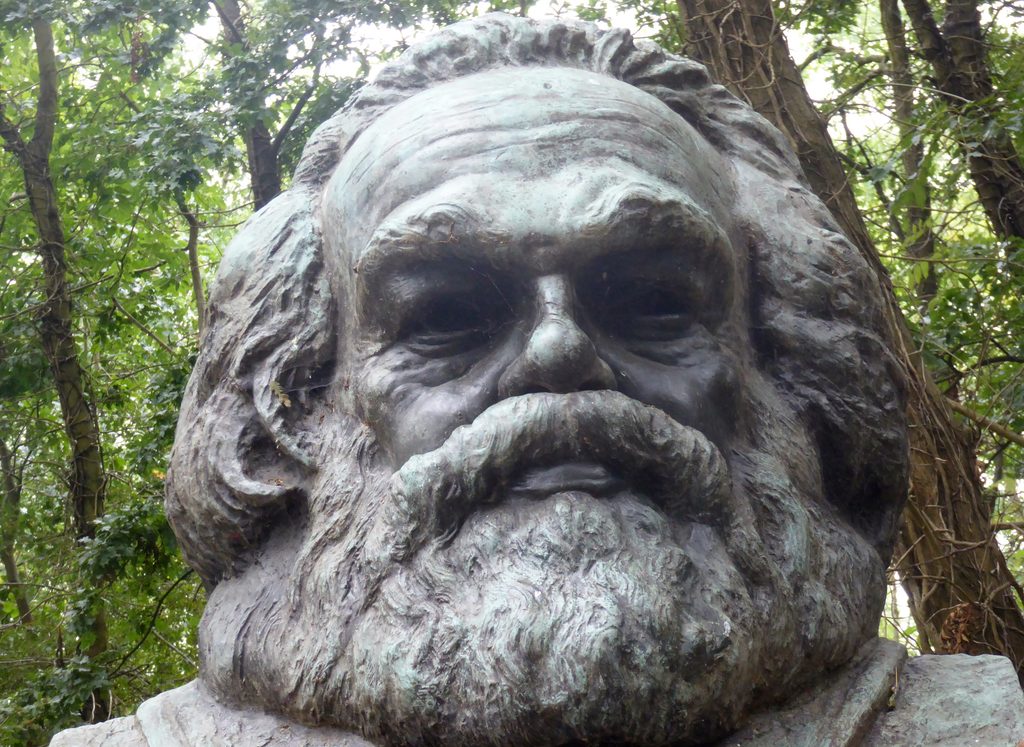
It is the most famous and the most visited grave marker in Highgate, and probably the largest. The massive bronze bust of Karl Marx sits on a ten-foot marble plinth bearing the final words of the Communist Manifesto picked out in gold lettering:
WORKERS OF ALL LANDS UNITE
Beneath, an inset panel bears the names of the grave’s inhabitants: Jenny von Westphalen, Karl Marx, Harry Languet, Helena Demuth and Eleanor Marx.
Then, again in gold letters, comes a quotation from Marx’s Theses on Feuerbach:
THE PHILOSOPHERS HAVE ONLY
INTERPRETED THE WORLD IN
VARIOUS WAYS. THE POINT
HOWEVER, IS TO CHANGE IT.
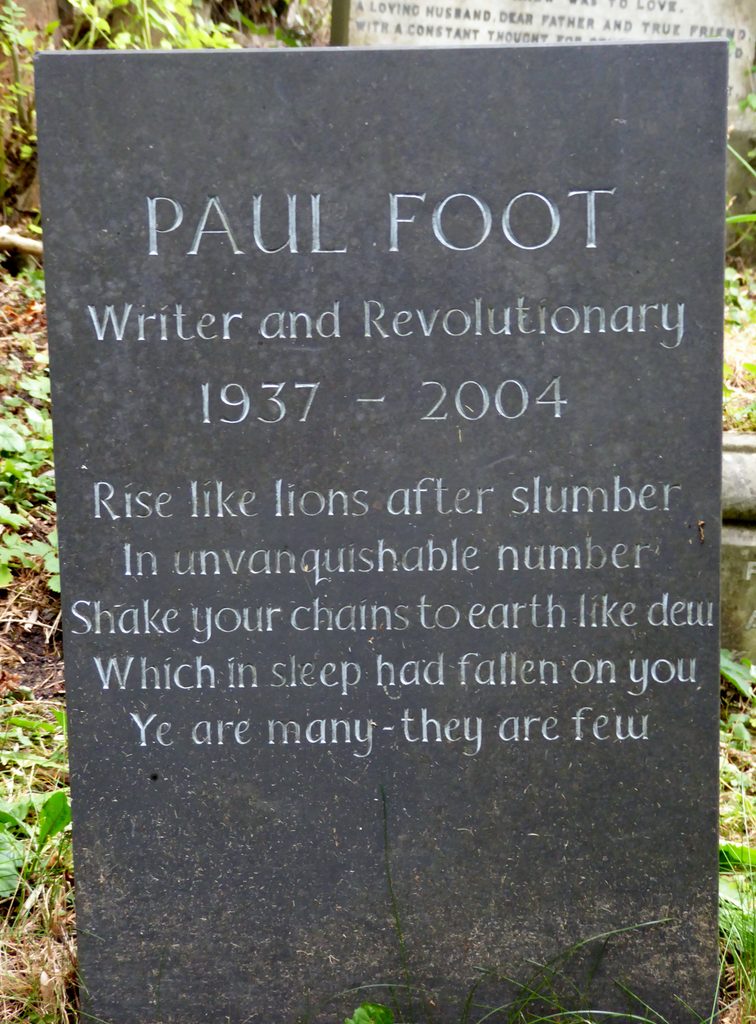
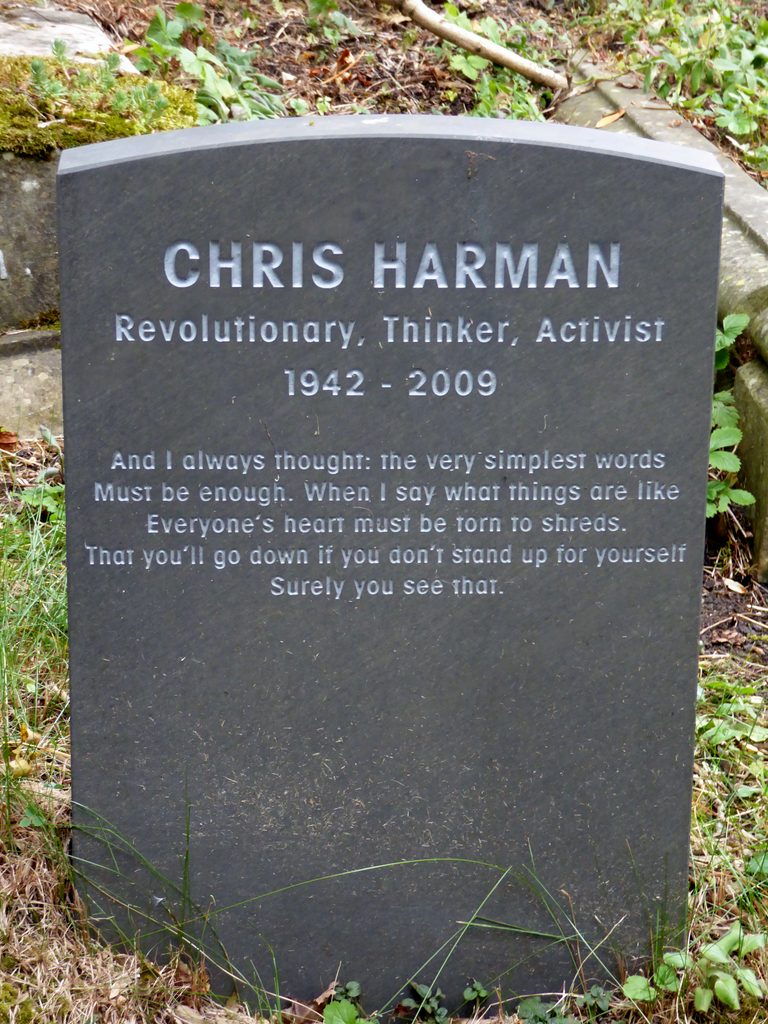
It is not only living pilgrims who are drawn to the grave; the headstones of dead socialists nudge each other as they cluster around Marx. Here are Mansour Hekmat, Iranian Marxist who opposed first the Shah and later the Islamic Republic of Iran; Saad Saadi Ali, Iraqi Communist; Paul Foot, investigative journalist, political campaigner, member of the Socialist Workers Party; his comrade Chris Harman, journalist, political activist, member of the Central Committee of the SWP, editor of International Socialism and the Socialist Worker; Yusuf Dadoo, South African Communist and anti-apartheid activist; Claudia Jones, communist, feminist, and anti-racist activist, instrumental in founding the Notting Hill Carnival; Ralph Miliband, academic Marxist and prominent member of the New Left who, while he was a student at the LSE, made a commitment to Communism at the grave of Marx; Eric Hobsbawn, Marxist historian; Koque Martinez, one of the ninos vascos who came as a refugee to Britain after the bombing of Guernica and throughout his life advocated Spanish Republican ideals. What passionate debates must unfold when the last visitor departs and the cemetery gates are locked for the night.
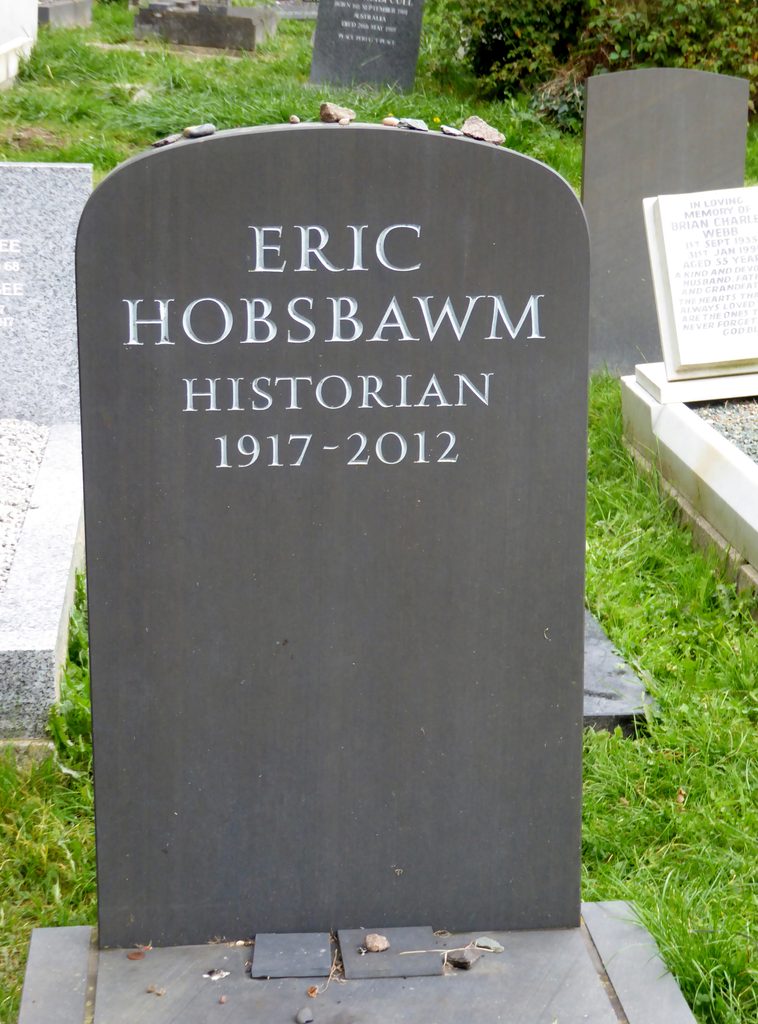
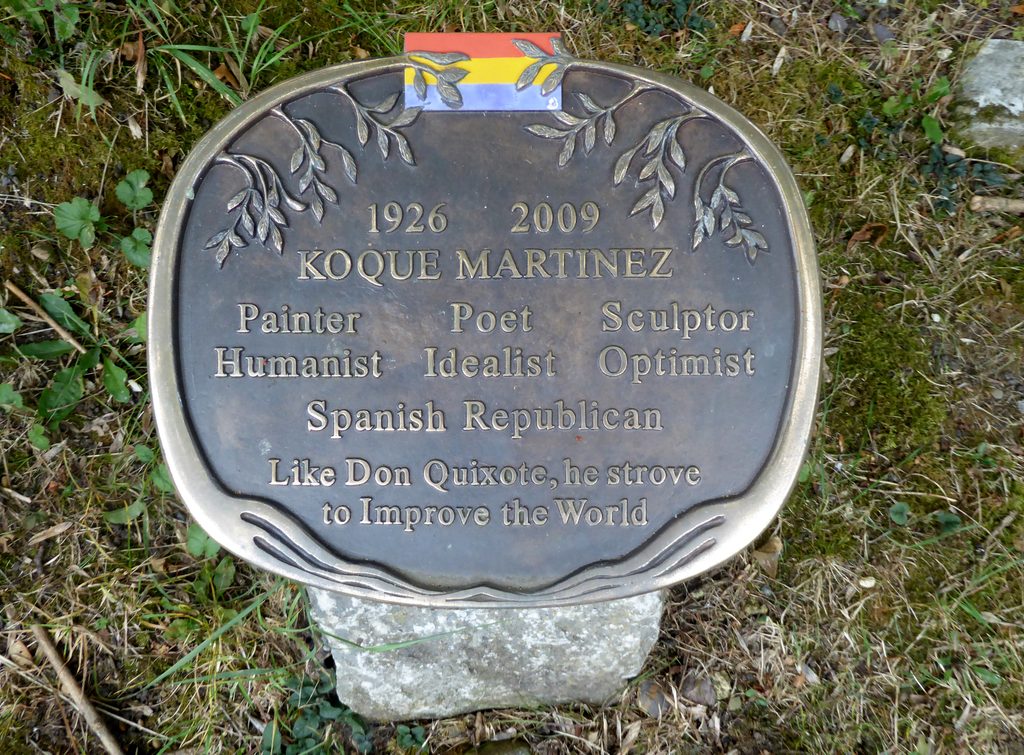
The man around whom they congregate had come to London as a political exile in 1849 after his radical journalism had led to his expulsion from Prussia and France in 1845, and his involvement with the European revolutions of 1848 had precipitated his banishment from Belgium.
Marx’s literary output had always been prolific; alongside the journalism he had produced The Economic and Philosophic Manuscripts of 1844, The German Ideology and Theses on Feuerbach in 1845, The Poverty of Philosophy in 1847, and, co-authored with Engels, The Communist Manifesto in 1848.
Now in the Reading Room of the British Museum, day after day he toiled at his lifelong project, the three-volume Das Kapital. Dauntingly these three volumes were originally intended to be only the first one of six volumes. His exhaustive research resulted in a work which is often turgid, tortuous and obscure. It is a difficult and rather joyless read. It was the more so when its contents had to be moulded to meet an essay deadline; with Emma Goldman, I had often wanted to shout,
If I can’t dance, I don’t want to be part of your Revolution.
Yet, in the years after his death Marx’s work revolutionised the study of philosophy, political science, economics, sociology and history. The works of Gramsci, Adorno, Marcuse, Althusser and Fanon are rooted in those of Marx. And beyond academia his ideas have had unrivalled influence on modern world history, informing workers movements of the late nineteenth and the twentieth century, providing the inspiration for political parties, and the framework for national liberation movements in Africa, Latin America and Asia. Rosa Luxemburg, Lenin, Trotsky, Castro, Che, Ho Chi Minh, Tito, Nkrumah, Allende all drew on Marxist concepts and values.
Marx adapted and synthesised the philosophy of German Hegelianism, the French Utopian Socialism of Rousseau and Proudhon, and the British Political Economy of Adam Smith and Ricardo. He combined Hegel’s dialectic with the materialism of Feuerbach, rejecting Utopian Socialism in favour of Scientific Socialism.In place of a dialectic based on ideas he posited one driven by material factors.
Labour, he reasoned, had become a commodity to be bought and sold. While not denying that a capitalist would expect to make a profit, he reasoned that workers were being exploited, paid only a subsistence wage, while the value of the goods they produced far exceeded this. This surplus value, essentially the product of unpaid labour, led to excess profit, capital accumulation and wealth on the one hand, and to misery and alienation on the other. The presence of a reserve army of labour, created by the introduction of labour-saving machinery, increased the downward pressure on wages. In giving up their labour, the workers had given up their ability to transform the world.
False consciousness, which presented the interests of the capitalist class as universal and inevitable values, exacerbated the plight of the workers. Religion provided an ideology which legitimised the power of the dominant class and gave divine sanction to inequality. It was, Marx inferred, an opiate which might alleviate the workers’ pain, but which would never offer a cure.
The remedy lay in the defeat of Capitalism with the proletariat as the agency of change. In his theory of Historical Materialism, Marx reasoned that the economic infrastructure determines the nature of society and that history progresses through the resolution of economic contradictions and class conflicts. The opening words of the Communist Manifesto, an infinitely more accessible volume, co-authored with Engels in 1848, encapsulated his contention,
The history of all hitherto existing societies is the history of class struggles.
Just as feudalism had replaced slavery, and Capitalism had replaced feudalism, so, once class consciousness replaced false consciousness, the international working class would unite in the final revolution to overthrow Capitalism. A transitional dictatorship of the proletariat would be succeeded by Communism. A classless, communist society, without private property, would signal the end of prehistory, exploitation and ideological conflict.
When Marx died in 1883 only a dozen people, including family members, attended his funeral and he was not buried beneath that famous grave marker. He was interred in a more modest grave in a less prominent location. There he joined his wife, Jenny von Westphalen, in a grave which Engels had paid for when she died. Later his grandson, housekeeper and daughter Eleanor were buried with them.
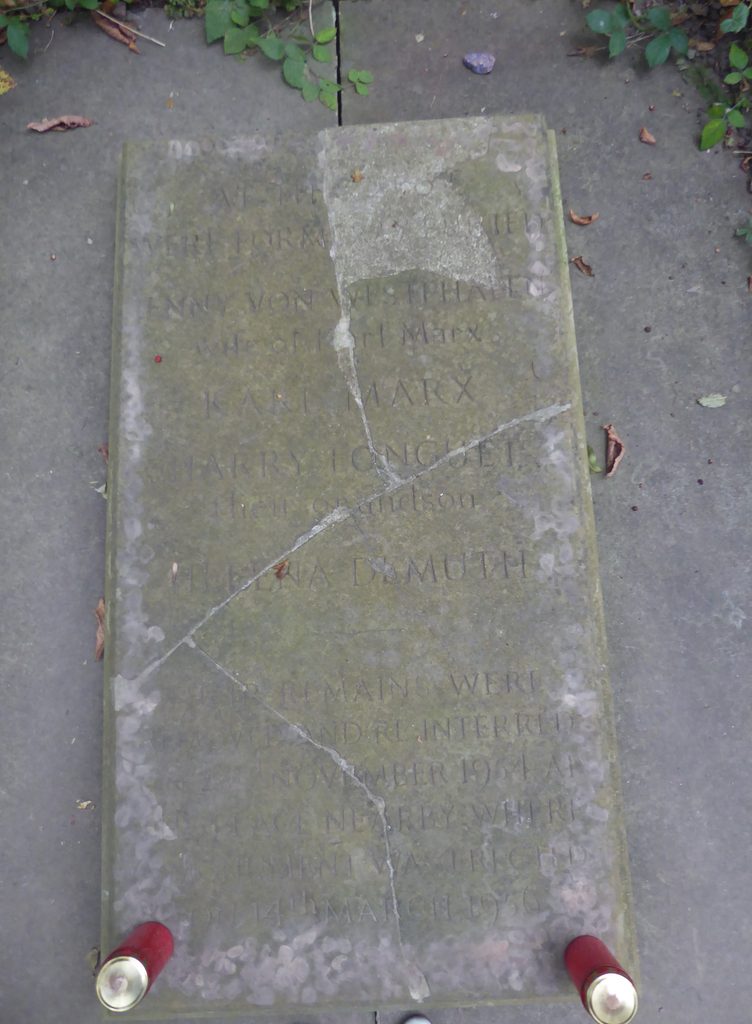
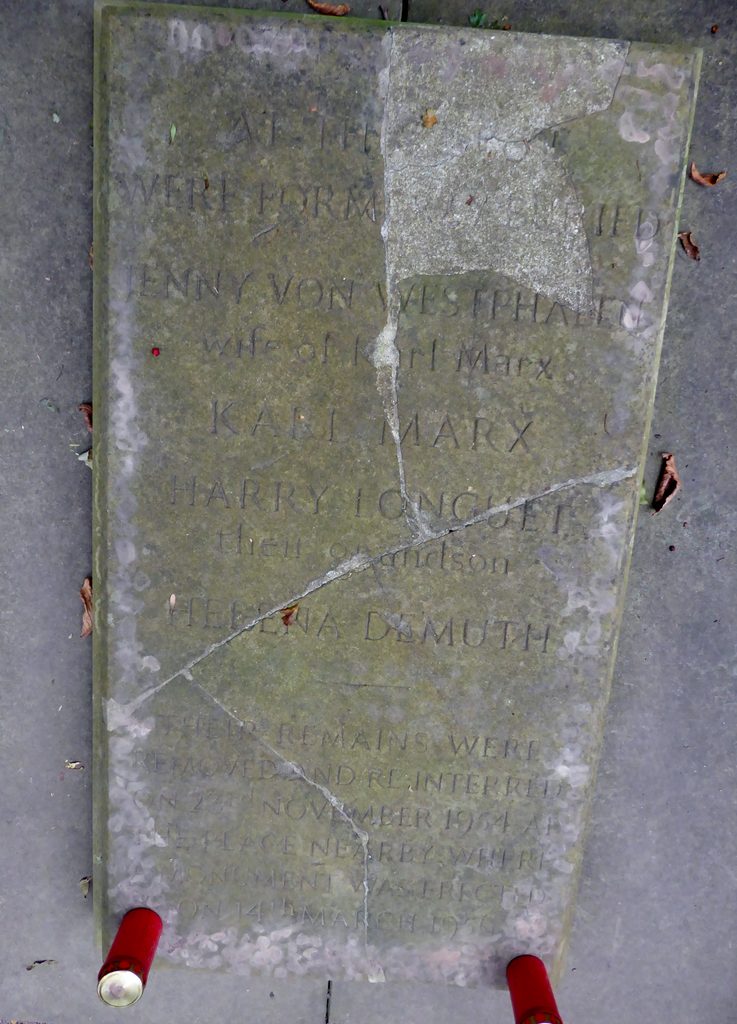
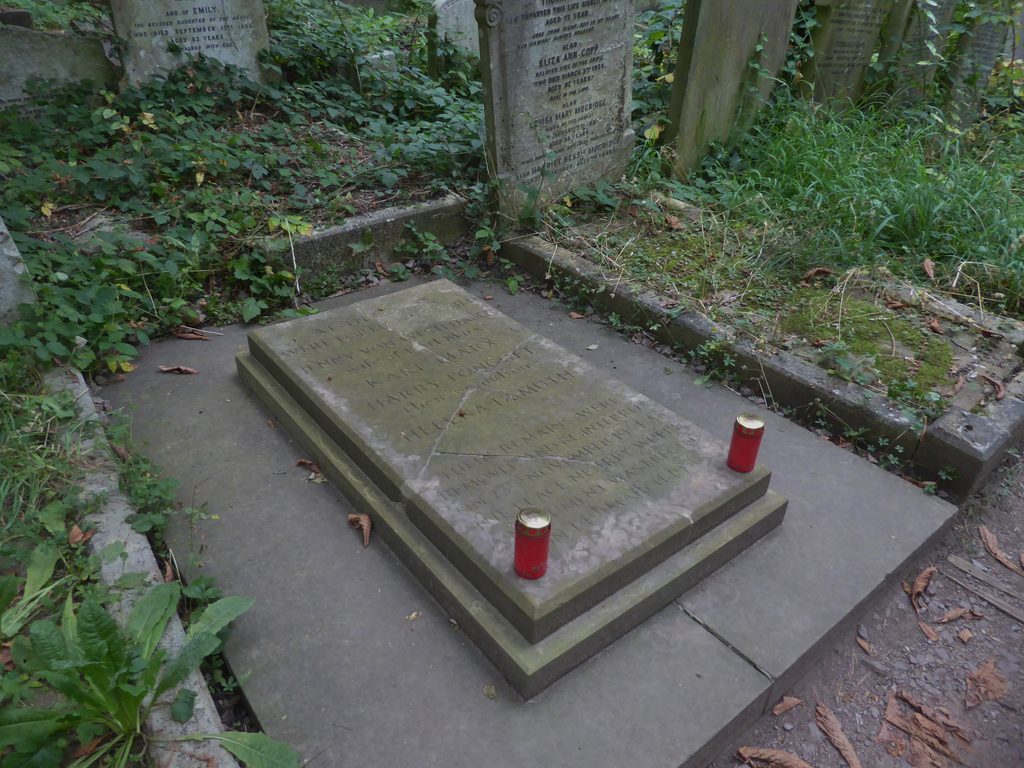
It was only in 1954 that the Marx Memorial Committee, established by the Communist Party of Great Britain, applied for the exhumation and reburial of the bodies and funded the monument designed by the socialist sculptor Laurence Bradshaw. A Guardian report of the unveiling noted bleakly that although Harry Pollitt, General Secretary of the Communist Party of Great Britain, led the ceremony all but two of the wreaths of roses and carnations “were of foreign extraction.”
Marxism has never flourished on British soil. Notwithstanding all that labour in the British Museum, both the acolytes who surround Marx and his living visitors are preponderantly “of foreign extraction.”