Before there was Amazon, there was the Royal Welsh Warehouse, and before there was Jeff Bezos, there was the more bardically named Pryce Pryce-Jones.
Born at Newtown in Powys, when Pryce Pryce-Jones (1834-1920) was twelve years old he was apprenticed to a local draper. Ten years later he took over the business.
In 1840 the penny post had been introduced in the United Kingdom, a cheap, uniform delivery system. Pryce-Jones took advantage of this to send out fabric swatches and price lists to rural customers who could then place orders by mail. But it was the arrival of the railway in Newtown in 1859, facilitating a next day delivery of goods by cheap parcel post throughout the country, which enabled Pryce-Jones to expand his business beyond recognition.
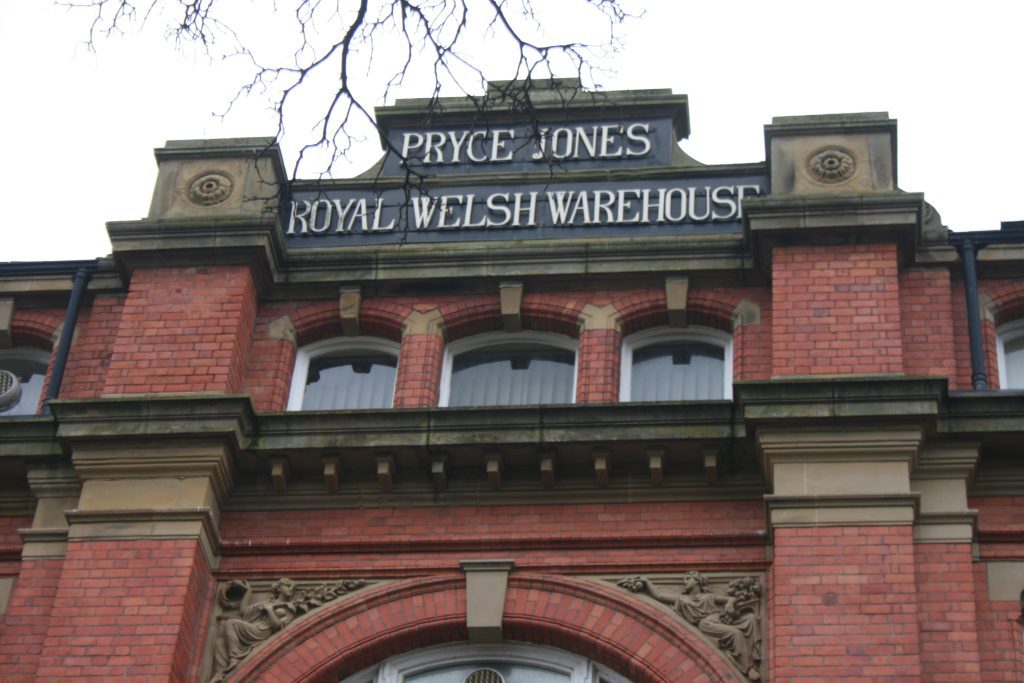
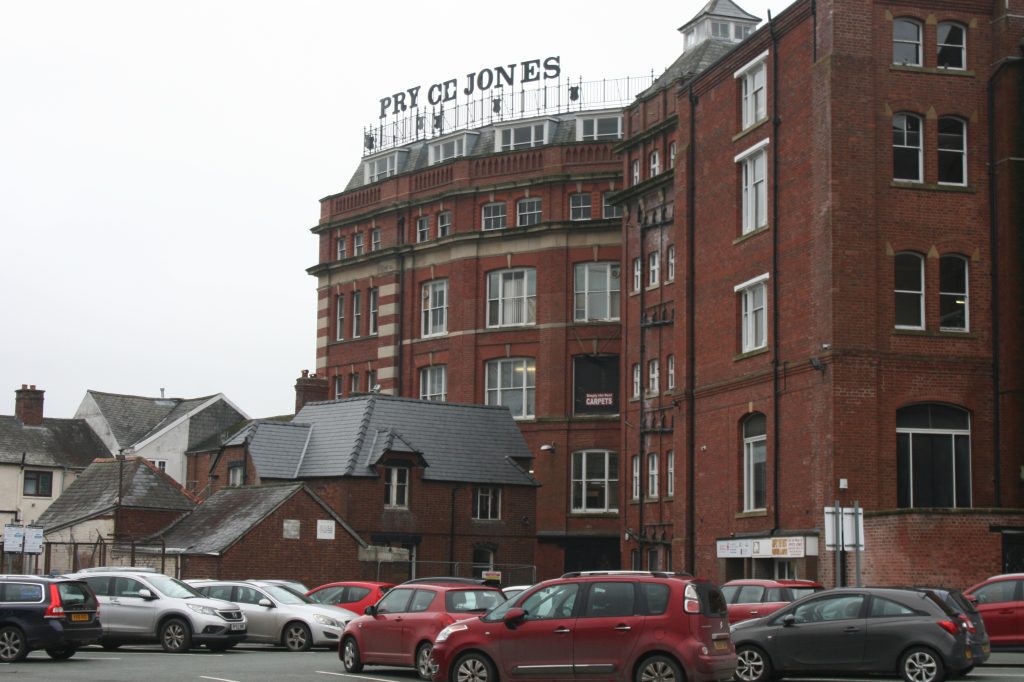
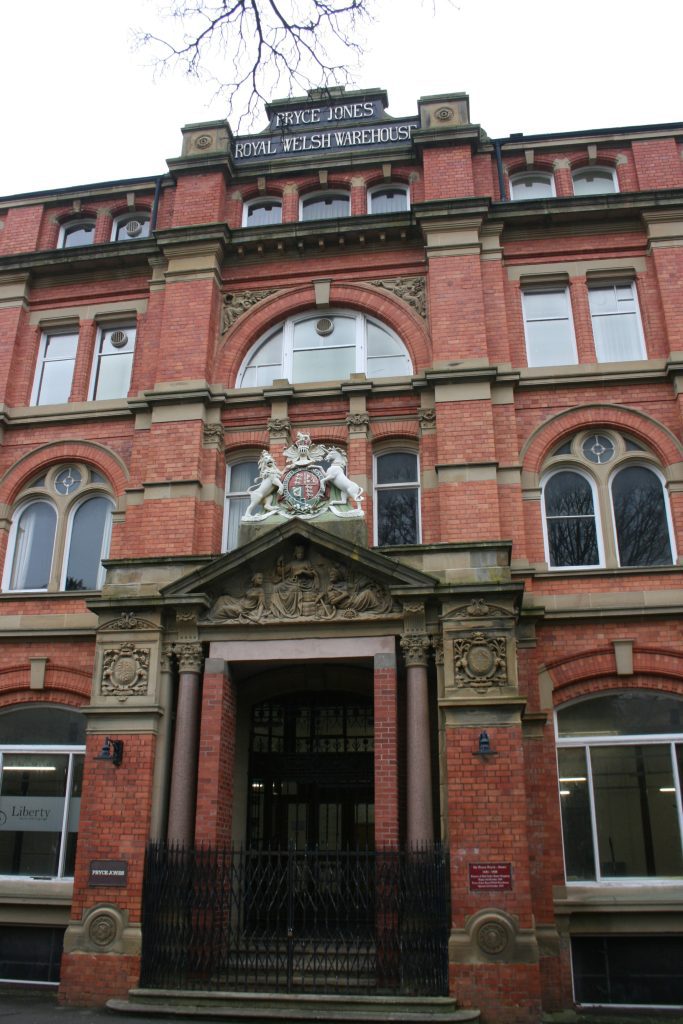
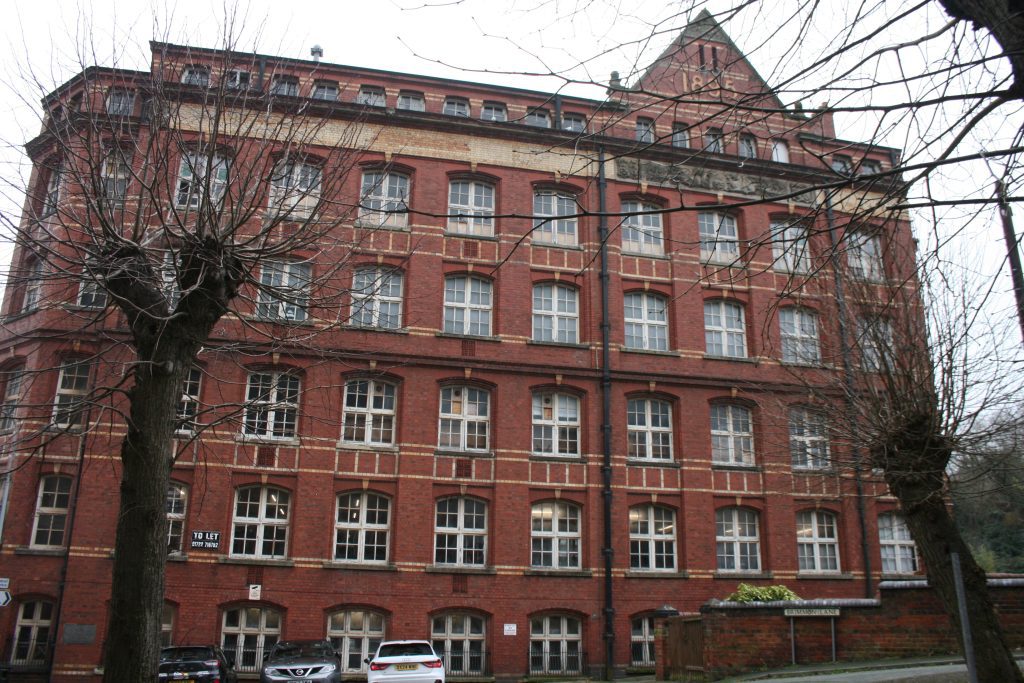
In 1861 he brought out the first mail order catalogue in the world, and in 1879 established the Royal Welsh Warehouse adjacent to the railway station. And what a warehouse: a massive structure of red brick, joined in 1895 by a second six-storey building linked to it by a bridge, and by a further extension in 1904.
The business expanded with the railways. In its heyday it employed 4,000 workers. The warehouse had its own printing press, its own post office and its own railway siding. Pryce Jones was the first person in Wales to install a telephone in his home, keeping him in constant contact with his business.
He supplied all the goods which you would find in any department store, but at the heart of his empire was flannel made from Welsh wool. At exhibitions in Europe, America and Australia he won gold medals and built-up a customer base of 200,000. He supplied the royal houses of Austria, Denmark, Germany, Italy and Russia.
In 1876 he patented the world’s first sleeping bag and immediately secured a contract to supply the Russian army with 60,000 of his “Euklisia rugs.”
At home, his customers included Florence Nightingale and Queen Victoria, the latter so enamoured with her Welsh flannel bloomers that she gave him a knighthood.
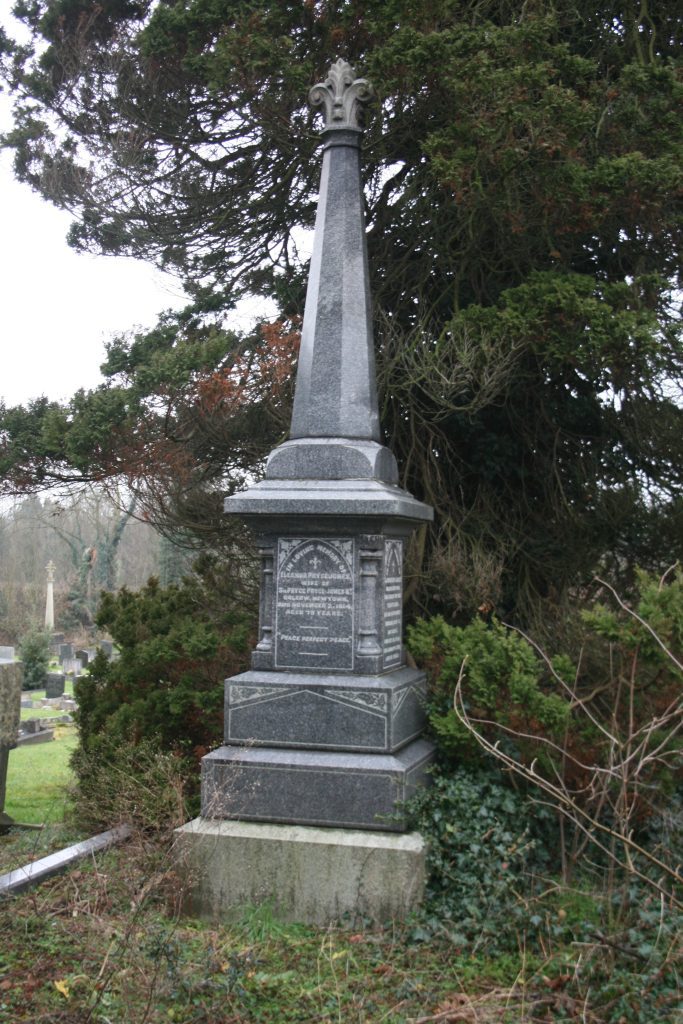
When Pryce-Jones died he was buried in the cemetery of Saint Llwchaiarn’s church, Llanllwchaiarn, on the edge of Newtown.
Granite obelisk, the family grave of Pryce-Jones
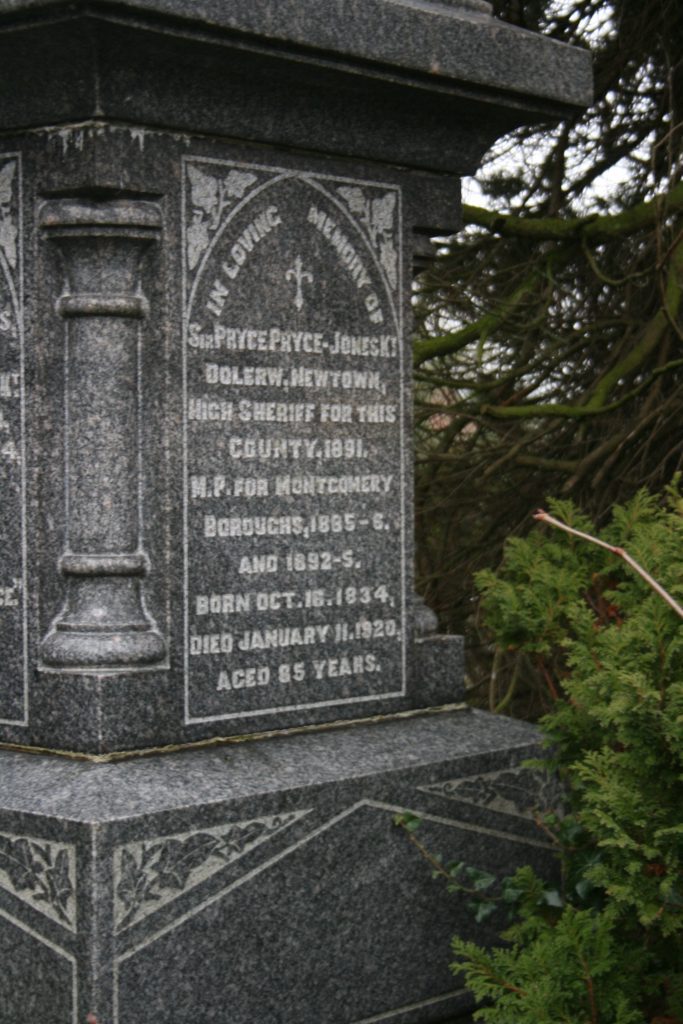
The epitaph records Pryce-Jones tenure as High Sheriff and as M.P. but makes no mention of his long, and far more remarkable, career in trade.
Pryce-Jones’ sons took over the business, but it faltered in the depression years of the 1930s when it was taken over by the department store Lewis’s of Liverpool. Then in the 1960s the Beeching cuts reduced Newtown’s railway, once the hub of the mid-Wales railways, to just one through route running from Shrewsbury to Aberystwyth. The goods yard disappeared, and the volume of trade conducted by the once mighty warehouse declined.
Lewis’s in turn closed its doors in 2010, ironically the victim of the growth of online shopping. The warehouses had a brief half-life as a multi-let commercial enterprise until they were sold at auction in 2025 and now stand empty.
They still dominate the town, the Pryce-Jones name picked out in large letters reminiscent of the Hollywood sign, but today, like Ozymandias’ transient empire, “nothing beside remains.”
Royal Welsh Warehouse, 1904 extension.
Royal Welsh Warehouse, detail of the original 1879 building
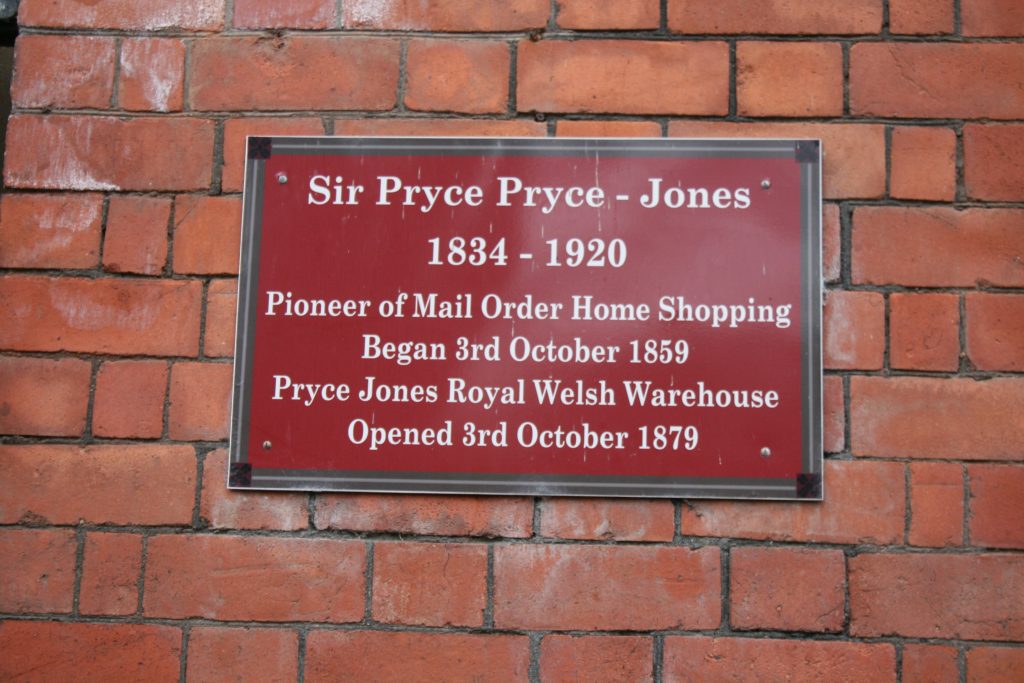
Plaque on 1879 building
Royal Welsh Warehouse, the 1895 building; the bridge between the two older warehouses no longer exists
In my childhood, in the 1950s and 1960s, WH Smith was an essential presence on every high street. It supplied some of my favourite items: books, comics, stationery. And in Chester the shop itself had a romantic allure. Housed in a black and white, half timbered, mock Tudor building, it advertised its presence only with a swinging sign suspended from ornate iron brackets and discreet lettering above the entrance.
Foregate Street, Chester, in the 1950s, WH Smith is housed in the black and white building on the right hand side
Old poster advertising the shop
The lettering, designed by Eric Gill in 1903, was common to all branches of WH Smith at the time, and the hanging sign featured at many branches. Designed by Septimus E Scott in 1905 these signs were usually made of enamelled steel and featured a newsboy brandishing a newspaper with a tray of books and papers in a basket. Some branches had “boy lanterns” where the image was on glass illuminated from within.
Swinging sign designed by Septimus E Scott
“Boy lanterns” were illuminated from within
In Chester newspapers, magazines and comics occupied the front of the shop, an enticing display spread across a huge counter, the smell of warm printers’ ink hanging in the air above, competing with a chilly blast coming in from the street, for during working hours the shop front stood completely open, and it is winter in my memory.
Deeper inside the shop behind swing doors was the cosy stationery department: a wellspring of fountain pens, Quink ink, pencils graded from 9B through HB to 9H, crayons, pencil sharpeners and rubbers, rulers and protractors, pencil cases, and notebooks. Basildon Bond writing paper and envelopes jostled for space with the more exotic airmail stationery, tissue thin with blue and red borders, and the severe brown envelopes favoured by businesses.
But the greatest delight lay at the top of the broad, creaking L-shaped stair whose dark timbers clung to the panelled walls and whose banister gleamed with polish. For this led to a room where leaded lights in mullioned frames punctuated the panelling, and shelves and tables overflowed with books. Here hardcovers held sway, and it required several months pocket money or a birthday windfall to effect a purchase from the generously stocked children’s section. But I could browse for hours undisturbed, benefitting from the dappled light which discouraged older eyes.
The truth is that though nicely bound and with attractive dust jackets the quality of the literature was not always high; librarians and teachers would have disapproved of the complete set of Enid Blyton’s Mallory Towers stories which I coveted. But from its beginnings WHSmith had catered without pretension for popular taste alongside respectable literature.
Henry Walden Smith and his wife Anna had established a newsvendors shop in London just before their son was born in 1792. Anna’s husband died when their son was only a few weeks old, but she continued the business and the son, William Henry (1792-1865) duly took over, renaming the shop WH Smith.
William Henry expanded the business and began sending London newspapers to rural towns by mail coach. He invented Smith’s Peculiar Slipknot which enabled packers to draw the string around the newspaper parcels as tightly as if it had been done by machinery. Every morning at 5am he would be outside his shop in the Strand, in his shirt sleeves, sorting and tying, priding himself on being the quickest packer.
Sometimes there was a delay in the publication of newspapers, and the mail coach would leave without them. William Henry built a light cart with fast horses and employed drivers to pursue the Mail when this happened. When news broke after publication, he sent messengers on horseback carrying printed slips with updates for customers in provincial towns.
Newspapers carried a stamp duty and were expensive. In 1821 William Henry opened a Reading Room at his premises in the Strand where for a daily fee “gentlemen” were invited to read the news more cheaply.
The second William Henry (1825-1891) joined his father in the business just as the railways began to supplant the mail coaches. Unregulated stalls had mushroomed at railway stations selling buns, books, and beverages, often of dubious quality. To raise the standard, and their own income, railway directors invited tenders for holding official stalls. William Henry’s bid was successful; he obtained the exclusive right to sell books and newspapers on the London and Northwestern Company’s stations and established his first stall at Euston in 1848. In 1850 he opened stalls on platforms in Birmingham, Manchester, and Liverpool. As the railways expanded so did his business. By 1862 he had a monopoly with stalls on the stations of every railway company in England.
He moved into publishing, producing the “railway novels,” also known as “yellow backs,” * or “mustard plaster novels.” These cheap books bound in yellow board covers, with adverts at the back helping to cut production costs, were the precursors of paperbacks. They covered popular genres of crime, suspense, and romance, undemanding literature suitable for wiling away a train journey, although there were also cheap reprints of Dickens and Shakespeare.
William Henry began lending books from his railway stalls; for a small fee books could be borrowed at one station and returned at another. A circulating library in the Strand followed.
Meanwhile he had benefitted from the abolition of stamp duty on newspapers and from his position as the sole distributor of the Times as circulation increased during the Crimean war.
William Henry had never employed workers on Sundays or distributed Sunday newspapers, but he made an exception when the list of killed and wounded at the Battle of Alma came through late on a Saturday night. On the Sunday morning, he opened his railway bookstalls to allow soldiers’ relatives to check the lists.
His son, William Frederick Danvers Smith (1868-1928), inherited the business and was responsible for the proliferation of high street stores in the early twentieth century. From 1905 the railway companies had demanded higher rents for the station stalls. So, William Frederick moved the focus of the business to shops, often located on approaches to the station to capture the passenger trade. Circulating libraries operated within the shops.
These were the shops that were still flourishing in the 1950s and 1960s although by then most of the circulating libraries had gone, rendered obsolete by the growth of public libraries. It was during this time that the statistician Gordon Foster, hired by the firm, originated the nine-digit code for referencing books which became accepted as the International Standard Book Numbering, ISBN, in 1970.
But in the 1970s, though still successful businesses, the shops began to lose their unique character as they were modernised. In many towns this meant plate glass, crude signage, and cheap fittings. As a listed building the exterior of the Chester branch was protected, but inside the beautiful staircase was ripped out to make more floor space, the panelling disappeared, the newspapers were removed from their glorious display area and shunted into a corner of the airless new shop floor, and the book room was lost to storage.
Yet in one branch, at Newtown in Powys, something special happened. For here instead of being updated the shop was restored to its appearance when it had first opened in 1927, with a small museum upstairs where the former circulating library had been. Tiles, light fittings, and oak shelving emerged from storage, and although not housed in such an attractive building, the shop in Newtown had the same old-world charm that I remembered in the Chester store.
Exterior: WH Smith, Newtown, Powys
Newspapers and magazines
Tiles adorned the outside of the shop
External lights
But from the late twentieth century onwards WHSmith, faced with competition from budget shops, supermarkets and online traders, became run down and shabby. The quality of merchandise declined. In February 2025, all the high street stores were sold to the private equity firm Modella capital. Some remain open, fictitiously renamed TG Jones, to give the false impression that it is still a family business. Other branches have been closed, including, in an act of supreme vandalism, the Newtown shop, where the delightful old fixtures and fittings have been removed and the building is on the market as a “development opportunity.”
RIP WHSmith
WH Smith, Family Tomb, Kensal Rise
WH Smith and his descendants lie appropriately beneath a tomb with an open book on top
*Not to be confused with the French yellow novels of the 1890s. WH Smith had a puritanical streak, and nothing salacious reached his bookstalls.
To appreciate what has been lost with the closure of the Newtown shop see, The WH Smith Museum: Hidden Gem in Newtown, Powys. H18-PDW
I loved the Grandes Dames of Oxford Street. Of course, when I arrived in the city in 1970, I explored Carnaby Street and King’s Road, delighting in the brash, new boutiques with their loud pop music, communal changing rooms, and startlingly rapid turnover of fashions, but it was Oxford Street that captured my heart. The magnificent stately department stores, with their classical and art deco architecture, occupied whole blocks. Though damaged in the war years, they had pieced themselves back together, freshened up, and faced the world with impassive self-assurance. Their ornate entrances bore sculptures above the doors, the window displays rivalled any art gallery, and when you entered the air was heady with the combined scents of the perfume counters.
So confident were these great ladies that they scorned to scrabble after the very commerce which fed them. For they chose to make Saturday their early closing day. Coming from a typical provincial town where Wednesday, dead space in the middle of the week, was early closing day and shops fairly burst with customers on Saturday afternoons, I was astonished. From 1pm on Saturdays until Monday morning, at the very time when potential customers had the freedom to visit and had just received their weekly pay packets, dignified, superior Oxford Street chose to close its doors, and the normally thronged pavements grew quiet.
The very names of these unruffled purveyors of finery filled me with delight: Marshall and Snellgrove; Bourne and Hollingsworth; DH Evans; Selfridges; John Lewis; but the one I loved best was Peter Robinson. This magical store situated on the north-east segment of Oxford Circus, stretching east along Oxford Street and north into Regent Street, lay at the very beating heart of the twentieth century agora. Its eponymous founder, a farmer’s son from Yorkshire, had opened a drapery shop in 1833. In 1840 he established a second store in Regent Street: The Court and General Mourning House Store, aka “Black Peter Robinson’s.” There he kept a coach permanently parked outside with a black clad coachman and two lady fitters, similarly attired, seated inside, ready to speed to the home of any recently bereaved widow.
In 1850 Peter Robinson expanded his Oxford Street drapery to sell ladies’ clothes and accessories. During that decade he promoted one of his drapery assistants to the position of silk buyer and in 1864 offered him a partnership, but John Lewis preferred to open his own Oxford Street premises.
Peter Robinson died in 1874 leaving the Regent Street branch to his eldest son Joseph and the Oxford Street store to his second son, John Peter. The latter bought out his brother in 1895. As fashions and social attitudes changed Black Peter Robinson’s declined while the Oxford street shop flourished. But when John Peter died none of his children wanted to take on the running of their inheritance and it became a limited company, “run by accountants” in the scornful words of Gordon Selfridge.
But Selfridge was unfair, for Peter Robinson’s went from strength to strength; when Burton’s Tailoring, the most successful menswear store of the day, bought up the company in 1946, they not only retained the name but opened more branches alongside their own businesses. And in 1965, in the Oxford Circus basement, they opened Top Shop. This was an inspired move with Top Shop rivalling the upstart boutiques by catering specifically for the under twenty-fives, while the main store continued to serve its older clientele. The buyers employed by Top Shop in the ensuing years were peerless, all with a consummate eye for fashion.
During my first term in London, I bought two long-cherished garments at Top Shop, and I can still recall occasions when I wore them. There was the dark red velvet maxi-dress with the white lace bodice and the pearl buttons on the sleeves. I wore it to formal dinners and twenty-first birthdays, to sit on the hard benches in the gods at Covent Garden, and to rock concerts at the Roundhouse. Then there was the purple hooded maxi-coat with the cream lining whose first outing was to the theatre on my nineteenth birthday, and which enveloped me on a memorable, misty, romantic January night while being “walked home” from a dance at UCH to my student residence. Alas, the coat was later to succumb to an unfortunate encounter with the wheels of a luggage trolley on Euston station.
As a result of these sublime purchases, I ended my first term term with my first overdraft. The solution was obvious, and I spent the Christmas vacation working at Oxford Circus. The hours were long, that early closing day abandoned during this busy time, and evening opening extended. The crowds were intense, the bright shop lights were hot, and I left every evening feeling as though my eyes had been boiled…and I loved every minute of it. The other girls were fun, the supervisors a source of amusement, and the holiday shoppers good tempered.
I was “on jewellery,” and it was the year of the stars and the moons. I guarantee that any girl who walked down Oxford Street that December will remember them: ordinary hair clips with a little diamante star or moon attached to the end. It required but little skill to conceal the clip so that the stars and moons shone out like diamond confetti. Every morning before we arrived sack loads of these desirable items had been delivered. By midmorning we would have sold out, and desperate customers, undaunted by any thoughts of hygiene, were more than eager to remove those with which we had adorned our own hair. When this last source was exhausted, we assuaged their disappointment with the assurance that there would be more deliveries soon, and so there were, supplies arriving at frequent intervals throughout the day. How many thousands of stars and moons must have graced London’s Christmas and New Year parties.
The other must-have artefact that year was a mirror set in a pink plastic sphere, supported on a purple plastic base; Top Shop had widened the meaning of accessories. While girls bought their own stars and moons, boyfriends had clearly understood that the most felicitous Christmas present they could proffer would be a pink and purple mirror. Our jewellery counter stood just inside the store’s main entrance, and anxious young men, coming to a halt in front of us, would try to convey by word and gesture what they sought. Their relief was palpable when, understanding their requests, we pointed them towards the basement. Having no Significant Other that Christmas, I bought my own mirror – at staff discount. It was never a very practical object, its use limited to the tortuous application of mascara and lipstick, but it provided a cheery presence sitting on my desk or a convenient shelf through a succession of student halls and shared flats.
What I did not realise at the time was that my beloved department stores, facing increasing rents and rates, changing consumer tastes, increased labour costs, and competition from chain stores, were already in decline. Most of them would disappear in the coming decades. Marshall and Snellgrove merged with Debenhams when they both faced financial difficulties, rebranding as Debenhams in 1974. Nonetheless it went into liquidation and closed its doors in February 2021, finally broken by the growth of online sales and the impact of Covid. Bourne and Hollingsworth had already closed in 1983. DH Evans, purchased by Harrods in 1954, was rebranded as House of Fraser in 2001 but closed in 2022.
And Peter Robinson? In 1974 the Burton group split Peter Robinson from Top Shop, and the Oxford Street store became known as Top Shop and Peter Robinson. By the end of the seventies the Peter Robinson name had disappeared entirely, with the shop rebranded as Top Shop and Top Man, the latter a branch of Burton’s tailoring. In the 1990s Topshop became all one word, expanded to fill the entire store, and branches peddling fast fashion proliferated in the provinces and abroad. For a time, it was hugely popular, but I had long since ceased to find its clothes exciting or attractive. On the contrary by then I was aware of a certain malaise permeating the formerly vibrant British high streets, hiding behind the facades of cheap and garish outlets trading in dubiously sourced garments. Arcadia bought up the Burton group in 1997, but by 2010 they too had begun shutting stores as online shopping increased, in 2020 they went into administration, and the last of the Topshops, including the Oxford Circus branch, closed their doors.
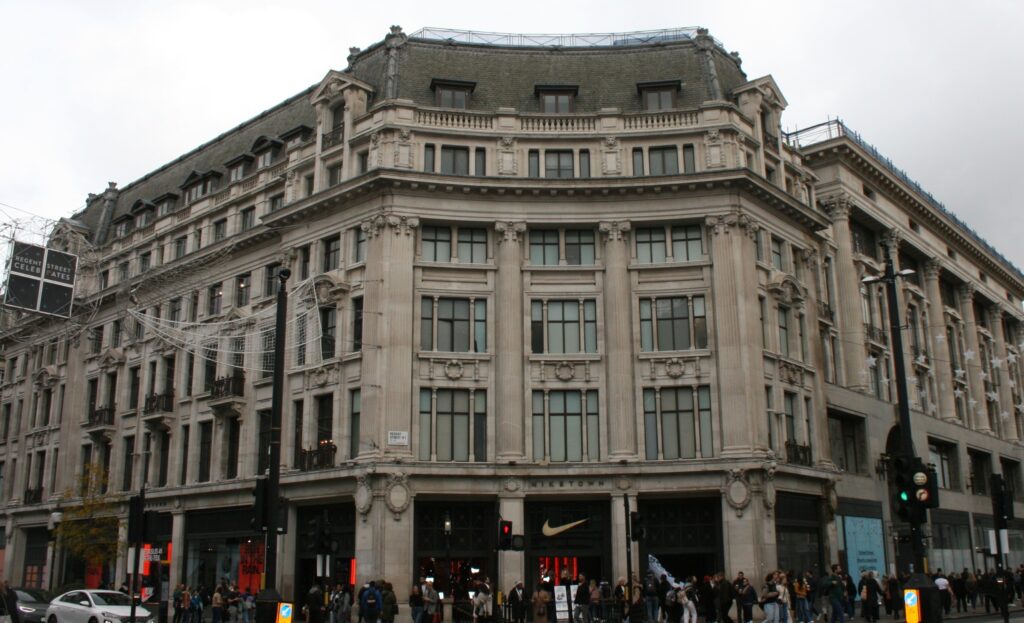
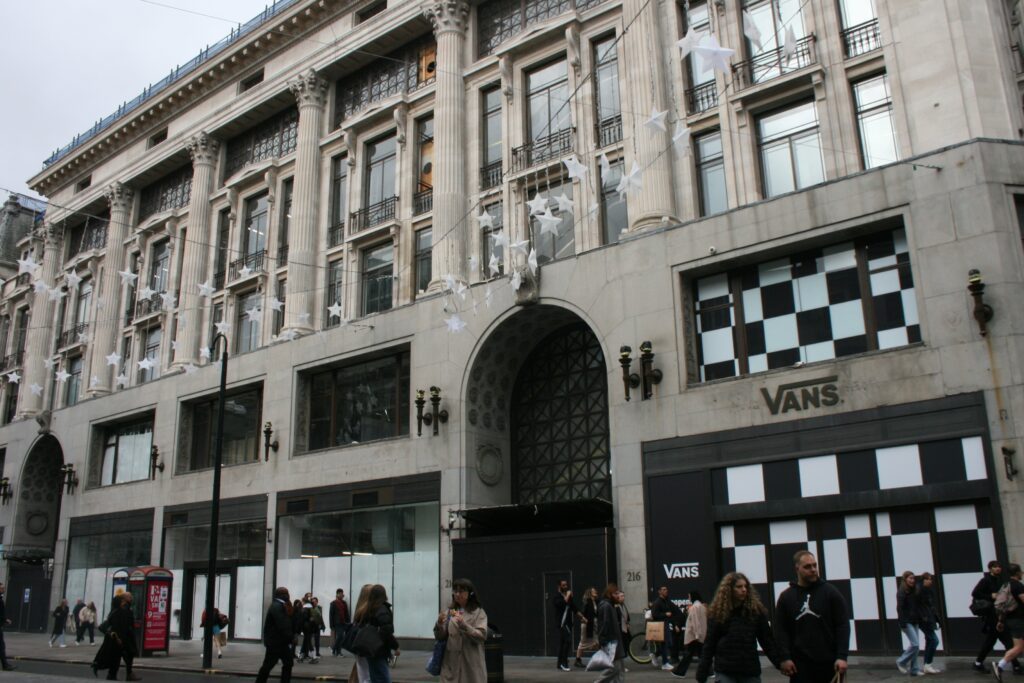
Nike and Vans occupied the empty building. O Peter Robinson, your beautiful store was filled with trainers. But worse is to come, for now the trainers too have moved on, and, the ultimate indignity, the Swedish flat pack furniture giant, Ikea, is scheduled to move in later this year.
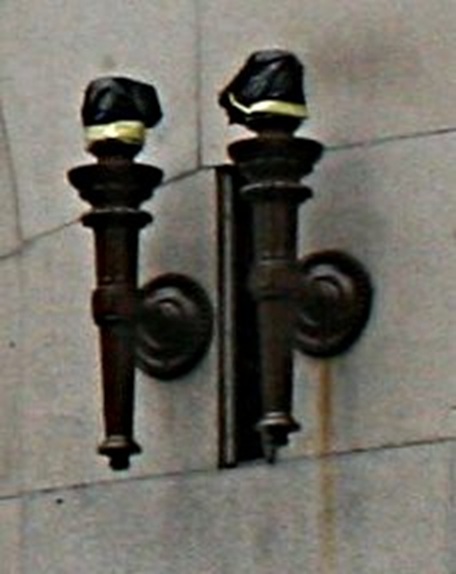
I had not visited Oxford Street for many years, but on a recent trip to town, with an hour to spare, I walked from Tottenham Court Road to Marble Arch. It was not a cheerful peregrination. Only two of the glorious department stores remain: Selfridges and John Lewis maintain a dignified if somewhat subdued presence at Marble Arch. The rest of the street hosts dreary chain stores and vacant, shuttered store fronts, punctuated by an extraordinary number of souvenir shops offering tourist tat – union jack tea towels, policemen’s helmets, fridge magnets of king Charles, plastic models of tower bridge, – and gaudy American style candy stores. Both the latter are allegedly fronts for the sale of illegal goods and money laundering, and police raids regularly seize counterfeit and unsafe items. And at Oxford Circus I contemplated a sorry shell, once Peter Robinson’s glorious shopping mecca. Boarded up, grubby and unloved, even the beautiful lamps which once graced its exterior shrouded in plastic, it was a pitiful spectacle.
NIKETOWN reads the depressing sign above the entrance to the former Peter Robinson at Oxford Circus. Boarded up, grubby and unloved, even Nike have now moved on.
VANS claimed the Oxford Street entrance but they too have moved on leaving boarded up windows.
The lamps taped up in black plastic
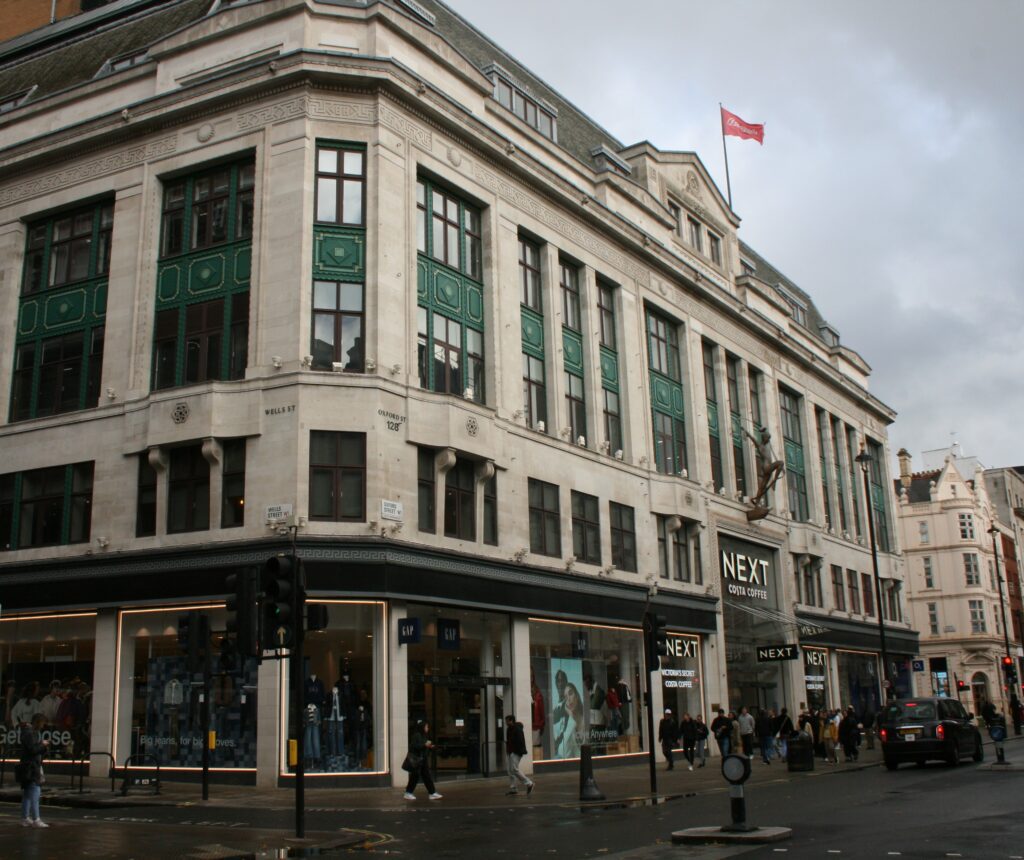
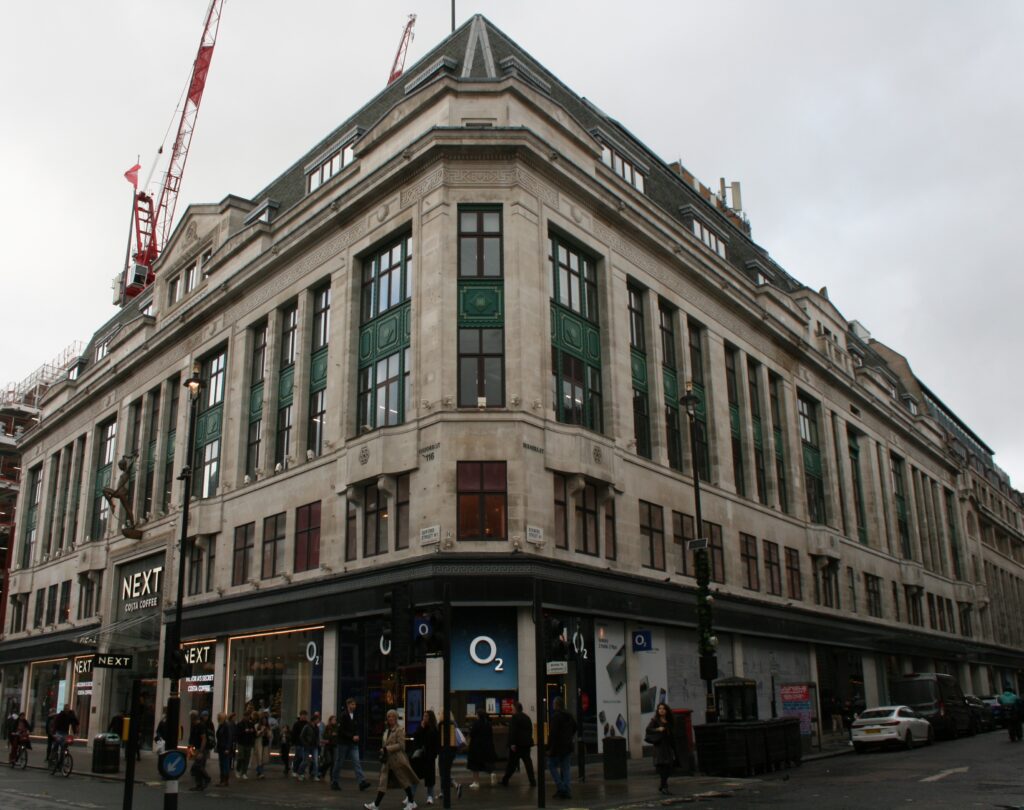
Bourne and Hollingsworth has fared little better…
… it is now the Plaza Shopping Centre, housing O2, Next, Victoria’s secret and Costa Coffee.
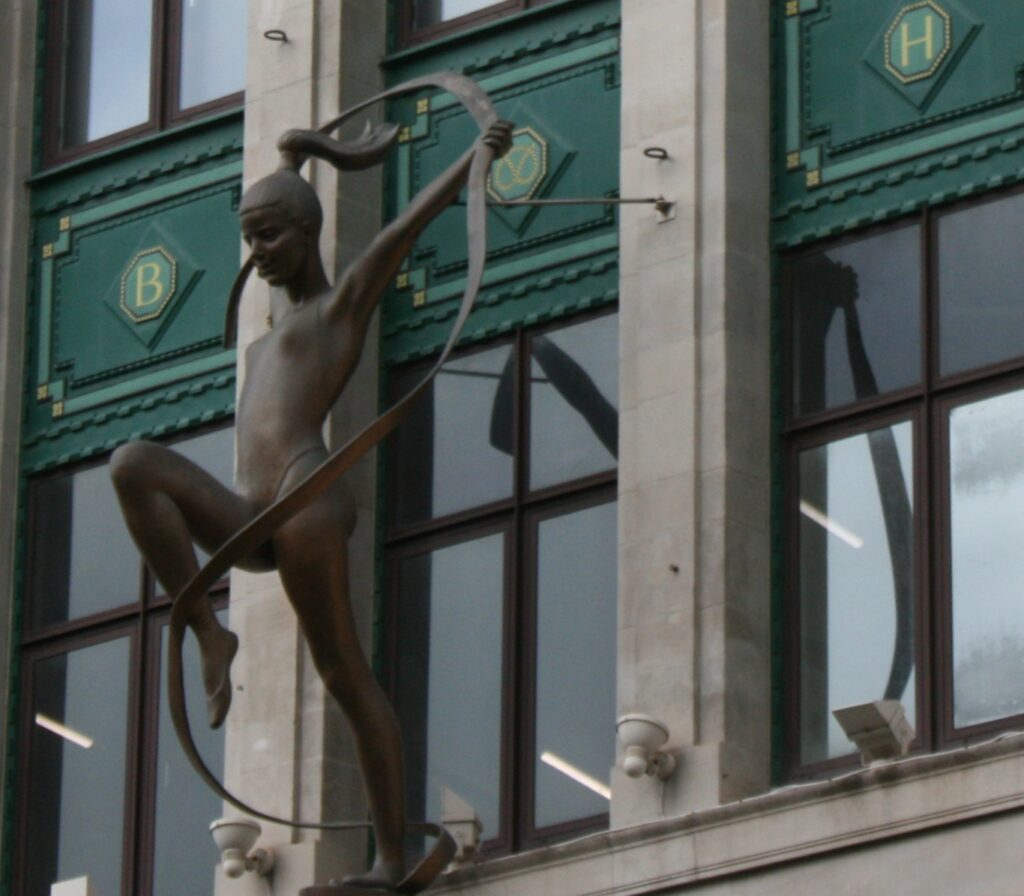
Depressing neon strip lights behind the facade on the upper floors, but the letters B and H dating from the store’s remodelling in art deco style in 1928 reveal the building’s pedigree.
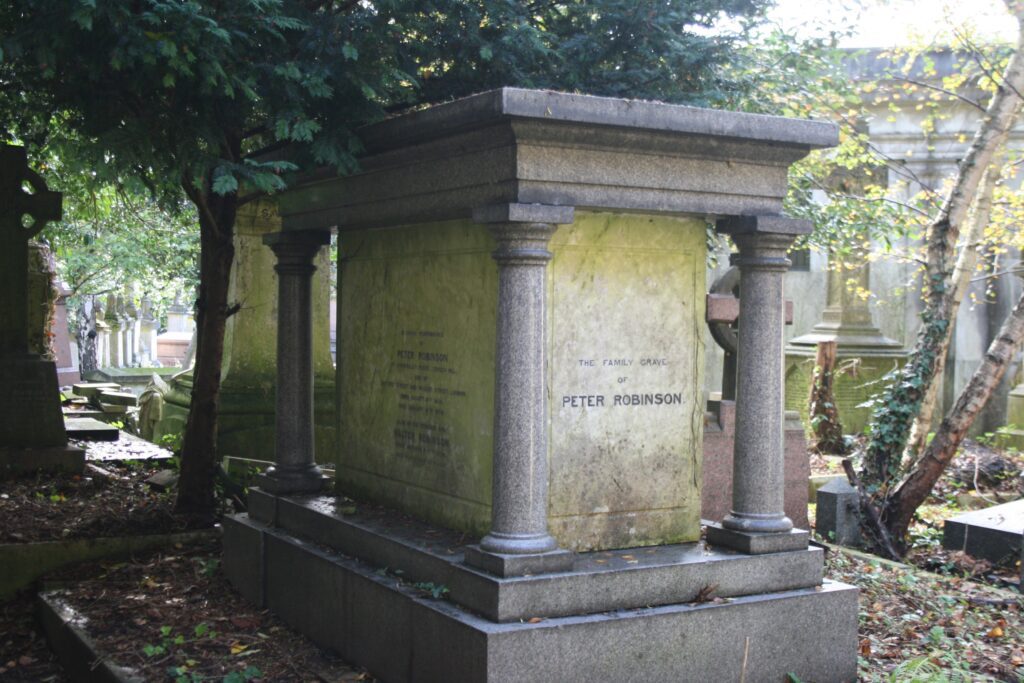
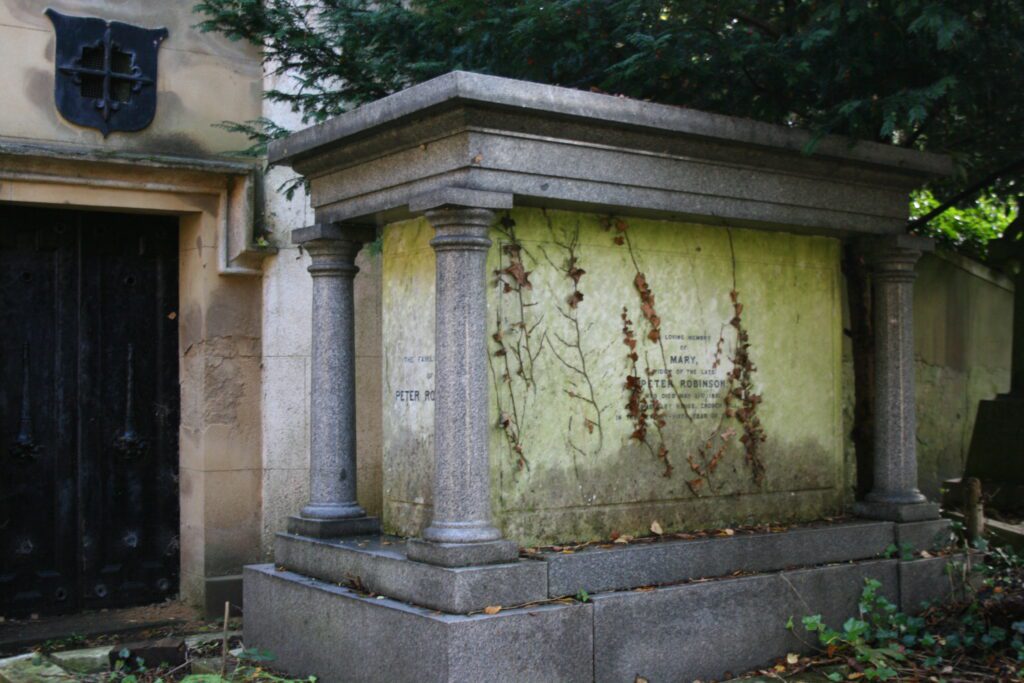
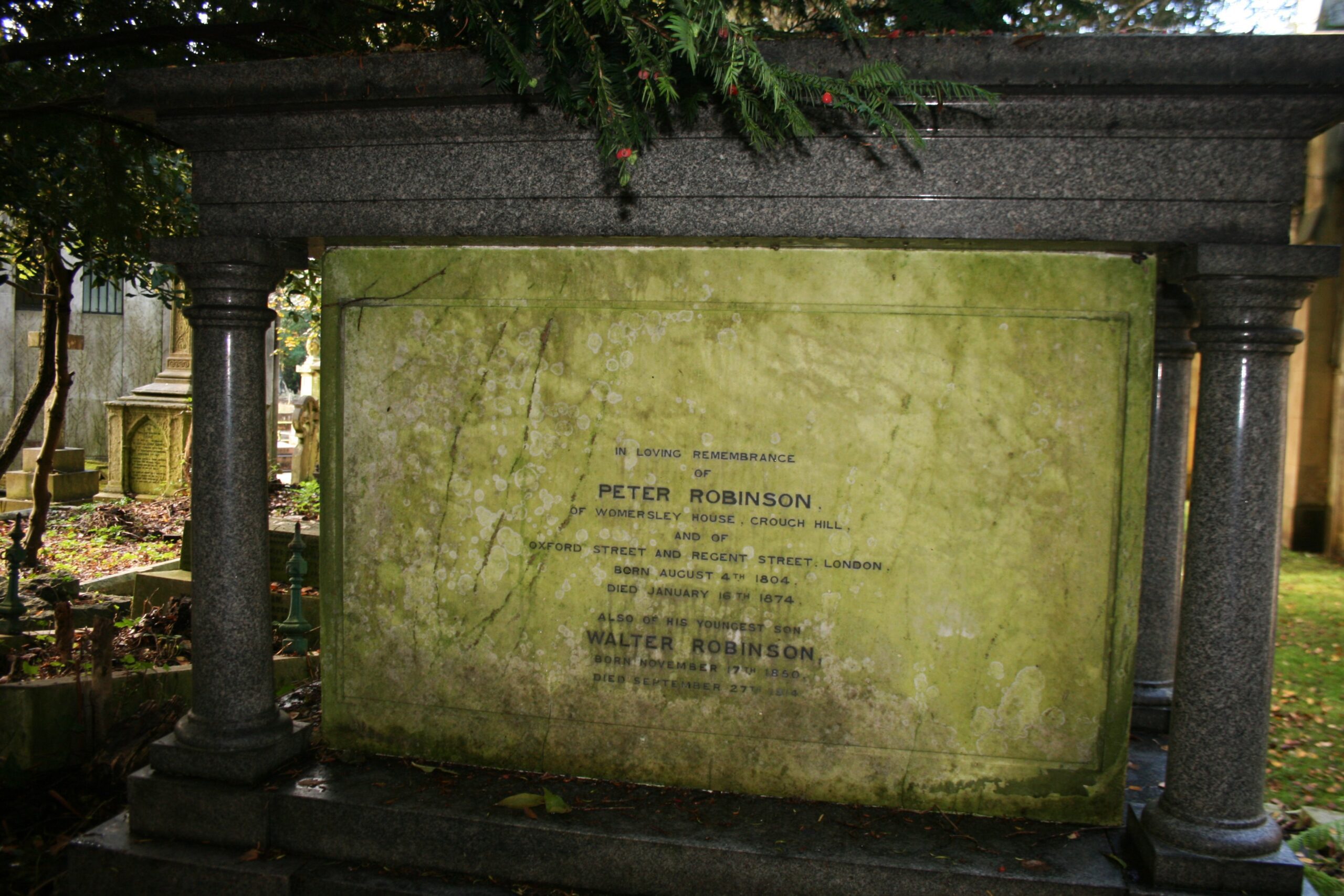
I made my way to Highgate Cemetery wondering how Peter Robinson would feel about the demise of the magical world of department stores. When he died, he left over a million pounds in his will, around £113.5 million in today’s money, so it was no surprise to find him, with his wife and youngest son, Walter, in a large family tomb in one of the most expensive locations in Highgate West, between the Circle of Lebanon and the terrace catacombs. Yet it was not a welcoming nor an attractive grave, built of a cold granite and stone, lying close to the cemetery wall, and overshadowed by a gloomy evergreen.
But Peter Robinson died a phenomenally successful Victorian businessman, the grave was probably to his taste, and there is no reason to imagine that the store I knew in the 1970s would have been any more congenial to him than the prospect of another Ikea blighting the land is to me. I suspect he would have been appalled by Top Shop, the stars and moons, the pink and purple plastic mirrors invading his elegant shop. Maybe he is best left with his memory of it as it was in his day, as I am with my memory of it fifty years ago and almost a hundred years after his death: holding fast to its old fashioned, restrained glamour while simultaneously incubating an exotic and beguiling parvenu in its basement.
The Family Grave of Peter Robinson…
…with Mary, his wife
…and Walter, his youngest son
In Loving Remembrance
of
Peter Robinson
of Womersley House, Crouch Hill,
and of
Oxford Street and Regent Street, London.
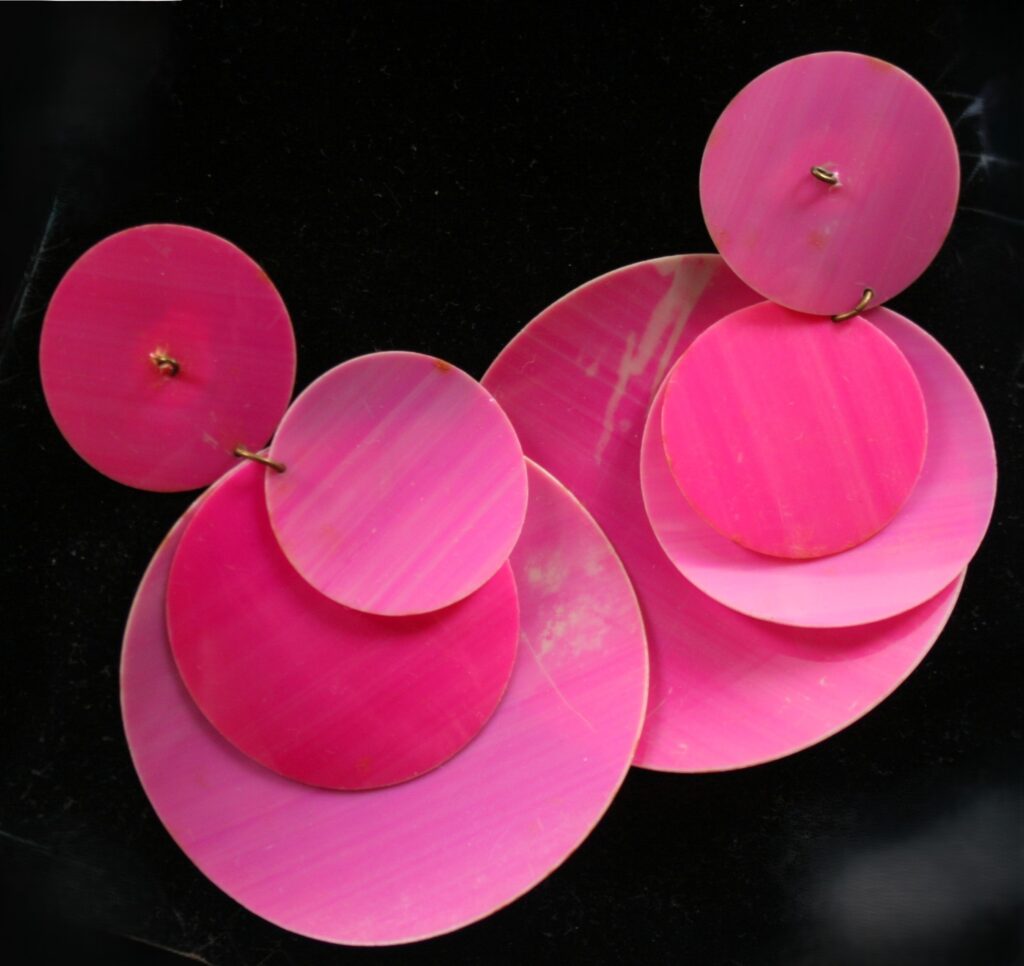
I no longer have the red velvet dress and the purple maxi-coat, nor the stars and moons, nor the pink and purple plastic mirror, but at the back of a drawer, I found the mirror’s cousins – ear-rings from Top Shop at Peter Robinson.