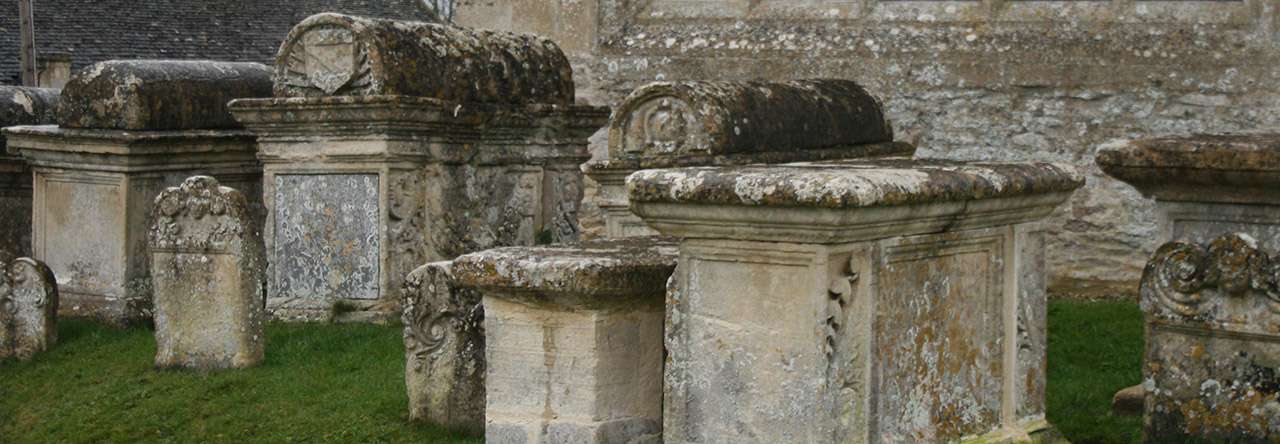
Come with me into the graveyard, all human life is here

Month: July 2026

Marc Chagall: “the light of freedom… and the colours of love”

Entering Chichester Cathedral through the west door the impact of John Piper’s controversial altar tapestry is immediate. Symbols of the Trinity, the four evangelists and the four elements cavort in bold, arresting colours, noisily clamouring for attention.
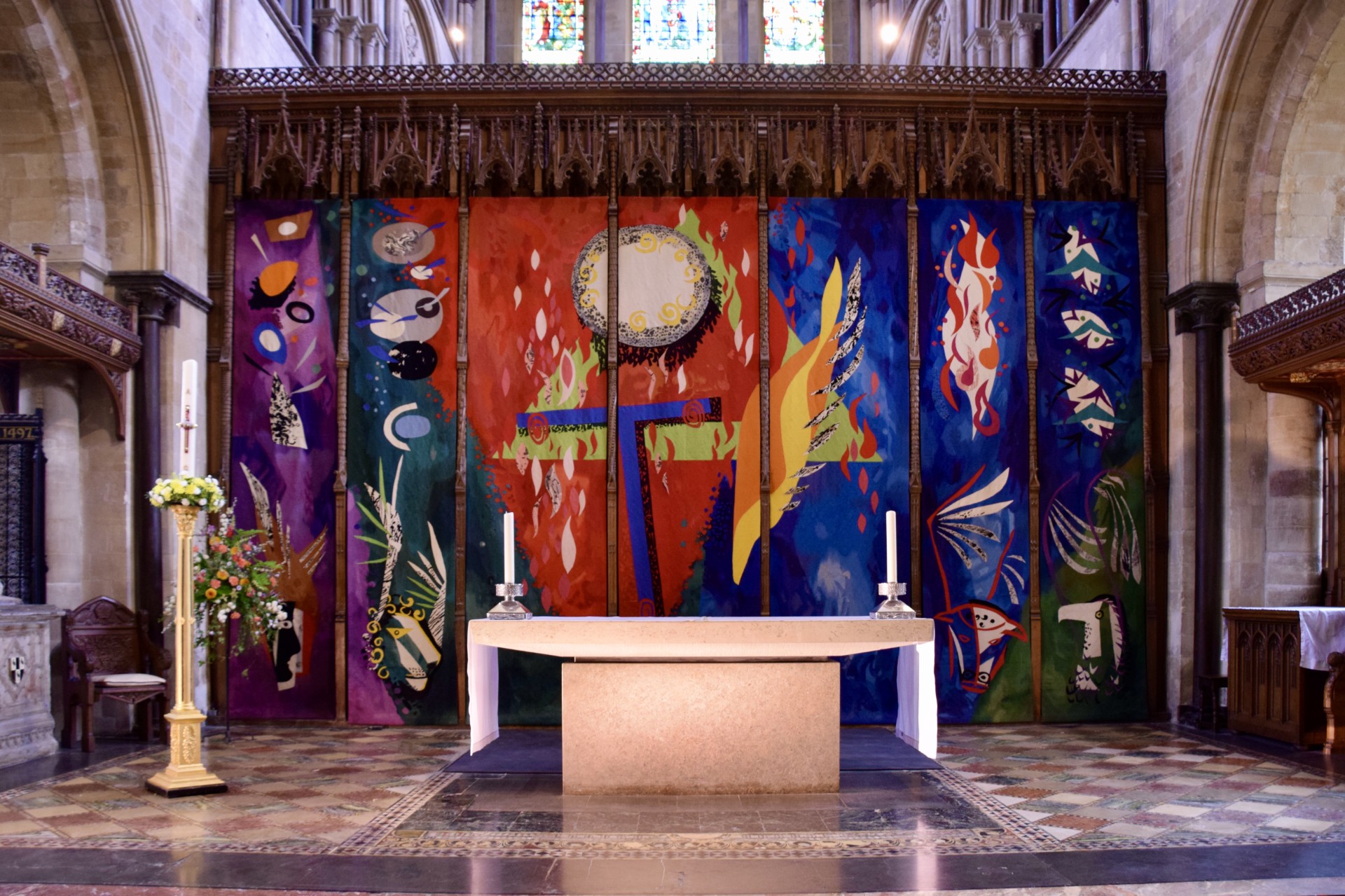
Altar tapestry by John Piper.
(Universal Public Domain via Wikimedia Commons)

The presence of the tapestry and other twentieth century art in the eleventh century cathedral is attributable to Walter Hussey. In earlier centuries the church had been a major patron of the arts, and Hussey regretted that contemporary painting, music, sculpture and drama were little encouraged by the ecclesiastical hierarchy of his day. As vicar of St. Matthews in Northampton, he had set about rectifying this, commissioning works by Benjamin Britten, Henry Moore, Michael Tippett and Graham Sutherland.

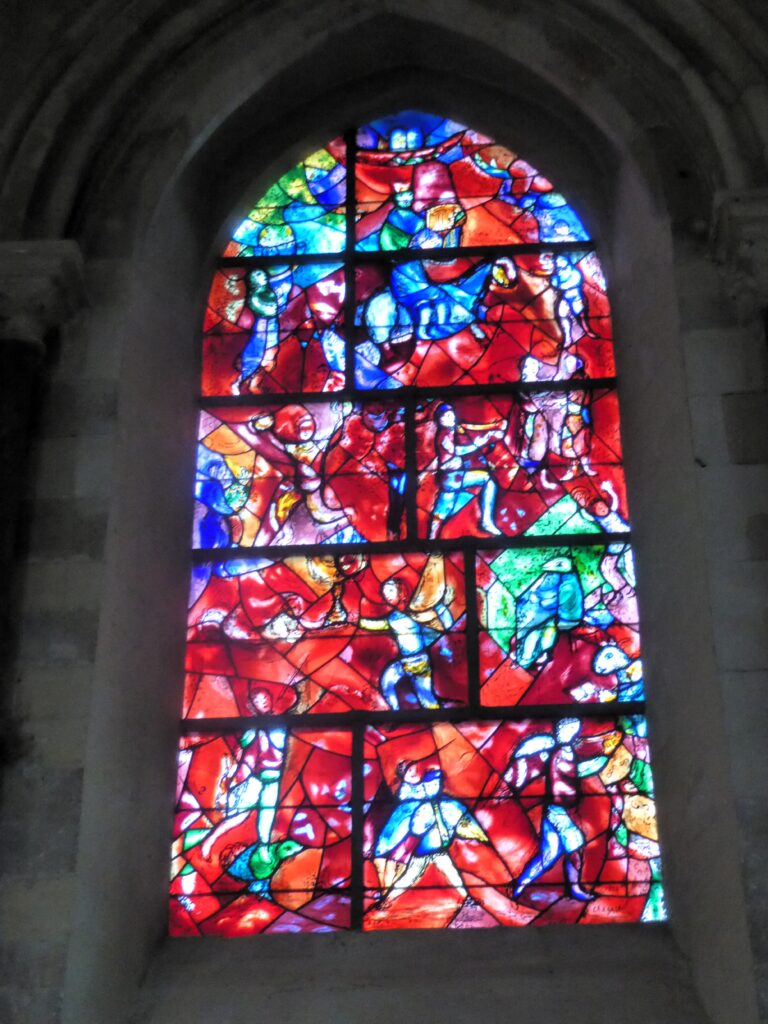
When he became Dean of Chichester in 1955 his scope was increased, and the cathedral boasts an enviable collection of modern art. This was supplemented by Hussey’s personal collection which he left to the city, today located in the Queen Anne townhouse known as the Pallant Gallery. My personal favourite amongst the cathedral treasures is Hussey’s final commission, a stained-glass window by Marc Chagall based on psalm 150: “Let everything that hath breath praise the Lord.”
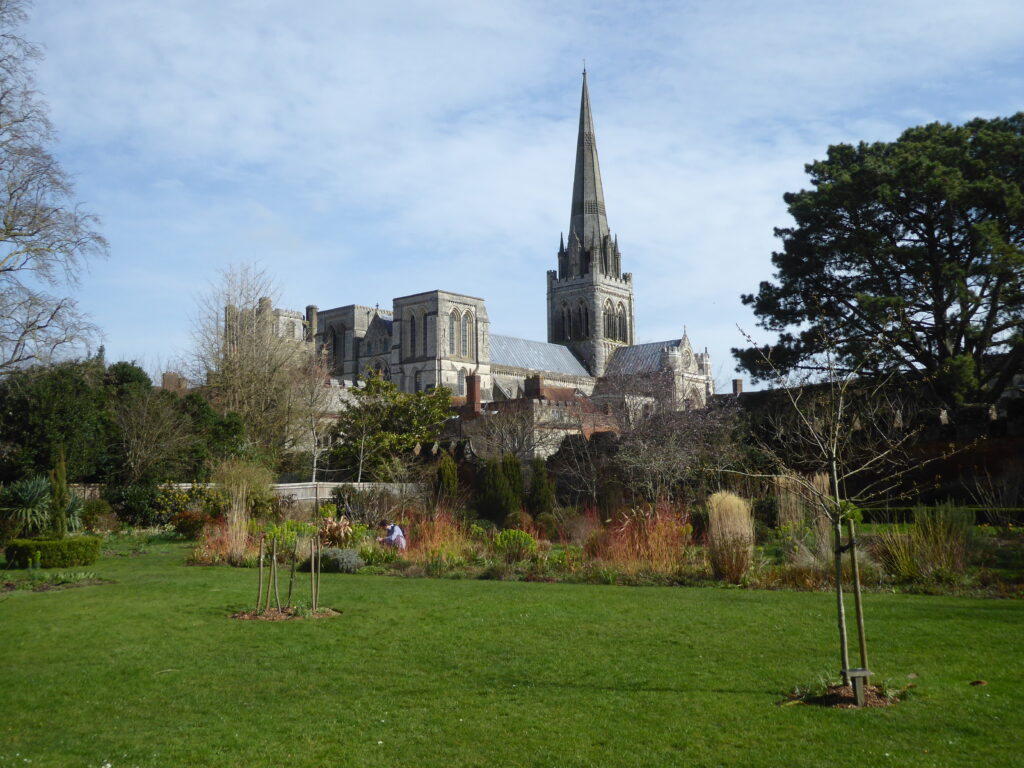
The eleventh century Chichester cathedral
The vibrant window contrasts with the sombre fabric of the cathedral. Unusually for stained-glass by Chagall the dominant colour is red, but the animals, birds, and human figures playing harps and trumpets are familiar.

Chichester is one of only two locations in England with stained-glass by Chagall, and fond though I am of the cathedral window there is no question that the glass in an otherwise unremarkable church in neighbouring Kent far eclipses it.

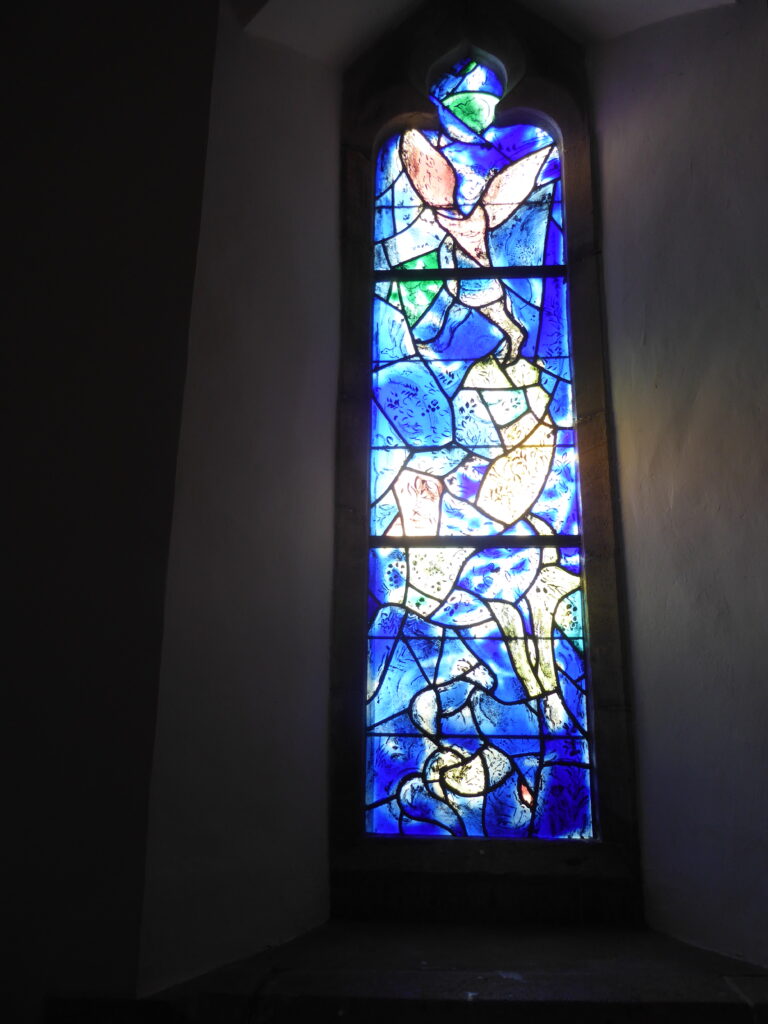
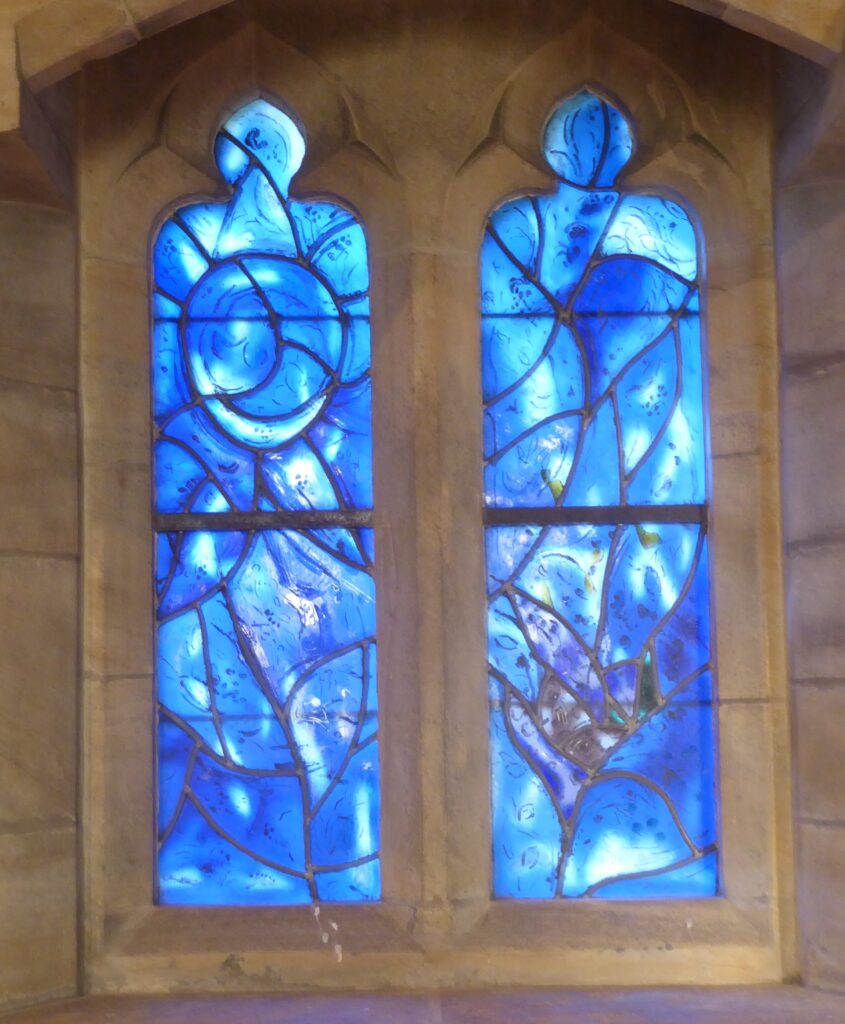
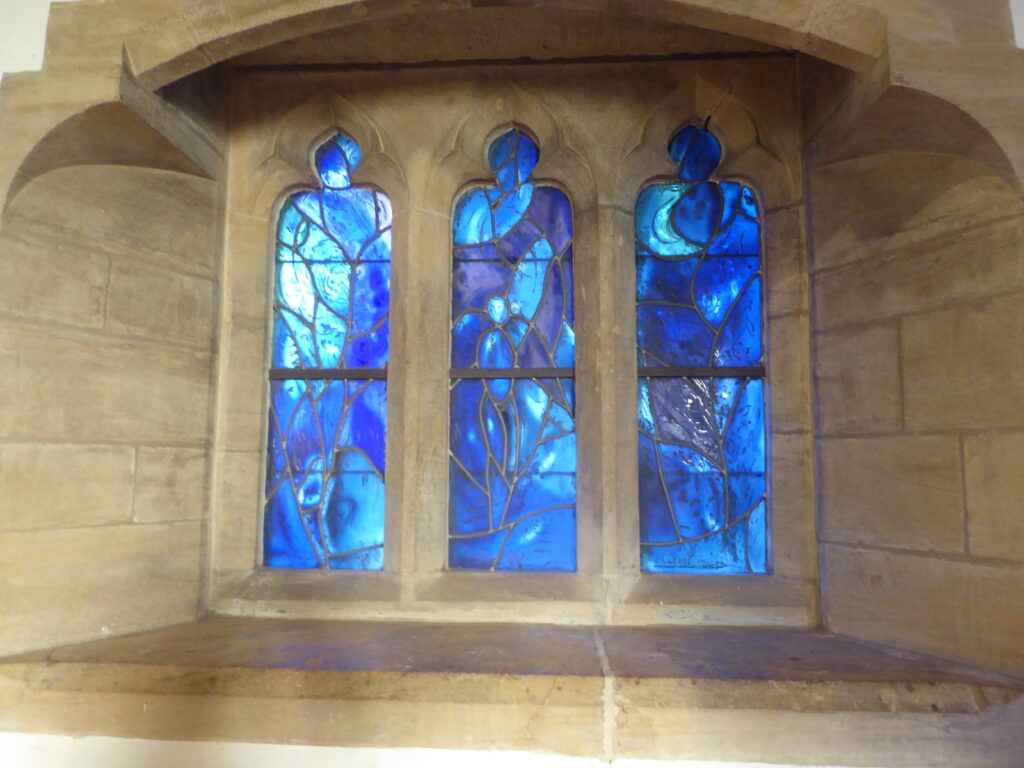
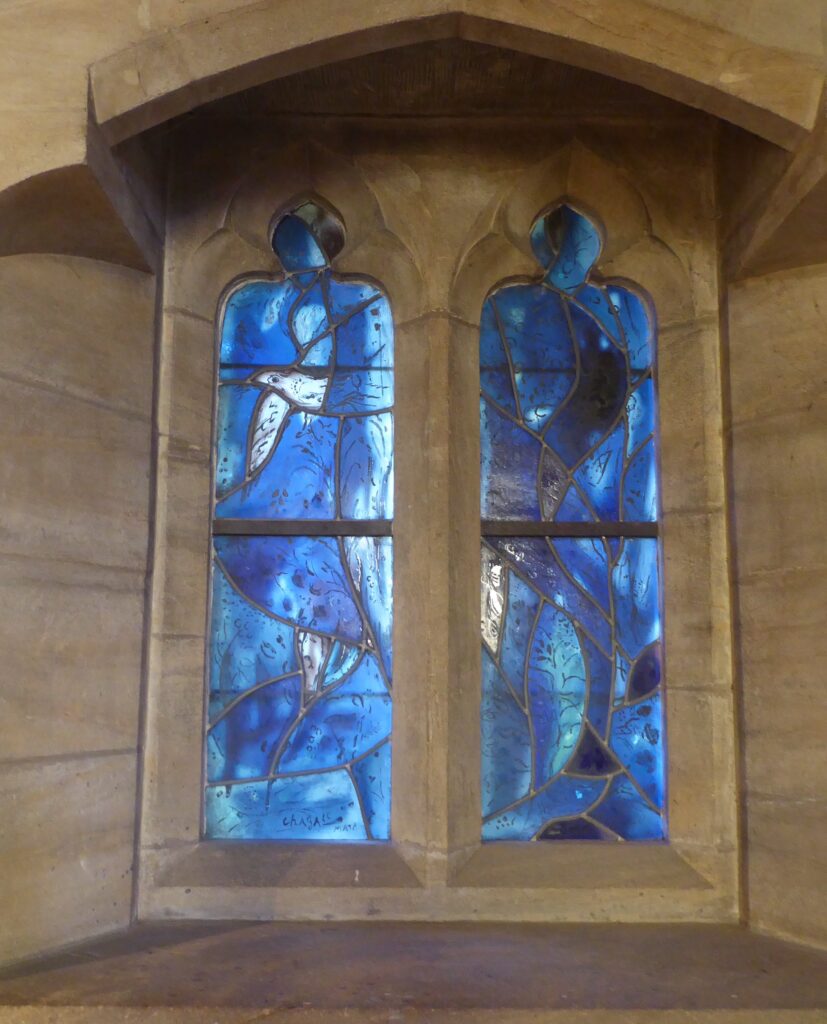
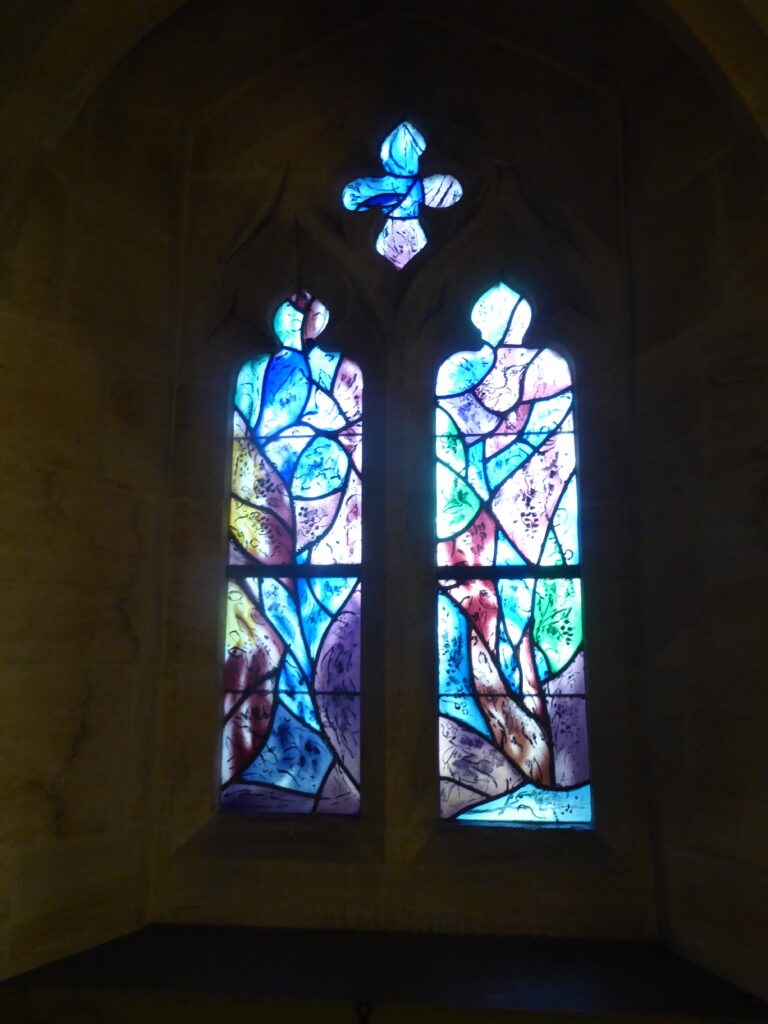
Henry and Rosemary d’Avigor-Goldsmid commissioned Chagall to design a window for All Saints church, Tudeley, in memory of their daughter who had died in a sailing accident. When Chagall arrived for the dedication of the east window in 1967, his response was immediate,

C’est magnifique! Je les ferai tous.

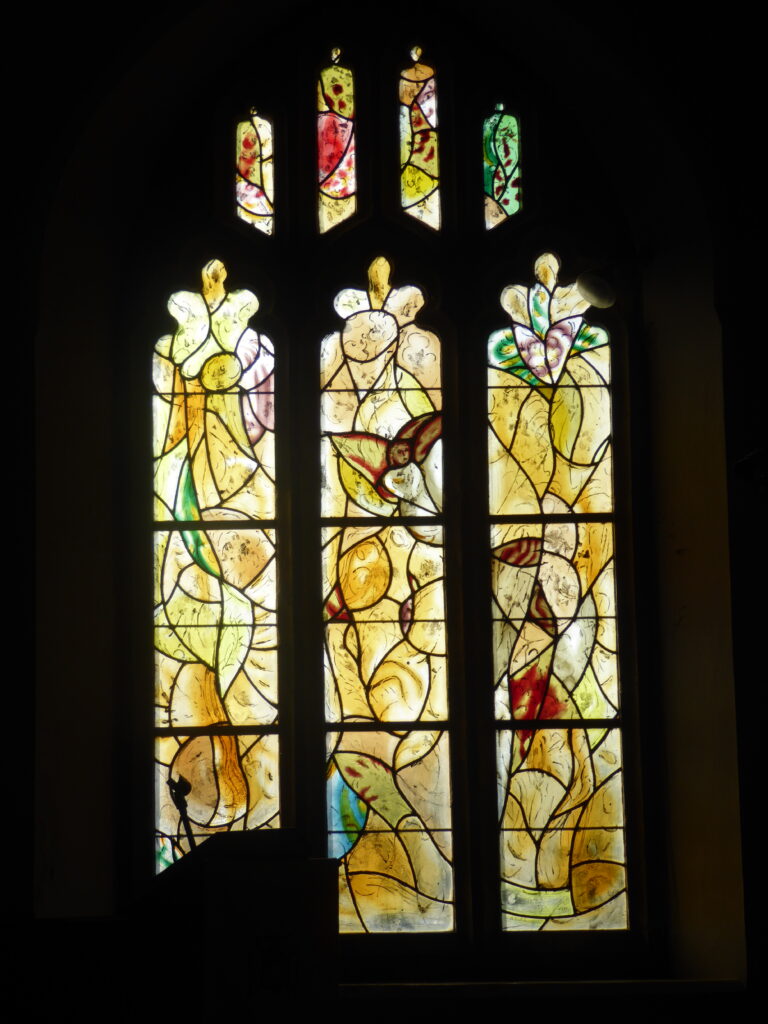
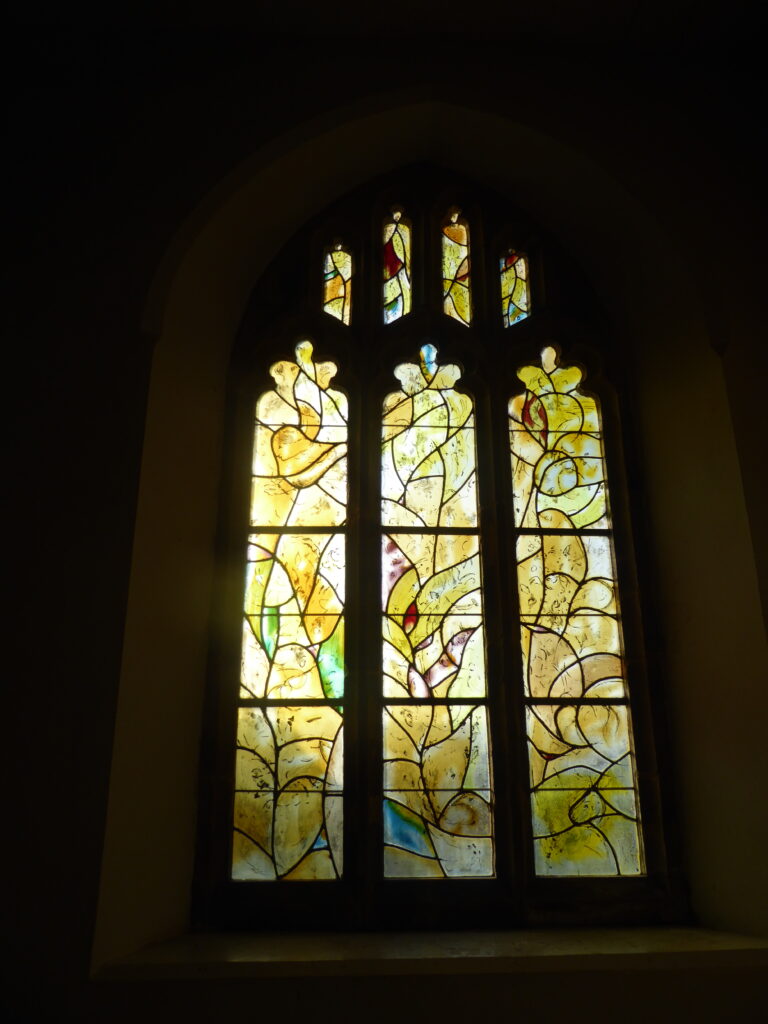
Over ten years he designed eleven more windows as a gift to the family and the community; the last one was installed in 1985 just before his death. All Saints became the only church in the world to have all its windows designed by Chagall.
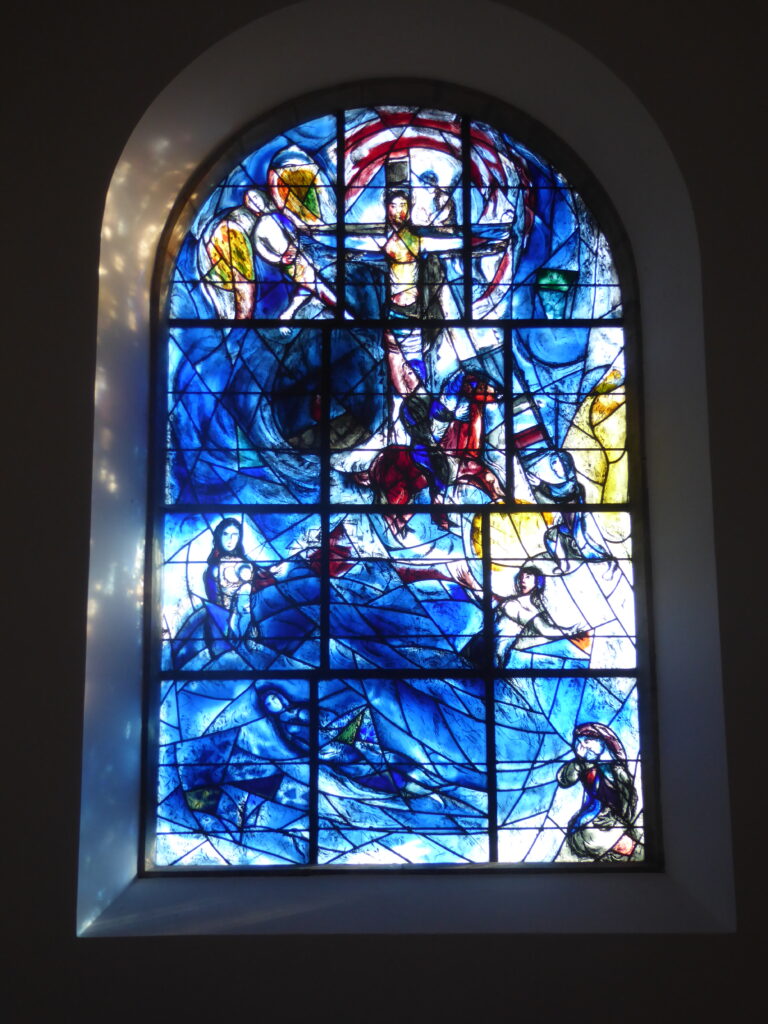
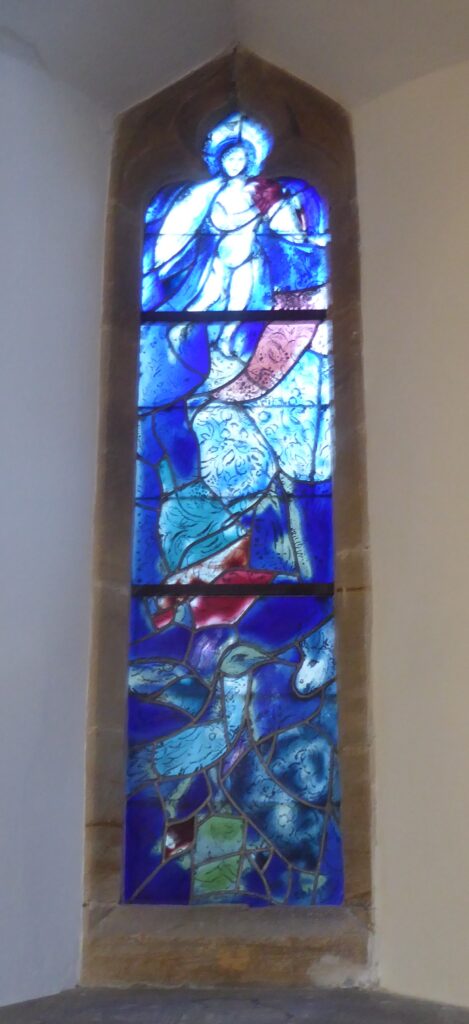
East window of All Saints, Tudeley. Crucifixion and drowning
Angel with harp, bird, and donkey
Angel
Crescent moon
Green leaf, angel and moon
White bird
Blue fish in quatrefoil
Resurrection: angel, bird, candles
Resurrection:birds, donkey, candles

Marc Chagall (1887-1985) was born in Vitebsk, NE Belarus, then part of the Russian Empire. From 1906 he attended art school in Saint Petersburg for four years, before moving to Paris where he began to produce paintings of life in Vitebsk. Life in the town had been hard; Chagall was one of nine children whose father was employed hauling barrels of herring. Chagall compared the work to that of a galley slave:

My heart used to twist like a Turkish bagel as I saw my father lift those weights.

Worse, there was always the fear of pogroms against the Jews.

But the paintings he produced do not emphasise the hardship, they are not realistic, objective portrayals. For Chagall was motivated at least in part by a tender desire to record and celebrate Jewish traditions and modes of living which were disappearing. The dream like paintings of snowy streets, wooden houses, fiddlers, circuses, acrobats, and ghostly figures floating in the sky led Picasso to wonder:

I don’t know where he gets those images from; he must have an angel in his head.

In 1914 Chagall went home to marry Bella Rosenfeld in Vitebsk. The most romantic pictures come from the years following his marriage. In The Birthday (1915) a couple kiss as they drift through the air. The Promenade (1918) shows him holding onto his wife’s hand as she flies above.

Chagall had not intended to remain in Vitebsk but with the closure of borders in World War I, he was unable to return to Paris and spent the years until 1923 between Vitebsk, Moscow and Petrograd. There he taught, illustrated books, and produced murals alive with dancers, fiddlers and acrobats for the State Jewish Chamber Theatre.

After his return to Paris, he worked and travelled extensively but in the 1930s Nazi campaigns against modernist, “degenerate” art began. Paintings, including those of Chagall, described as

green, purple and red Jews shooting out of the earth, fiddling on violins, flying through the air…representing an assault on Western civilisation

were confiscated from museums.

Yet even after the German invasion Chagall and his wife remained in Vichy France, slow to perceive the danger and unable at last to afford the passage to America. They were rescued in 1941, following their arrest and loss of citizenship, by the American journalist Varian Fry and the Emergency Rescue Committee who helped anti-Nazis and Jews, especially artists and intellectuals, to escape.

Chagall lived in New York until 1948 when he returned to France, seeking the “lumière – liberté” of the Cote d’Azur. There he experimented with ceramics and sculpture alongside his painting. Malraux, a great admirer of Chagall, commissioned him to paint the ceiling of the Paris opera in 1963, avowing

Chagall has looked at our world with the light of freedom and seen it with the colours of love.

And after a visit to Chartres in the 1950s Chagall began to produce stained glass with intense colours refracted by the light. For the Hebrew University’s medical centre in Jerusalem, he designed twelve windows representing the twelve tribes of Israel earning breathless praise from the philosopher Gaston Bachelard:

Chagall reads the bible and suddenly the passages become light.

The art historian Jean Leymarie in his commentary on the windows concurred:

The essence of the Jerusalem windows lies in colour, in Chagall’s magical ability to animate material and to transform it into light. Words do not have the power to describe Chagall’s colour, its spirituality, its dazzling luminosity…it is simultaneously jewel-hard and foamy, reverberating and penetrating, radiating light from an unknown interior.

Other windows followed: the peace window in the Secretariat building of the United Nations in New York; at Saint Stephen’s Mainz, a widow symbolising Jewish-German reconciliation; windows in the Fraumunster church in Zurich, in Metz cathedral, at the art institute in Chicago, in Reims and in Tudeley.

Chagall’s art defies description. It has been linked with Cubism, Fauvism, Surrealism, and Expressionism, but ultimately it is unique. The paintings blend the real and the fantastic, at once whimsical fairy tales, romantic fantasies, dreams, and representations of the wonder and joy of the quotidian and the commonplace. And, as with the stained-glass, it is the colour and the light which leave us breathless. Picasso was confident that

When Matisse dies, Chagall will be the only painter left who understands what colour is…His canvasses are really painted, not just tossed together. Some of the last things he has done in Vence convince me that there has never been anyone since Renoir who has the feeling for light that Chagall has.

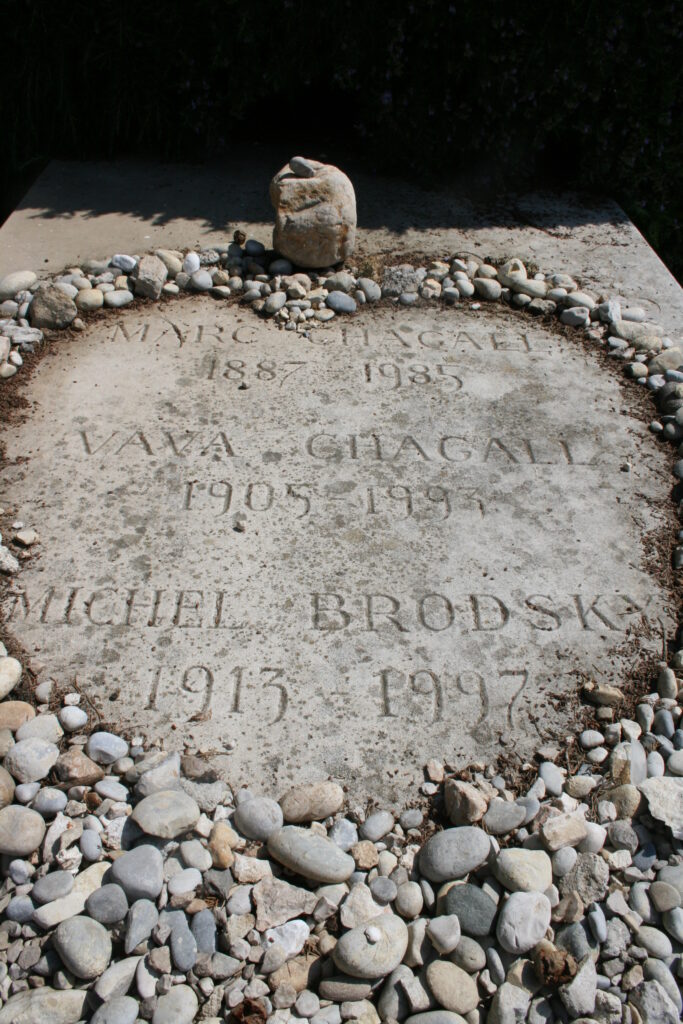
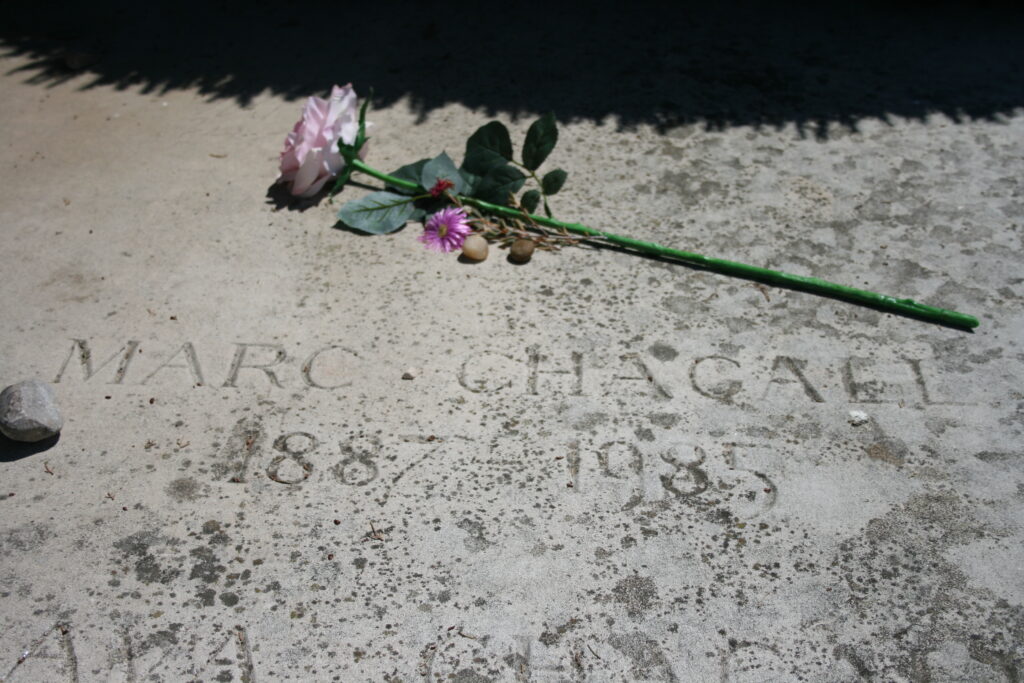
Chagall is buried in the multi-denominational cemetery of St. Paul de Vance, bathed in the light and colour of the south of France, but maybe still dreaming of Vitebsk.
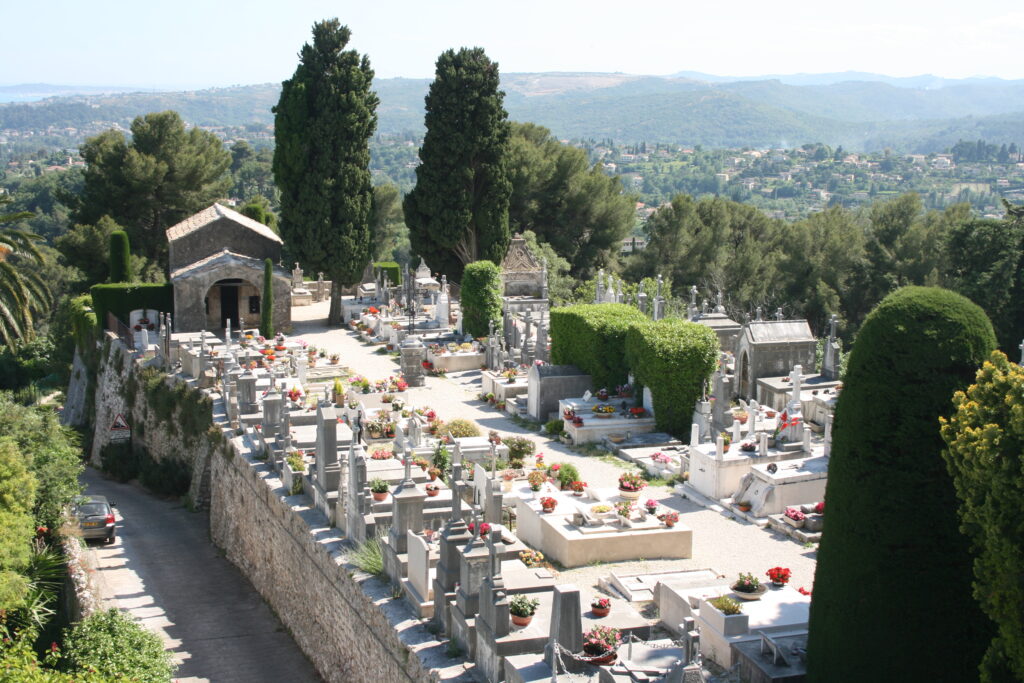
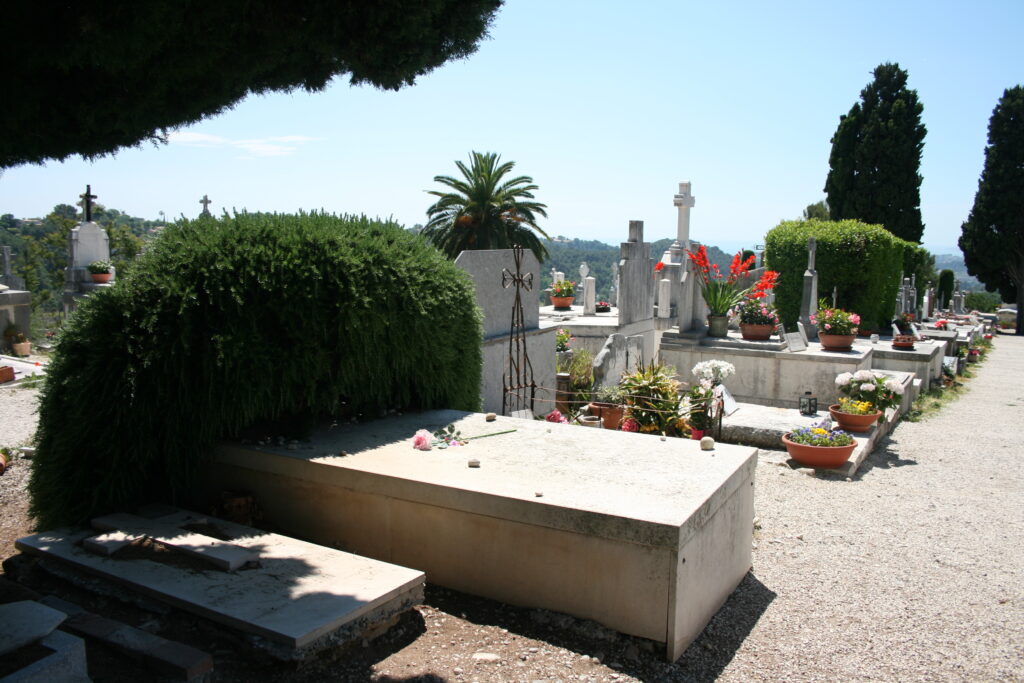
The cemetery at St. Paul de Vence
Chagall’s grave
Vava Chagall was Chagall’s second wife, Michael Brodsky was her brother. Bella Chagall had died of sepsis following a throat infection while the couple were in America.
The grave top is always decorated with offerings

Jeremy Bentham and the Greatest Happiness of the Greatest Number

I first encountered Jeremy Bentham (1745-1832) in my O-level history class. Miss Brown expounded briefly upon Utilitarianism, adding “Bentham is a philosopher of whom you would approve, Josephine.”  She was right: while her conservative values made Bentham anathema to her, I warmed to his radical, democratic view that “the greatest happiness of the greatest number…is the measure of right and wrong.”

Bentham had reasoned,

Nature has placed mankind under the governance of two sovereign masters, pain and pleasure. It is for them alone to point out what we ought to do, as well as to determine what we shall do.

The greatest happiness principle consisted in the predominance of pleasure over pain.

JS Mill later distinguished between higher and lower pleasures, asserting that human happiness could not be reduced to mere sensual pleasure and that it was better to be an unhappy Socrates than a happy pig:

It is better to be a human being dissatisfied than a pig satisfied; better to be Socrates dissatisfied than a fool satisfied. And if the fool, or the pig, are of a different opinion, it is because they only know their own side of the question.

But for Bentham it was essential that the principle applied to all individuals equally. All pleasures, intellectual or physical, were accorded equal weight in his ethical calculations.

He measured individual pain and pleasure by the “felicific calculus” taking account of their intensity, duration, certainty, proximity, purity, extent and productive nature.

Yet this universal hedonism would not result in selfish and thoughtless egoism, for people would realise that their own interests were inextricably linked with the interests and good of others and adapt their behaviour accordingly.

And if this failed then there might be recourse to the Pannomion, Bentham’s codified philosophy of law. He challenged Blackstone’s traditional commentaries on the law with their antipathy to reform, arguing that “judge made laws” should be replaced with rational statues enacted by democratic legislation. For Bentham, all law was a restriction on liberty, inculcating pain rather than pleasure. Limited legal control by the state could only be justified if it clearly promoted individual and community well-being:

Every law is an evil, for every law is an infraction of liberty: And I repeat that government has but a choice of evils: In making this choice what ought to be the object of the legislator? He ought to assure himself of two things; first that in every case the incidents which he tries to prevent are really evils; and secondly that if evils they are greater than those which he employs to prevent them.

Rejecting concepts of natural law, inherent human rights, divine commandments, social contracts and other legal fictions as “nonsense on stilts,” he espoused legal positivism. Laws were just social constructs created by legislators for the protection and advantage of society, and as such they could be altered in response to changes in society.

In his own time, Bentham advocated changes in the law to give women equal rights, including suffrage, the right to public office and the right to divorce on the same terms as men; to de-criminalise homosexuality; to make slavery a crime; and to protect animals from unnecessary suffering.

A political radical, he reasoned that better law making would come through constitutional reform making government more accountable and open. A wider franchise, a more representative democracy, a more transparent government with greater checks on its power, and freedom to criticise government were essential.

And if the law were broken? Punishment clearly involved the infliction of pain and should only be used “so far as it promises to exclude some greater evil.” Like the laws, punishment should be designed to achieve more good than harm, and while penalties should outweigh the immediate advantages arising from crime, the punishment should ultimately benefit both society and the individual.

Bentham opposed capital and corporal punishment. He sought to redesign and reform prisons.

His brother, supervising Potemkin’s factories in Russia, had designed a system whereby a circular building at the centre of a larger compound enabled a small number of managers to oversee the activities of a large workforce. Shutters on the central building ensured that the workforce did not know when they were being observed and this encouraged self-regulation.

Bentham adapted this model for use in prisons, designing a central, circular, shuttered tower, the Panopticon, with the prisoners’ cells facing inwards around its circumference. All the prisoners could be observed at various times by one person: not knowing whether they were being watched or not would ensure elective self-policing.

Bentham’s Panopticon has been tainted by the association of constant surveillance with violation of privacy and totalitarian control, but the Panopticon was designed purely for criminals. Moreover, it was only part of a wider proposal, according to which there would be no locks on cell doors, and prisoners would be free to move around the prison attending workshops and educational facilities which were at the heart of Bentham’s plan. Meaningful work and rehabilitation would see

morals reformed…health preserved…industry invigorated… instruction diffused…public burthens lightened.

The latter was effected by the decreased cost of prisons with fewer warders required. Finally, the issue of “who guards the guards” would be resolved by regular inspections guaranteeing humane management of the Panopticon.

There were always right-wing critics of Bentham:  those who favoured law and government based on tradition rather than reason, and who were ever alert to the danger that, once enfranchised, “the masses” might pose a threat to the existing social order and hierarchy.

These disparagements aside, there are flaws in Bentham’s philosophy: the practicalities of quantitative measurement by the felicific calculus and of effective inspection of prisons; his overly sanguine view of democratic government; the possibility of the pleasures of one generation having a negative impact on the next; the obvious danger to minorities. Bentham wrote copiously throughout his life refuting criticisms with varying degrees of success. If I no longer swallow the greatest happiness principle with quite the enthusiasm of my sixteen-year-old self, nonetheless, there remains a compassionate decency at its core.

Yet what charms me most about Bentham is the manner of his leaving. A convinced atheist, committed to the separation of church and state, he was adamantly opposed to Christian burial. At a time when it was illegal to provide anatomists with bodies save those of criminals who had been hanged, Bentham left instructions that his corpse should be made available for dissection in the interests of medical research.

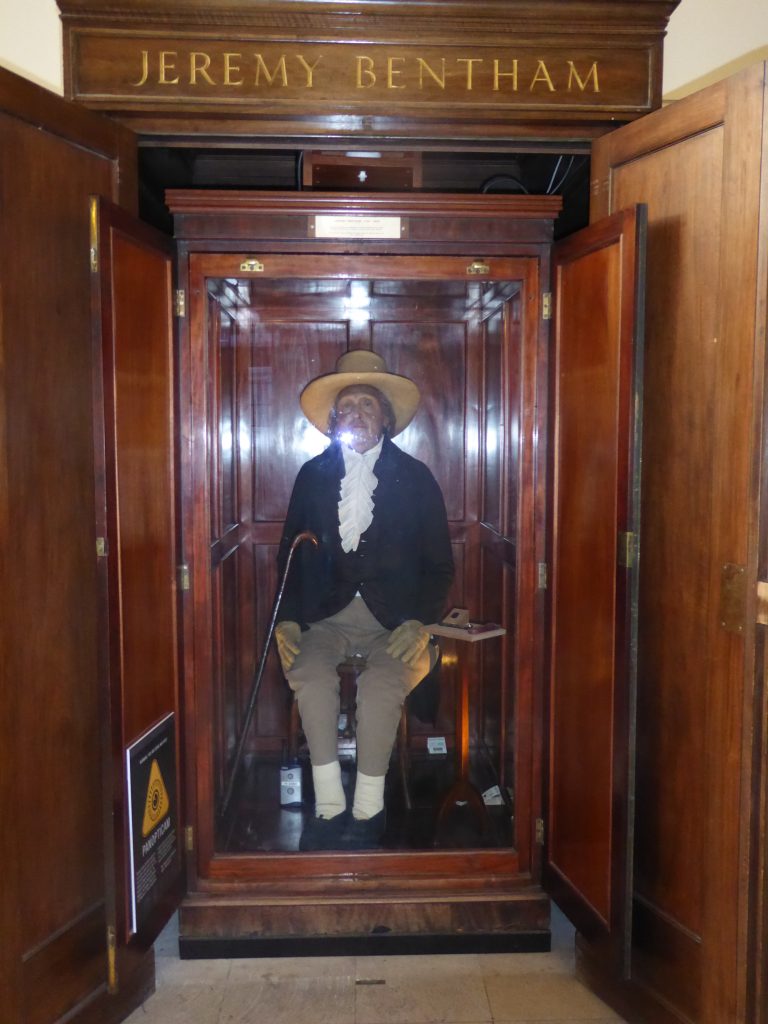
Following this his skeleton and his head were to be preserved as an “auto-icon” which would be his memorial. His instructions were specific: the skeleton would sit in his favourite chair wearing one of his suits padded out with hay. His mummified head would be placed on top and the whole displayed in a wooden cabinet.

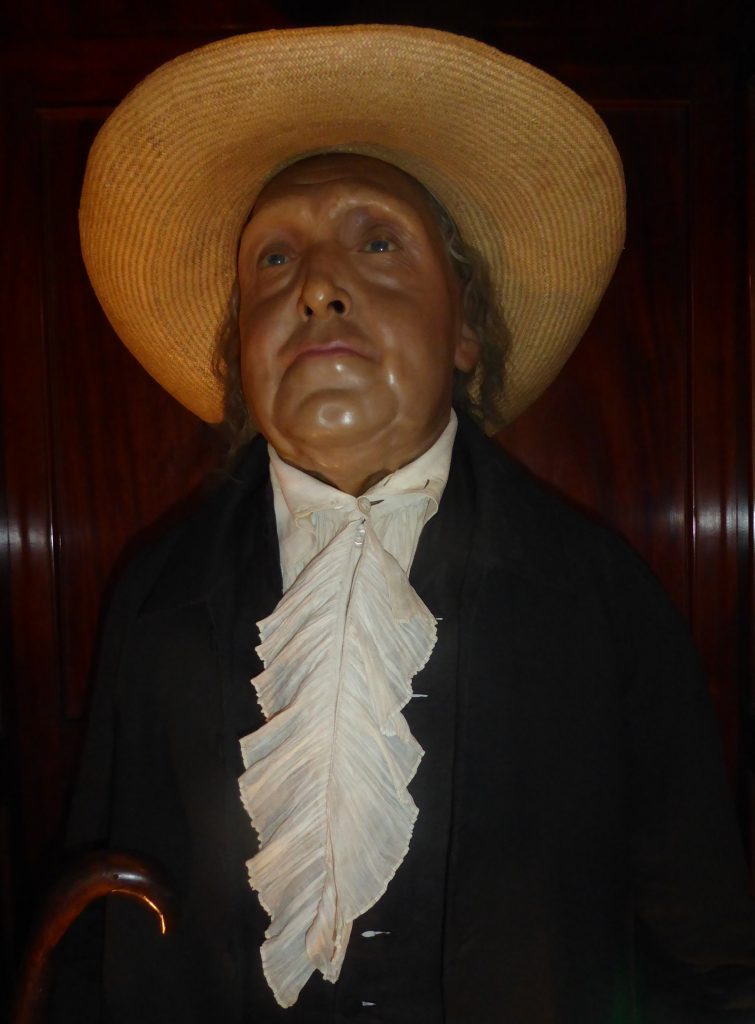
This did not go entirely to plan: Bentham’s head was desiccated using an air pump over a bath of sulphuric acid, the result was macabre, especially when two cobalt glass eyes were added. A wax head fitted with his own hair was substituted while the original head sat at his feet. This would no doubt have delighted Bentham whose instructions regarding his remains may well have been designed to cock a snook at religious sensibilities about life and death.

He would have been gratified too that the auto-icon found a resting place at University College, London, “the godless institution in Gower Street,” established in line with his own beliefs to provide university education for those of all religions and none, unlike the older universities which still enforced the Test Acts.

The auto-icon has always evoked affection at UCL and inspired the urban myth that he attends meetings of the college council casting a deciding vote, always in favour of the motion, when the votes of other council members are equally split. In July 2013 at the final council meeting of the retiring provost, Malcolm Grant, the myth became reality when Bentham was removed from his box and sat in council, recorded in the minutes as “present but not voting.”

After his original head was stolen and held to ransom by a rival college in 1975 (although not as the rumours said used as a football nor discovered in a left luggage locker on a Scottish railway station) it was put away for safe keeping in the strong room of the college records department. Recently the auto-icon has been moved to a new glass display case. Visitors are welcome and he remains a popular attraction.

Jeremy Bentham in his original wooden cabinet
The wax head fitted with his own hair
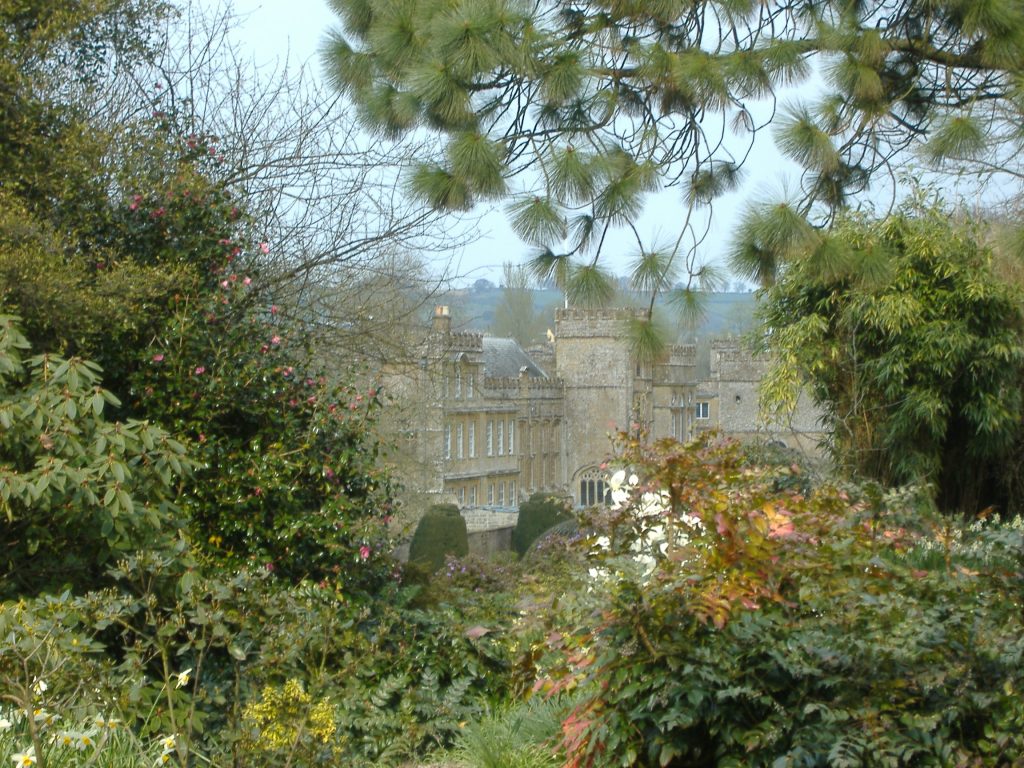
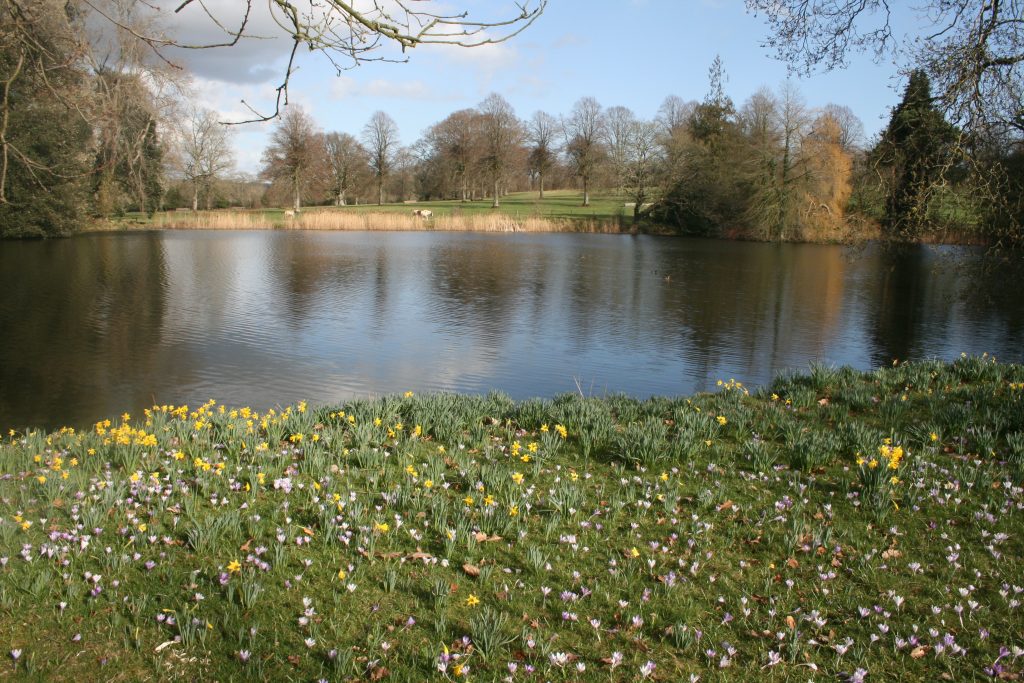
Forde Abbey, Dorset which Bentham rented as his summer residence, and where he hosted fellow philosophers, radicals, and reformers including James and John Stuart Mill, Joseph Hume, and David Ricardo
Grounds, Forde Abbey
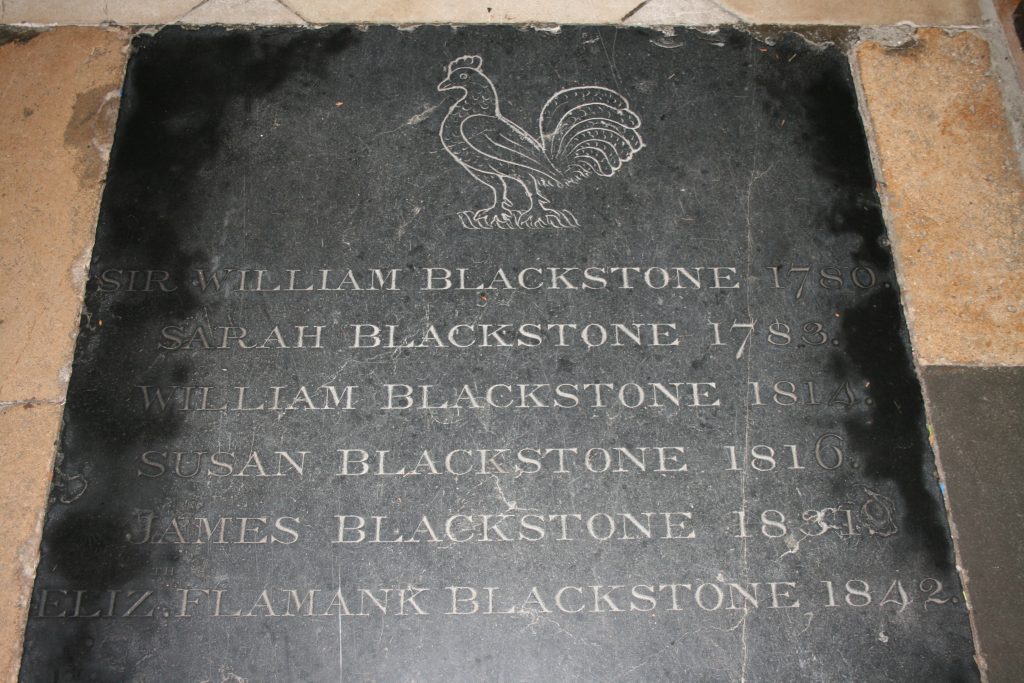
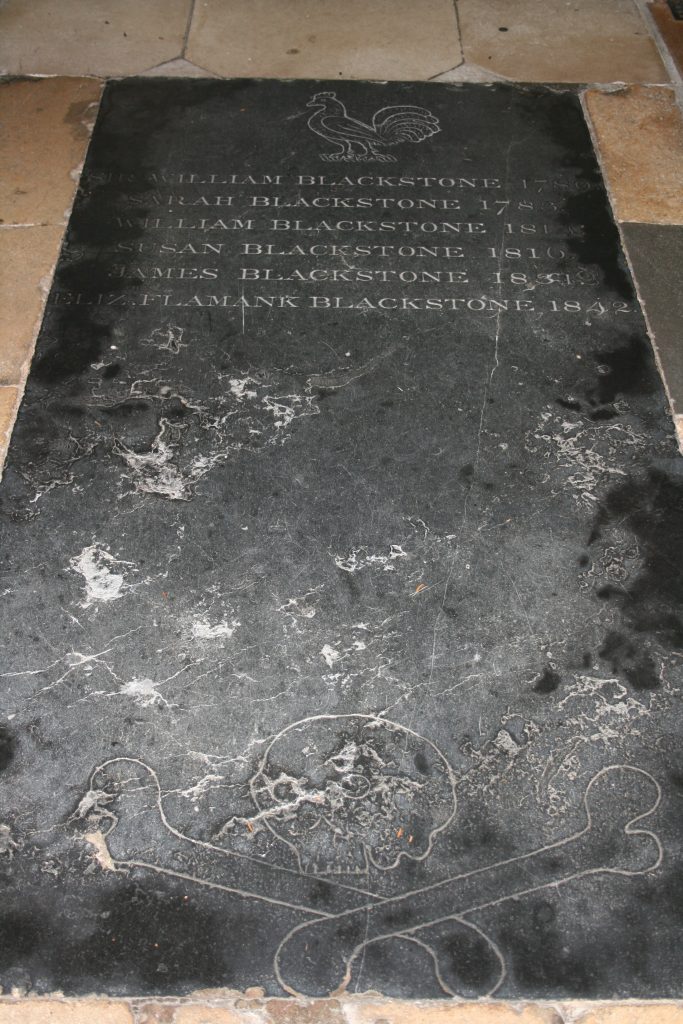
A more conventional memorial: Bentham’s bete-noire, William Blackstone (1723-80) lies in his family vault in Saint Peter’s, Wallingford, Oxfordshire.

Powered by WordPress & Theme by Anders Norén