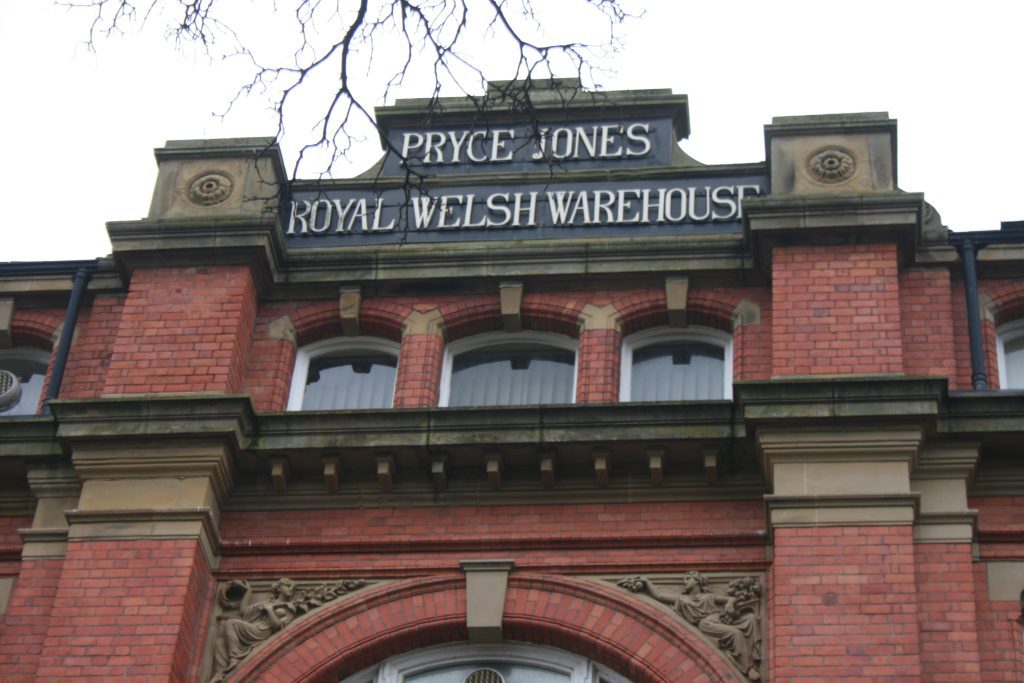
Before there was Amazon, there was the Royal Welsh Warehouse, and before there was Jeff Bezos, there was the more bardically named Pryce Pryce-Jones.
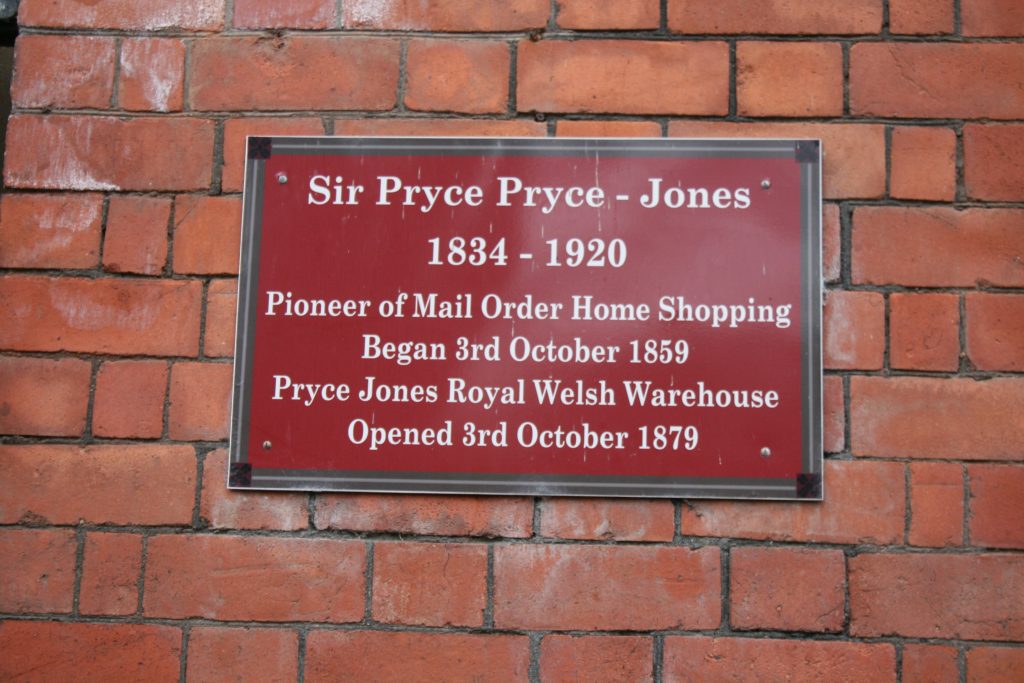
Born at Newtown in Powys, when Pryce Pryce-Jones (1834-1920) was twelve years old he was apprenticed to a local draper. Ten years later he took over the business.
In 1840 the penny post had been introduced in the United Kingdom, a cheap, uniform delivery system. Pryce-Jones took advantage of this to send out fabric swatches and price lists to rural customers who could then place orders by mail. But it was the arrival of the railway in Newtown in 1859, facilitating a next day delivery of goods by cheap parcel post throughout the country, which enabled Pryce-Jones to expand his business beyond recognition.
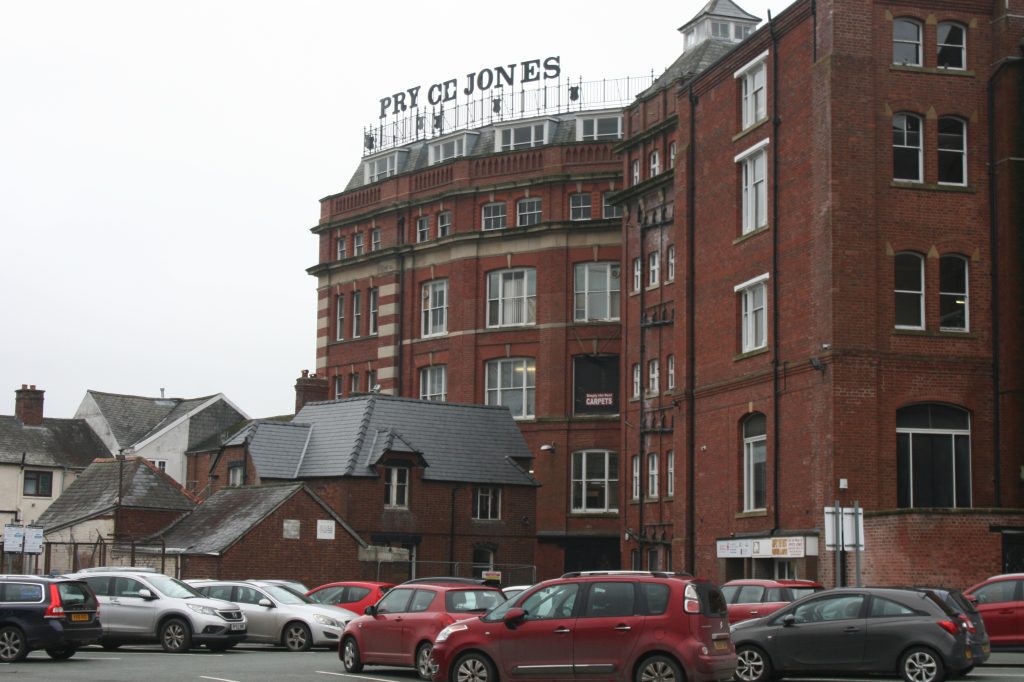
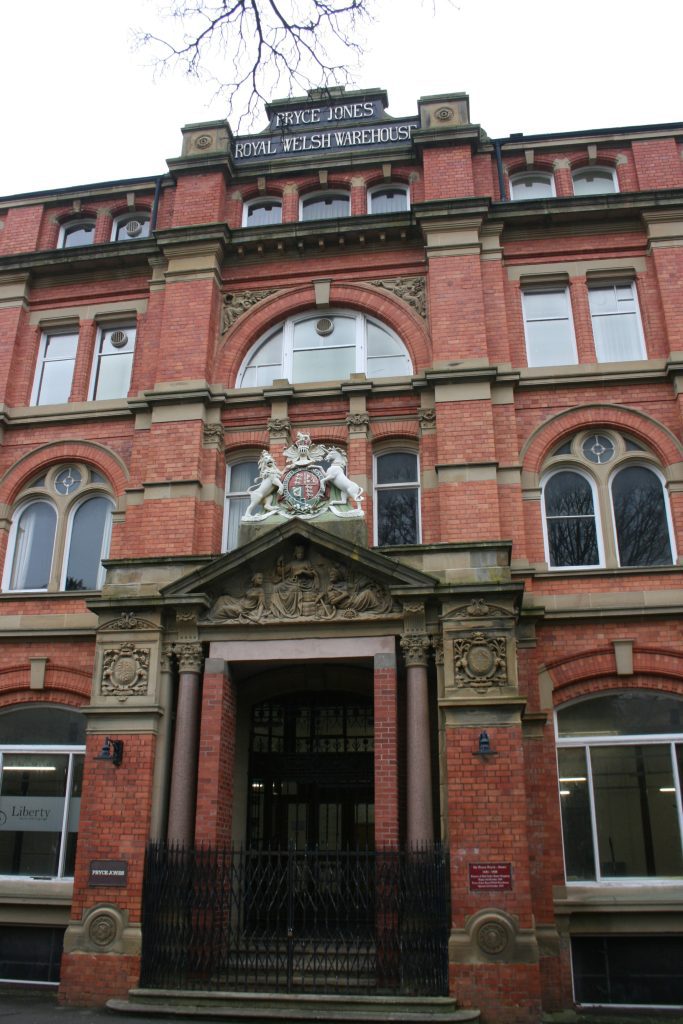
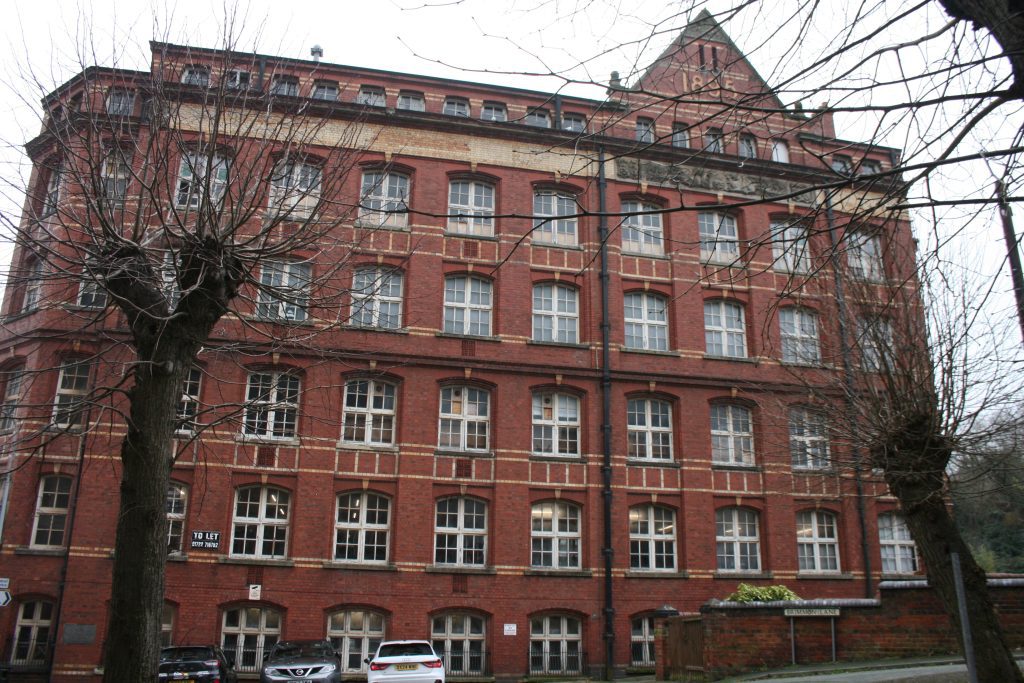
In 1861 he brought out the first mail order catalogue in the world, and in 1879 established the Royal Welsh Warehouse adjacent to the railway station. And what a warehouse: a massive structure of red brick, joined in 1895 by a second six-storey building linked to it by a bridge, and by a further extension in 1904.
The business expanded with the railways. In its heyday it employed 4,000 workers. The warehouse had its own printing press, its own post office and its own railway siding. Pryce Jones was the first person in Wales to install a telephone in his home, keeping him in constant contact with his business.
He supplied all the goods which you would find in any department store, but at the heart of his empire was flannel made from Welsh wool. At exhibitions in Europe, America and Australia he won gold medals and built-up a customer base of 200,000. He supplied the royal houses of Austria, Denmark, Germany, Italy and Russia.
In 1876 he patented the world’s first sleeping bag and immediately secured a contract to supply the Russian army with 60,000 of his “Euklisia rugs.”
At home, his customers included Florence Nightingale and Queen Victoria, the latter so enamoured with her Welsh flannel bloomers that she gave him a knighthood.
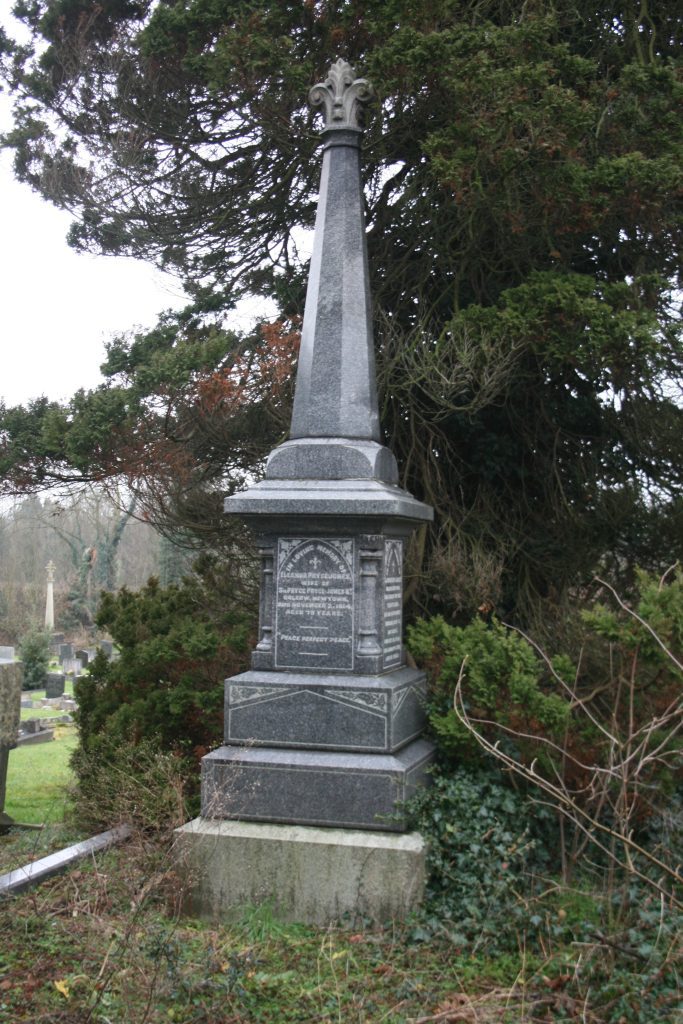
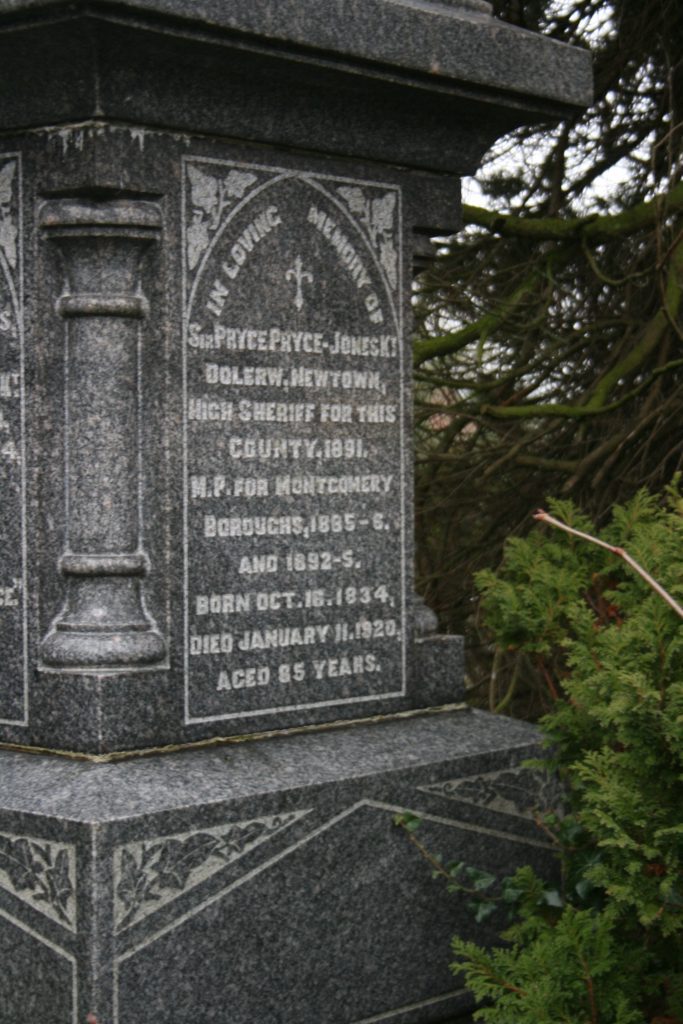
When Pryce-Jones died he was buried in the cemetery of Saint Llwchaiarn’s church, Llanllwchaiarn, on the edge of Newtown.
Pryce-Jones’ sons took over the business, but it faltered in the depression years of the 1930s when it was taken over by the department store Lewis’s of Liverpool. Then in the 1960s the Beeching cuts reduced Newtown’s railway, once the hub of the mid-Wales railways, to just one through route running from Shrewsbury to Aberystwyth. The goods yard disappeared, and the volume of trade conducted by the once mighty warehouse declined.
Lewis’s in turn closed its doors in 2010, ironically the victim of the growth of online shopping. The warehouses had a brief half-life as a multi-let commercial enterprise until they were sold at auction in 2025 and now stand empty.
They still dominate the town, the Pryce-Jones name picked out in large letters reminiscent of the Hollywood sign, but today, like Ozymandias’ transient empire, “nothing beside remains.”