I am fond of Rotherhithe; it is a comfortable walking distance from Tower Bridge but just far enough east to discourage most tourists… apart from those who congregate at the Mayflower Inn from where a grumpy bunch of Protestant separatists may have sailed in 1620.
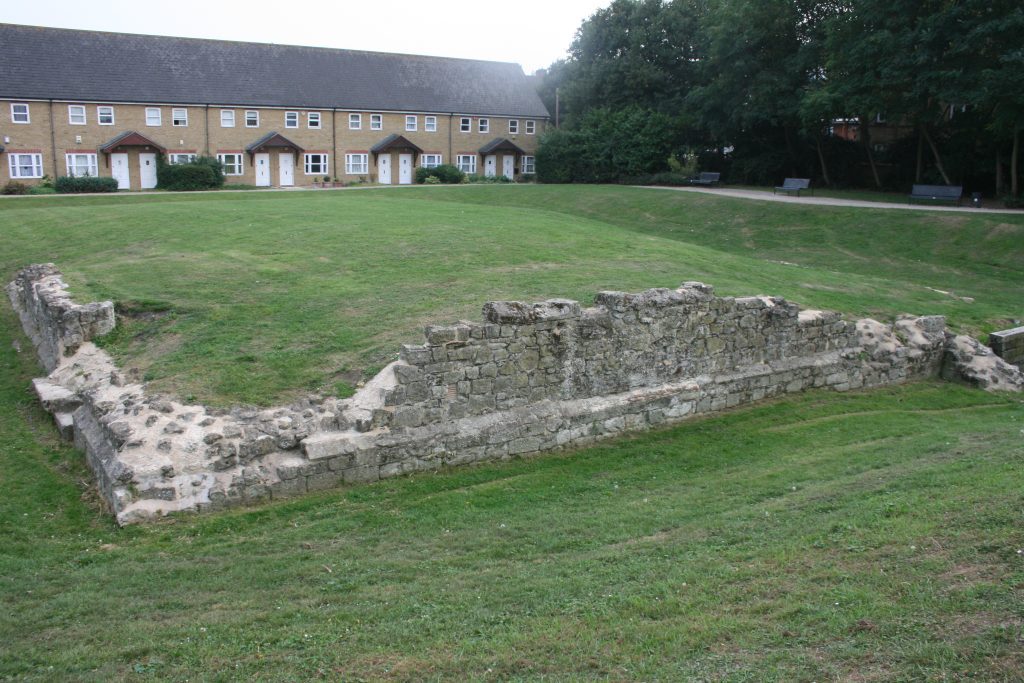
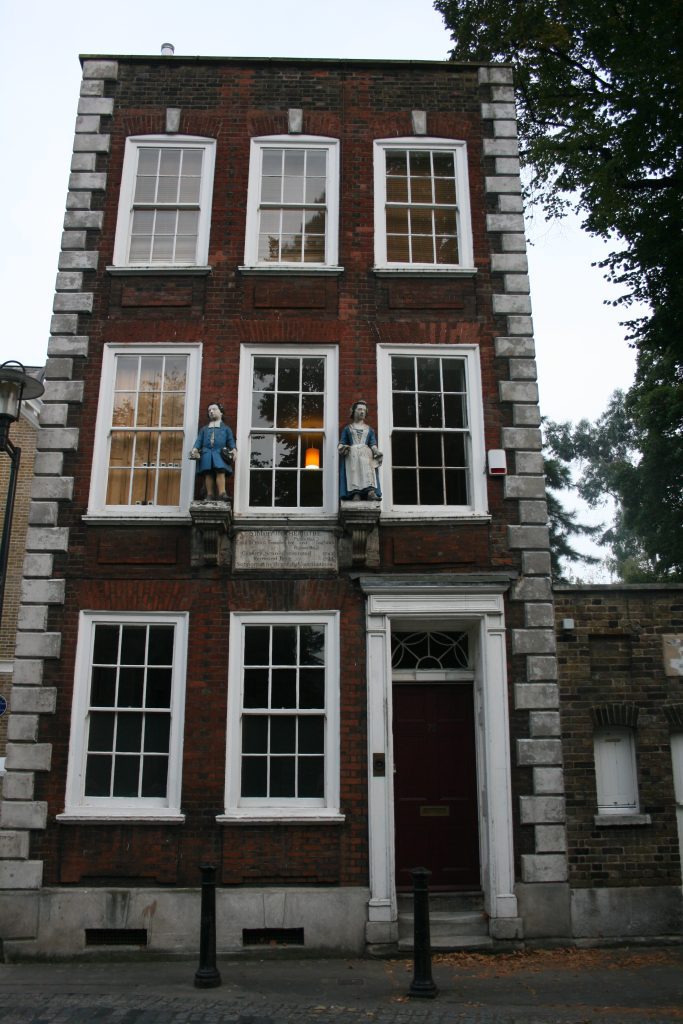
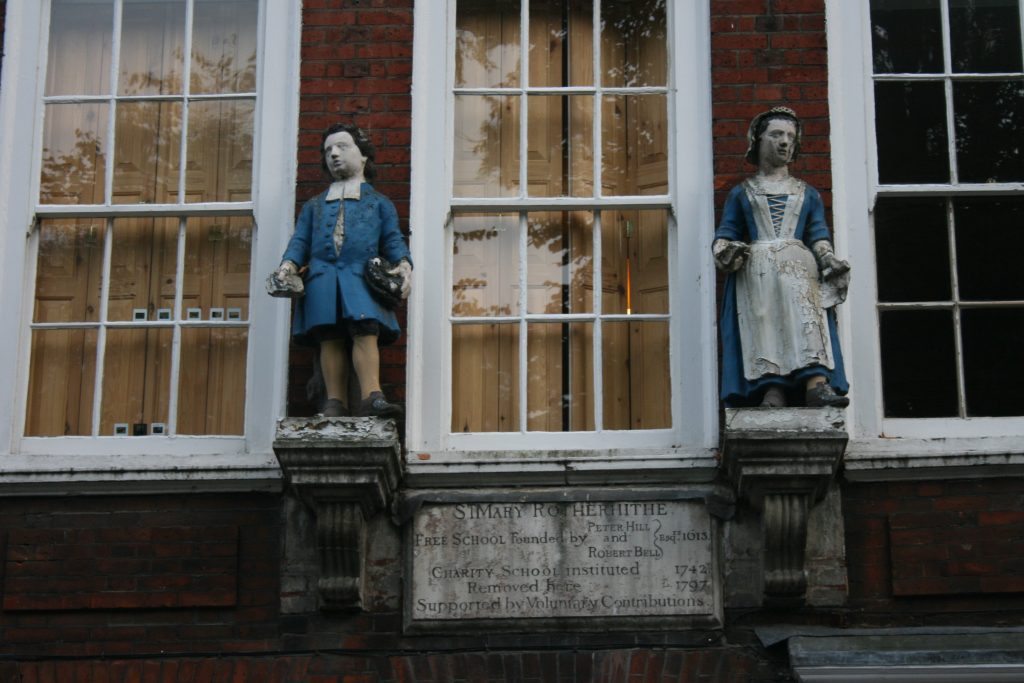
There is the little Brunel Museum located in the engine house designed by Marc Isambard Brunel as part of the infrastructure of the Thames Tunnel; the scant remains of Edward III’s Manor House; a few cobbled streets around St. Mary’s church, and somewhere in the graveyard the remains of Christopher Jones, the ship’s master on the Mayflower; St. Mary’s Free School, established 1613 to educate the children of impoverished seafarers, and bearing two statues of the charity children in their blue uniforms; and a Swedish, a Norwegian and a Finnish church.
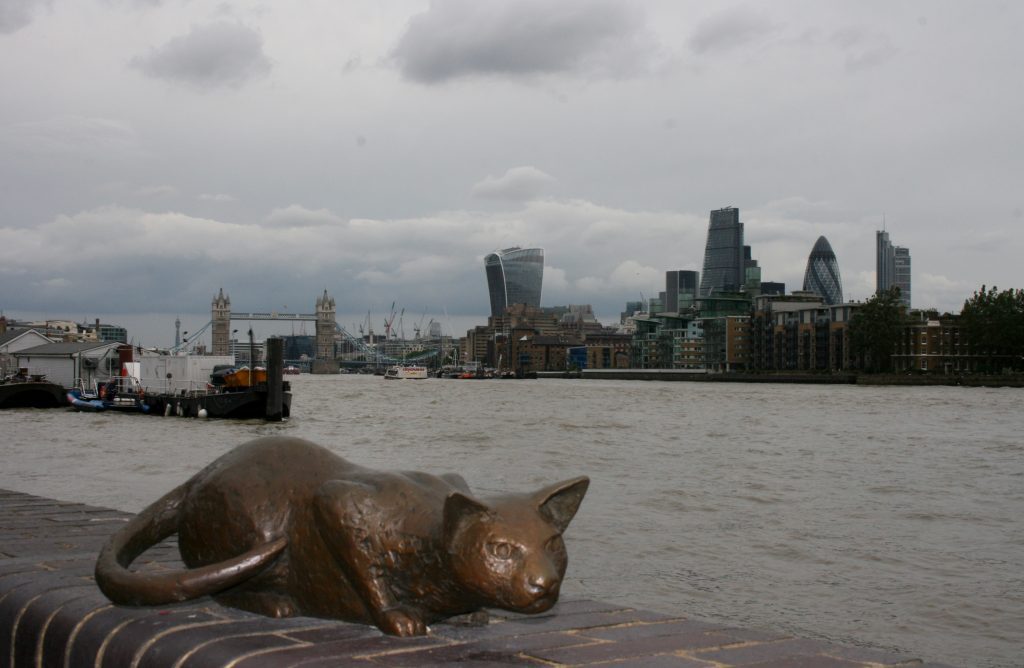
Otherwise, Rotherhithe today is a comfortably ordinary sort of place, its massive docks and wharfs long gone, but I envy those who live in the warehouse conversions along the river and drink in the Angel, a cosy 1830s pub built out over the Thames on wooden posts. From its balcony there are stunning views upriver to Tower Bridge and the jostling skyscrapers of the City.
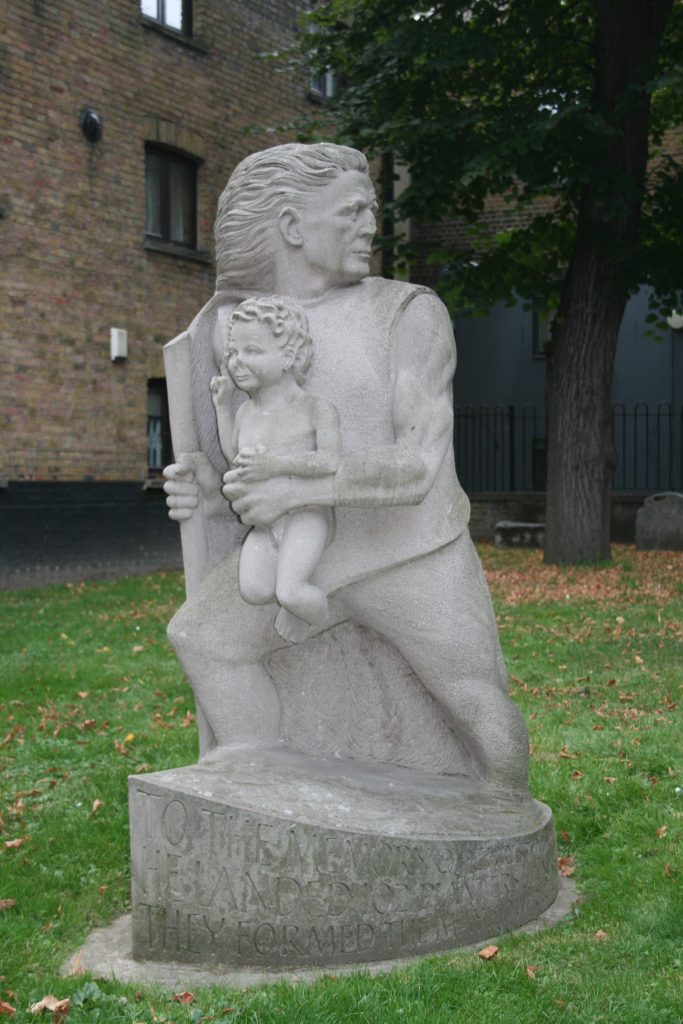
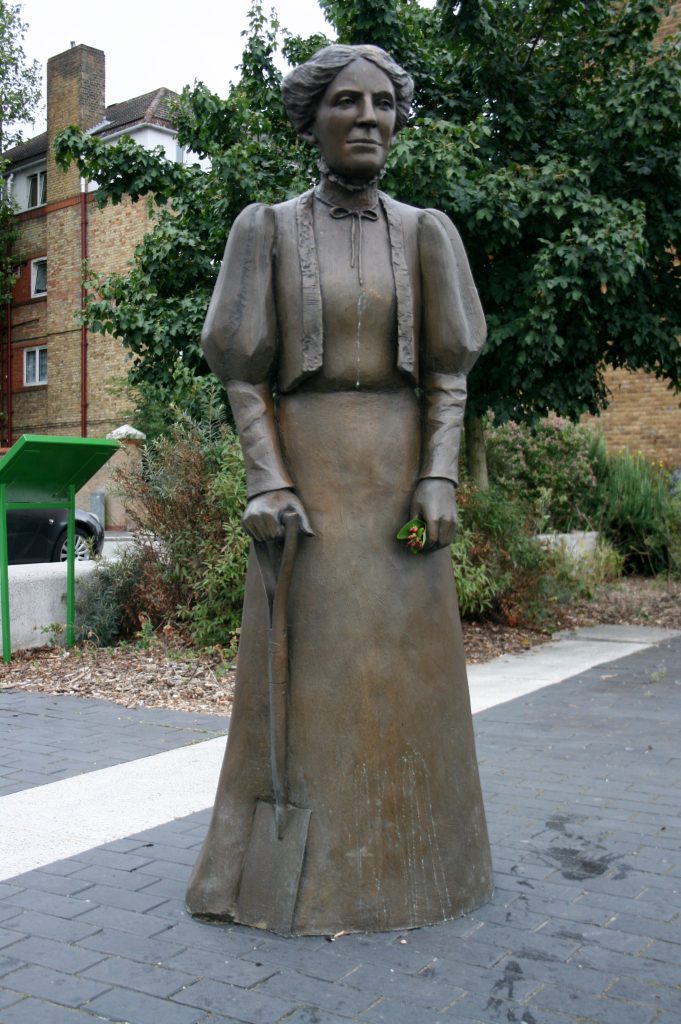
The Angel marks the boundary between Rotherhithe and Bermondsey, both part of the Metropolitan Borough of Bermondsey between 1900-1965. In an open space beside the pub is one of my favourite memorials: Dr. Salter’s Daydream.
Alfred Salter (1873-1945) entered Guy’s Hospital Medical School on a scholarship at the age of sixteen. He garnered prizes, first class honours, and gold medals. With his star burning so brightly, it was expected that he would assume a Harley Street practice, a consultancy, or a prestigious research post; Lister had invited him to join the British Institute of Preventative Medicine.
But during his time at Guy’s, Salter had become familiar with Bermondsey and Rotherhithe. I would not have envied the inhabitants in those days. Alongside the docks and the factories processing leather and hides, Salter visited courtyards where one water closet and one standpipe, operating for only two hours per day, served twenty-five houses. The dwellings were damp and cramped, with verminous walls, their occupants half starved. Jacob’s Island, made notorious by Dickens in Oliver Twist, lay in Bermondsey. Salter decided that this was where he would work.
He went to live in the Bermondsey Settlement which provided health and education services for one of the worst slums in London. Fenner Brockway, in his biography of Salter, describes a romantic figure bursting with life and energy, “known as the Settlement firebrand – militant Republican, militant Socialist, militant Agnostic, militant Teetotaller, militant Pacifist.” In these years Salter was also a member of an international organisation which assisted political refugees, Anarchists and Socialists fleeing oppressive regimes, and landing clandestinely from incoming ships at Rotherhithe docks.
At the Settlement, Salter met and married Ada Brown (1866-1942), a social worker. They bought a house in Jamaica Road in Rotherhithe where they lived above his surgery. Under Ada’s influence the former militant agnostic joined the Society of Friends, whose values accorded with the pacifist and ethical socialist beliefs which he and Ada shared.
Salter, who became known as “the poor man’s doctor” began by charging 6d for consultations but waived his fee if people were unable to pay, which did not endear him to fellow GPs. Later he introduced a mutual health insurance scheme in Bermondsey, described as “an NHS before the NHS.” He placed great emphasis on preventative medicine and education, promoting health centres and showing health propaganda films. His practice grew, and he took on four partners who shared his principles and worked on a co-operative basis.
In 1903 Salter was elected to the Borough Council and in 1922 he stood for Parliament as an Independent Labour (ILP) candidate. Having expounded the ideals of socialism, in his closing speech on the eve of the poll he told the electorate:
If you want a member of parliament who will vote for cheaper beer, you will elect one of the other candidates. If you want a member of parliament who will vote for an army and navy to defend Britain and the Empire, you will elect one of the other candidates… I will vote for prohibition. I will vote against all credits for the armed forces.
Most of his audience were drinkers and most of the men had served in the forces during World War I. His agent, horrified and fearing he was losing votes with every word, phoned the committee room begging them to send an urgent message calling the doctor to a life and death case.
Yet when the results came in next day, Dr. Salter had won and West Bermondsey had been captured for Socialism. In his maiden speech Salter introduced a motion in favour of a minimum living wage for all workers and condemned the fabulous dividends paid to shareholders. With a rare literary flourish he quoted Russell Lowell,
Have ye founded your thrones and altars then,
On the bodies and souls of living men,
And think ye that building shall endure,
Which shelters the noble and crushes the poor?
In his constituency Salter worked for better housing, free school meals, nursery schools, and playgrounds, recognising that these were as essential as medicines in improving public health. He understood that improvements in nutrition and the environment were vital to bring down deaths from tuberculosis. Under his guidance the council encouraged the use of tuberculin tested milk; the first municipal solarium in Britain was established to prevent and treat not just TB but also rickets and skin diseases; swimming pools, public baths and wash houses were built.
Salter himself bought Fairby Grange, an old mansion in Kent with twenty acres of grounds, and presented it to the Council to serve as the first convalescent home in Britain.
In 1929 he resigned his medical practice believing it was more important to focus on his political work removing the causes of sickness through help for the unemployed, adequate pensions, and recreational facilities.
Meanwhile Ada Salter had been elected as Mayor by the Borough Council, and the Labour majority replaced the union jack over the town hall with a red flag bearing the borough arms, fulfilling a prediction – “The red flag shall fly over the town hall” – which Ada had made when she was the only Socialist among fifty-six councillors. Ada also declined to wear the mayoral robes and chain of office. The Tory press was scandalised. But these were symbolic gestures, and she was soon introducing changes of greater social significance.
Campaigns against air pollution, pushing for the establishment of a green belt and promoting urban gardening, were at the heart of her work. Over two years nine thousand trees were planted in the borough. Thousands of cuttings from flowering plants at Fairby Grange were transported for summer bedding. Old gravestones were move to the walls of churchyards and the graves covered with flowers. Public buildings and lampposts were adorned with window boxes and hanging baskets. Bulbs, seeds and seedlings from Fairby were given to anyone in the borough with space to plant. In Southwark Park, which had been little more than a stark open space, flowerbeds and benches were laid out specifically with the elderly and mothers with young children in mind.
Both Salters dreamed of turning Bermondsey into a Garden Village. In Wilson Grove back-to-back slum dwellings were replaced with council owned cottages with gardens, drawing admiration at home and abroad. But a change in national government in 1924, and problems of space for rehousing the dense population, meant that elsewhere in the borough blocks of flats replaced the slums. Yet under the Labour Council gardens were built around the flats and tenants encouraged to grow plants on their balconies.
It was not easy. Fenner Brockway wrote:
For two years the planting of flowers was a complete failure. The children trampled on them and tore them up…the Housing Committee was coming to the conclusion that the gardens would have to be replaced by concrete yards. Then in the third year a daffodil broke through the earth –and the children were taught to guard it as though it were a fairy. The victory of the flowers was won. Adults and children now take pride in them.
The Salters had always been pacifists: both worked with the No Conscription Fellowship in World War One, and Alfred’s 1914 pamphlet Faith of a Pacifist had been translated and clandestinely distributed in Germany. In the 1930s he had spoken out in Parliament against arms sales and profiteering from war preparations. Both he and Ada worked for the Peace Pledge Union. He opposed the bombing of civilian areas in Germany despite the damage inflicted by the Luftwaffe in his own constituency. His last speech in Parliament in 1942 was a plea for peace reasoning that it was a terrible fallacy that ends justify means:
We cannot believe that any new or righteous order of society will be achieved by evil means, by overcoming evil with greater, more potent and more effective evil
His last political act was to join a two day fast to draw public attention to famine and starvation in Greece; under the combined impact of the Nazi occupation and the British naval blockade 30,000 people had died in the winter of 1941-42. Churchill’s government reluctantly lifted the blockade in February 1942.
The Salters chose cremation and have no gravestones. In 1949 Fenner Brockway wrote that the Borough of Bermondsey, despite its war time devastation, was Salter’s monument.
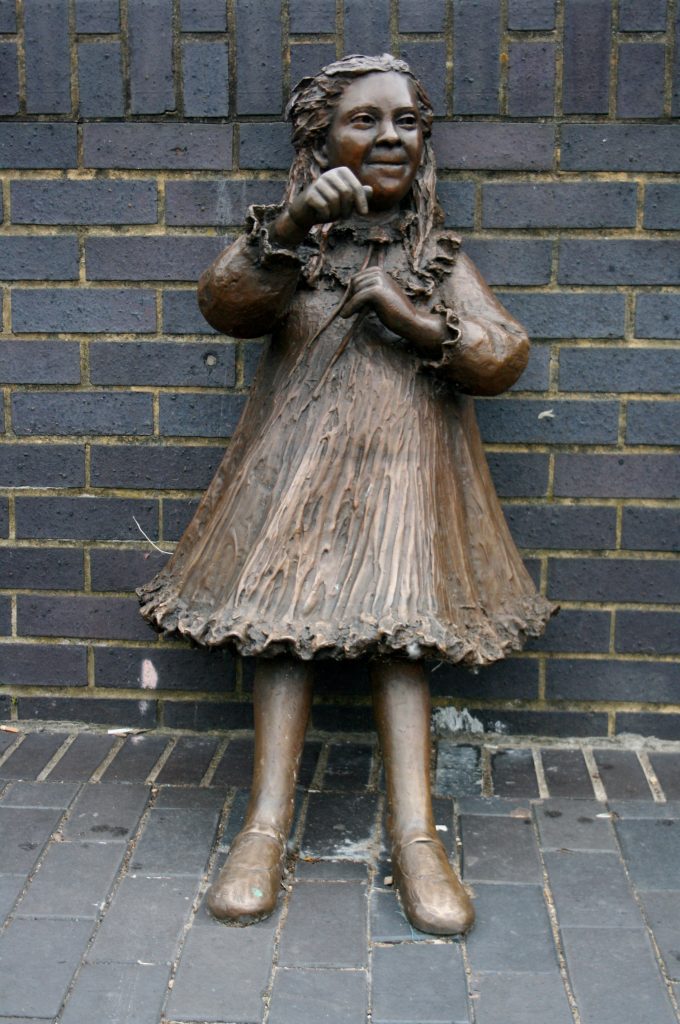
But Dr. Salter’s Daydream, the bronze memorial beside the Thames, remembers not just Alfred and Ada Salter’s medical and political achievements, but their private tragedy. For they had a daughter, Joyce. Unlike other middle-class parents, they did not send her to a boarding school outside the borough, for they did not believe that any child should have privileges denied to others. She attended a local school and made friends with local children. Her parents reserved a room in their home for Joyce and her friends. There everything was washable, and the toys and furniture regularly disinfected. Nonetheless when she was eight years old Joyce caught scarlet fever for the third time.
The Salters did not draw their blinds as was customary following a death. “She was our sunshine,” said Ada. “Why should we shut out sunshine?” Joyce’s portrait hung in their study, and to the end of her life Ada decorated it with flowers every day.
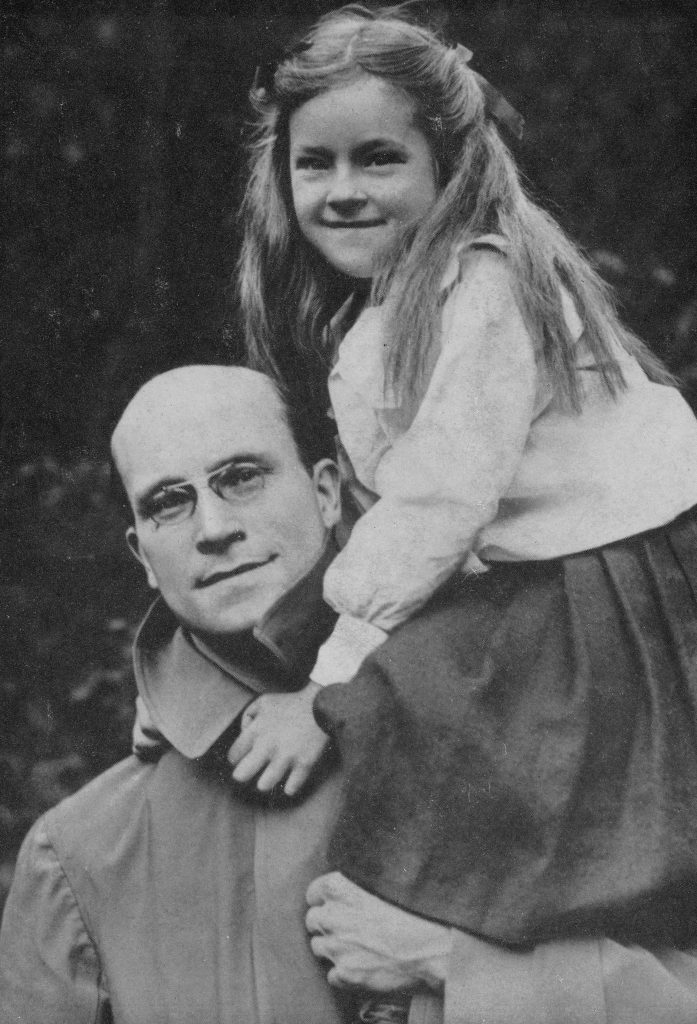
Image source: wikimedia creative commons, licensed under CC by 4.0 international license
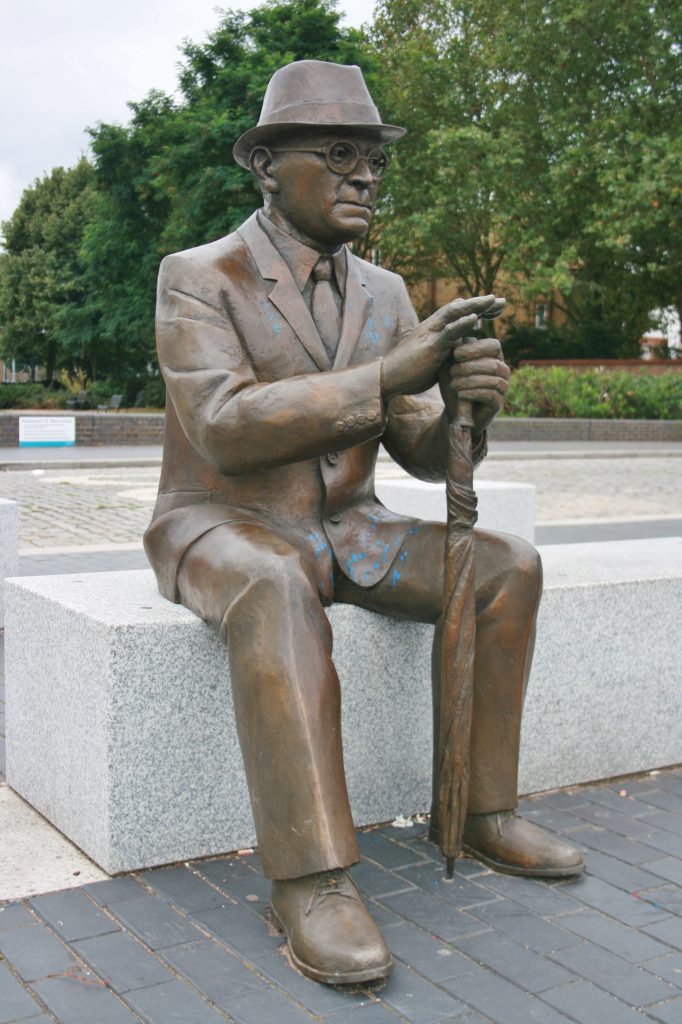
Dr. Salter, remembering happy times with his daughter, looks towards the Thames, where Joyce leans against the wall.
*****************************************************************
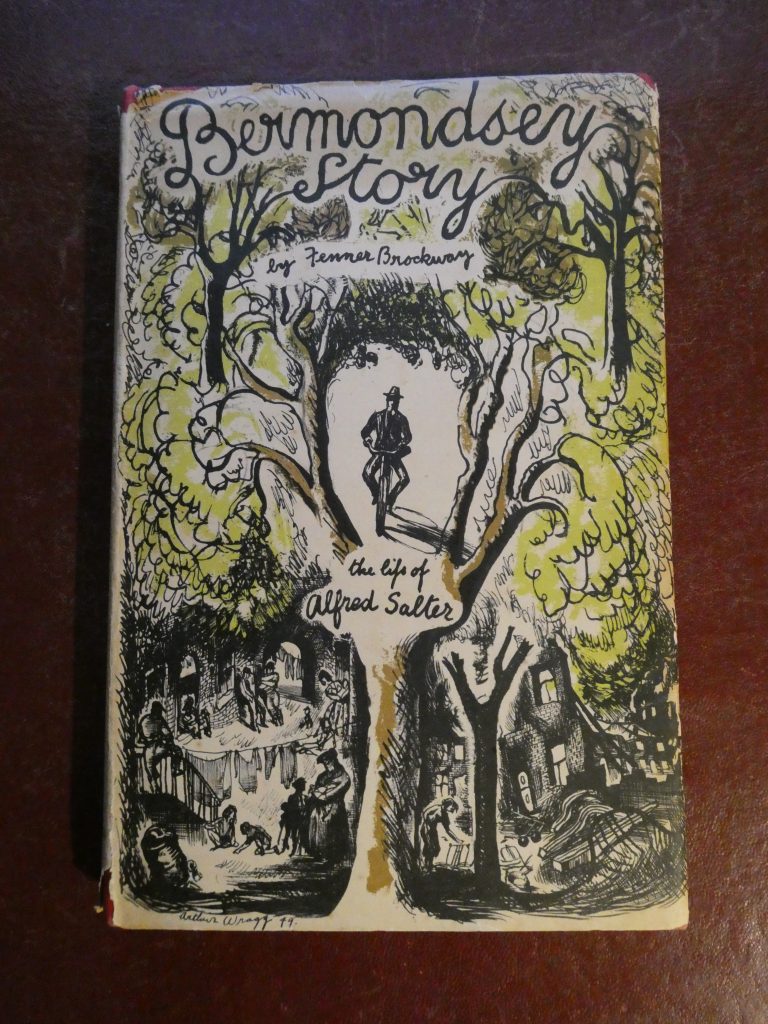
The information reproduced here about the work of Alfred and Ada Salter comes largely from Fenner Brockway, Bermondsey Story, the life of Alfred Salter, George Allen and Unwin Ltd., 1949.
Lynn Morris of the Journeyman Theatre wrote and performed Red Flag over Bermondsey about the life of Ada Salter in 2016.